France Protests Ease but Cost-of-Living Anger Signals Policy Risks
A third consecutive Saturday of nationwide demonstrations drew 320,000 people as economic and education grievances broadened.
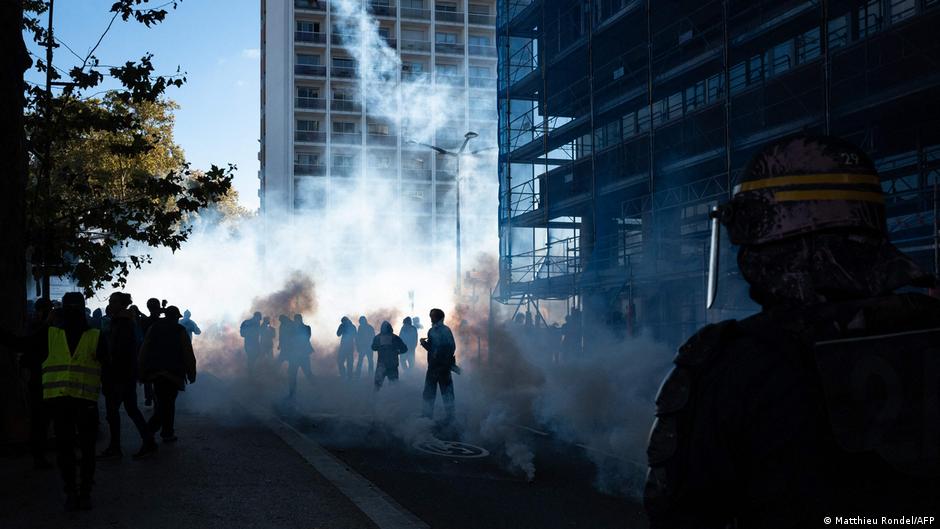
French authorities detained 565 people during a third consecutive Saturday of nationwide mass protests, as discontent over the cost of living and shortcomings in education continued to test the country’s political and social stability. Although participation declined for a second week, the demonstrations remained large enough to underline the policy risks created when pressure on household finances converges with anxiety about public services and future economic prospects.
The Interior Ministry said 320,000 people participated in demonstrations across France on Saturday, October 31, including 70,000 in Paris. Organizers put the nationwide turnout at nearly 500,000. Both estimates indicate a substantial mobilization, despite a downward trend from the previous two Saturdays.
Authorities estimated that 550,000 people took to the streets on October 17 and 410,000 on October 24. The latest official figure therefore suggests that the movement is losing momentum in numerical terms, but its persistence and widening agenda indicate that the underlying grievances have not been resolved.
Economic grievances broaden a student-led movement
The nationwide demonstrations began with protests by school pupils and university students in late September. Their initial complaints included teacher shortages, overcrowded classrooms, excessively long school days, outdated school buildings and a lack of modern equipment. Participants also expressed concern about their futures, including difficulties gaining admission to universities.
The protests subsequently attracted people dissatisfied with other social problems, including the rising cost of living. That evolution is significant for policymakers because it connects immediate household pressures with longer-term concerns about education, opportunity and social mobility. A movement that began around conditions in schools has become a wider channel for frustration over the state’s ability to provide services and protect living standards.
For senior economic decision-makers, declining turnout offers only limited reassurance. The demonstrations show how pressures that may appear separate in public budgets—education staffing, infrastructure investment, university access and household affordability—can reinforce one another politically. If these concerns remain unaddressed, governments may face growing pressure to increase spending or introduce relief measures, even while seeking to preserve fiscal flexibility.
Authorities counted 320,000 demonstrators nationwide, while organizers estimated that nearly 500,000 people joined the protests.
Interior Minister Laurent Nuñez said the demonstrations were mostly peaceful. However, he accused representatives of far-left groups taking part in the protests of using “monstrous violence” against law enforcement officers.
Security demands add to the policy burden
France deployed 70,000 police officers nationwide to maintain security. In Paris, clashes with several hundred protesters injured five officers, according to authorities. Three were hurt by Molotov cocktails. One officer’s clothing caught fire, and he was diagnosed with a burn to his leg.
Protesters in the capital also threw paving stones and rocks at police, who responded with tear gas and batons. In Toulouse, law enforcement officers used water cannon and tear gas against participants in an unauthorized demonstration.
An unauthorized march involving about 10,000 people also took place in Marseille and later developed into clashes with police. Confrontations were reported in Lyon as well, where tear gas was used against people involved in disorder, according to France24.
The large security deployment illustrates the immediate operational cost of prolonged unrest. Beyond policing, repeated disruption and property damage can weigh on local commerce, transport and public confidence. The protests have increasingly descended into disorder, including burning rubbish containers and vehicles, severe clashes with police, vandalism and looting.
These consequences sharpen the trade-offs facing the French government. Concessions intended to address the cost of living or improve education may require additional public resources, while continued unrest creates its own fiscal, commercial and institutional costs. The central challenge is not simply restoring order, but responding to grievances without allowing short-term measures to displace longer-term investment priorities.
French unrest carries wider European implications
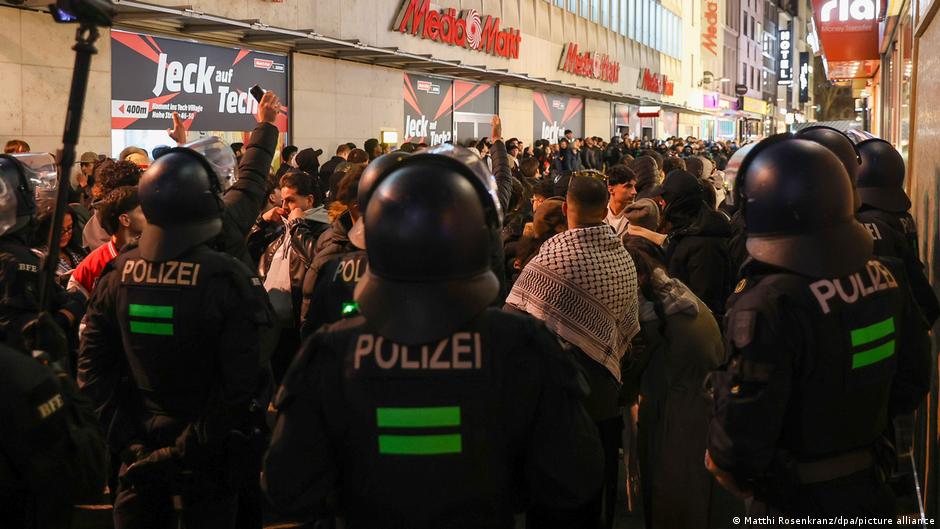
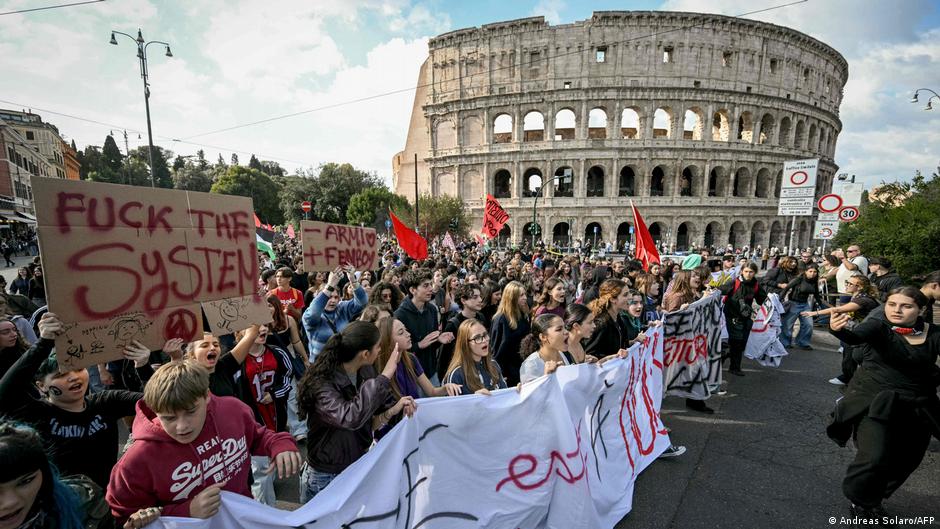
The demonstrations in France have also inspired young people to protest in other European countries, including Italy, Germany and Belgium. In major German cities, demonstrations on October 31 ended in disorder.
This cross-border spread gives the French protests broader economic relevance. While national circumstances differ, youth anxiety over education, access to opportunity and future living standards can become a shared source of instability. For European policymakers, the events suggest that social resilience depends not only on headline economic performance, but also on whether younger citizens believe public institutions are preparing them for viable careers and improving their long-term prospects.
The latest turnout figures show that mobilization in France is gradually declining, yet the movement’s geographic reach and expanded social agenda complicate any conclusion that the pressure has passed. The protests have linked the affordability of daily life with the quality of education and confidence in the future—an intersection that can shape public spending demands, political priorities and economic policy well beyond the immediate demonstrations.