Russian Diesel Cargoes Reverse Course, Testing Trump-Putin Deal
Sanctions and compliance risks are disrupting a politically sensitive fuel pact intended to ease record pressure on US diesel prices.
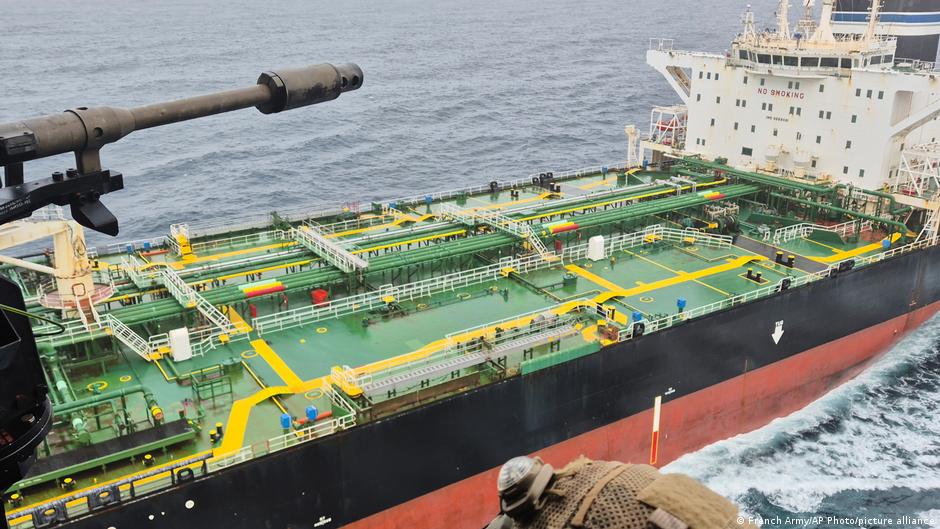
Two of three tankers carrying Russian fuel toward the United States have changed course, threatening a diesel import agreement reached by US President Donald Trump and Russian President Vladimir Putin, the Financial Times reported on Wednesday, November 4.
The diversions highlight the widening gap between high-level energy diplomacy and the practical constraints facing commodity traders, shipowners and buyers. Although the agreement was intended to bring additional diesel supplies into the US market, sanctions exposure and regulatory uncertainty appear to be limiting the willingness of American companies to receive the cargoes.
The disruption comes at a politically and economically sensitive moment. Diesel futures have risen by more than 60% since the start of the war in Iran, while the average retail price of diesel in the United States stood at approximately $6.30 per gallon, or $1.66 per liter, at the beginning of November 2026. Elevated diesel costs can spread rapidly through the wider economy by increasing freight, agricultural, construction and industrial expenses.
Sanctions complicate the supply response
The Russian tanker Talisman and the Hong Kong-owned Leruo, which sails under the flag of Sierra Leone, no longer list the US Atlantic coast as their destination, according to the report. Leruo changed course toward Brazil on November 2. Talisman entered the Mediterranean and was positioned off Algeria while transmitting a “for orders” signal.
That designation indicates that a cargo does not yet have a confirmed buyer or destination port. Both vessels are subject to European Union sanctions, adding legal and commercial uncertainty to any transaction involving their cargoes.
A third tanker, Agioi Fanendes, owned by Greek shipping company Eastern Mediterranean Maritime, continued to sail toward the United States but was also transmitting “for orders.” The vessel was expected to arrive in New York over the weekend.
“Given the apparent caution among US buyers over regulatory, legal and sanctions risks, it would not be surprising if this tanker also changed course and abandoned its US call,” Kpler analyst Matt Smith said.
Another sanctioned tanker, Beast, owned by companies in the Seychelles, loaded fuel at the Russian port of Primorsk on October 27 and continued to head toward the US Atlantic coast. Its voyage suggests that some supply remains in transit, but the uncertain status of the other vessels raises questions about whether the planned Russian diesel imports can reach American customers at meaningful scale.
A policy deal confronts market infrastructure
The tanker movements illustrate a central challenge for governments attempting to redirect sanctioned energy flows. A bilateral political agreement does not automatically resolve restrictions imposed on vessels, financing, insurance, settlement systems or counterparties. Even when a shipment is legally permissible under one jurisdiction, market participants may avoid it if they face potential exposure elsewhere or lack clear guidance from regulators.
For senior decision-makers, the immediate issue extends beyond the fate of individual cargoes. If Russian diesel cannot enter the United States reliably, the administration’s effort to relieve domestic prices will depend on alternative suppliers, additional refinery output or weaker demand. Each option carries different costs and time horizons, while persistent uncertainty can itself raise freight and compliance expenses.
The diversions could also redirect Russian diesel toward other markets, including Latin America or the Mediterranean. Such rerouting would not necessarily increase global supply, but it could change regional price relationships and shipping distances. Longer or less efficient trade routes may keep delivered fuel costs high even if crude oil and refining fundamentals begin to improve.
Trump reached the diesel purchasing agreement with Putin several weeks before the US congressional midterm elections, seeking to reduce fuel prices and strengthen political support. The initiative did not deliver the intended electoral benefit for the Republican Party. In the November 3 elections, Democrats won majorities in both the Senate and the House of Representatives.
That result could complicate the agreement’s implementation by increasing congressional scrutiny of Russian energy imports and the administration’s sanctions policy. With both chambers under Democratic control, lawmakers may press for tougher oversight, clearer legal safeguards or restrictions that make US buyers even more cautious.
The episode underscores the limits of short-term import deals as a response to an energy-price shock rooted in war, sanctions and constrained trade flows. Unless policymakers provide a durable legal framework and credible guidance for companies handling the cargoes, the attempted supply intervention may remain vulnerable to last-minute diversions. For the broader economy, the risk is that high diesel prices persist, reinforcing transportation costs and inflationary pressure even as the political environment becomes less supportive of the deal.