Meloni Presses EU to End Disarray Over Ukraine Peace Negotiations
Italy’s prime minister says Europe needs a clearly mandated negotiator to protect its influence over Ukraine’s security and economic future.
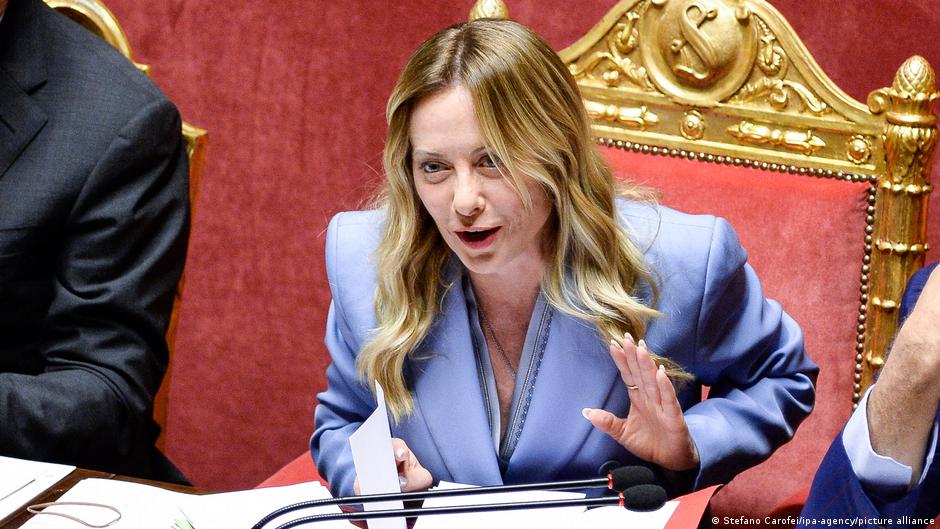
Italian Prime Minister Giorgia Meloni has called on European Union leaders to decide who should represent the bloc in negotiations aimed at ending the war in Ukraine, warning that an uncoordinated approach is weakening Europe’s position with both allies and adversaries.
In a letter to European Council President António Costa, quoted by the dpa news agency on Thursday, Nov. 5, Meloni demanded clarity over both the identity and authority of any EU representative involved in peace talks.
“I continue to insist that it be decided once and for all exactly who will sit at the negotiating table on behalf of the European Union and with what mandate,” Meloni wrote.
The intervention highlights an institutional problem with consequences extending beyond diplomacy. Europe’s role in any settlement will shape decisions on sanctions, defense spending, energy security, reconstruction and financial support for Ukraine. For governments and businesses attempting to plan around those issues, an unclear negotiating structure adds another layer of policy uncertainty.
Fragmentation threatens Europe’s leverage
Meloni said the EU’s “uncoordinated behavior” would help neither its relations with allies nor its engagement with those who must be persuaded to end what she called a “senseless aggression.” In another passage from the letter, quoted by AFP, she argued that a disorderly European approach benefits forces seeking to prolong the conflict.
“I am convinced that, by presenting the image of a Europe acting in a disorderly fashion, we serve only the interests of those who want to continue this war,” she said.
The criticism reflects a broader concern about the EU’s ability to convert its considerable economic weight into unified geopolitical influence. The bloc has major interests at stake in the outcome of the war, yet national leaders can pursue separate diplomatic initiatives that risk diluting a common position. Without an agreed representative and formal mandate, Europe could struggle to shape negotiations even as its members bear substantial long-term costs associated with security, displaced populations, disrupted trade and support for Ukraine.
For senior decision-makers, the dispute is also relevant to the credibility of EU policymaking. A coherent negotiating mandate could provide clearer signals on sanctions policy, possible security commitments and the conditions under which commercial and investment links might eventually change. Continued fragmentation, by contrast, could make policy shifts harder to anticipate and reduce confidence that European commitments will be implemented consistently across member states.
A timetable for an EU decision
Meloni proposed that the issue be discussed at an informal European Council meeting in Dublin on Nov. 13. That discussion, she said, could allow the European Council to make a formal decision at its Brussels summit on Dec. 17-18 about who will represent the EU in negotiations concerning peace in Ukraine.
The timetable places the debate alongside a new round of Russia-Ukraine negotiations mediated by the United States, scheduled for Nov. 10-11 in Abu Dhabi. US presidential special envoy Steve Witkoff said that meeting would address “postwar security, de-escalation, humanitarian initiatives and the next steps toward peace.”
The sequence underlines Meloni’s concern: diplomatic activity is moving forward while the EU has yet to settle how it will participate as a unified actor. If Washington remains the central mediator, Europe could face pressure to respond to proposals developed without a single European mandate, despite the direct implications for the continent’s security architecture and public finances.
Postwar security arrangements could influence national defense budgets for years, while de-escalation could alter energy risk premiums, transport routes and investor sentiment. Humanitarian agreements may also affect future refugee flows and public expenditure. Any eventual peace framework would raise questions about reconstruction funding, the treatment of sanctions and the conditions required for renewed economic engagement.
Rome challenges separate diplomatic initiatives
Meloni has previously criticized individual initiatives by European leaders that, in her view, blur the EU’s unified position on Russia’s war in Ukraine. Rome specifically objected to a telephone conversation involving Finnish President Alexander Stubb, Norwegian Prime Minister Jonas Gahr Støre and Russian President Vladimir Putin.
Her latest letter does not reject diplomacy by national governments, but it makes the case that European participation must be organized around an agreed political mandate. That distinction matters because peace negotiations could oblige EU governments to balance national priorities against collective commitments on sanctions, security guarantees and Ukraine’s future relationship with European institutions.
The dispute therefore tests more than diplomatic protocol. It raises the question of whether the EU can coordinate quickly enough to defend its strategic and economic interests during a potential transition from war toward negotiation. A formal representative would not eliminate differences among member states, but it could establish a clearer channel for turning those differences into a common position. Failure to do so risks leaving Europe with significant financial and security responsibilities but reduced influence over the settlement that determines them.