Russian Regions Restore Petrol Rationing as Refinery Strikes Strain Supply
Kaluga and Zabaykalsky have reintroduced fuel limits, underscoring how attacks on Russian refineries are feeding regional shortages and policy pressure.
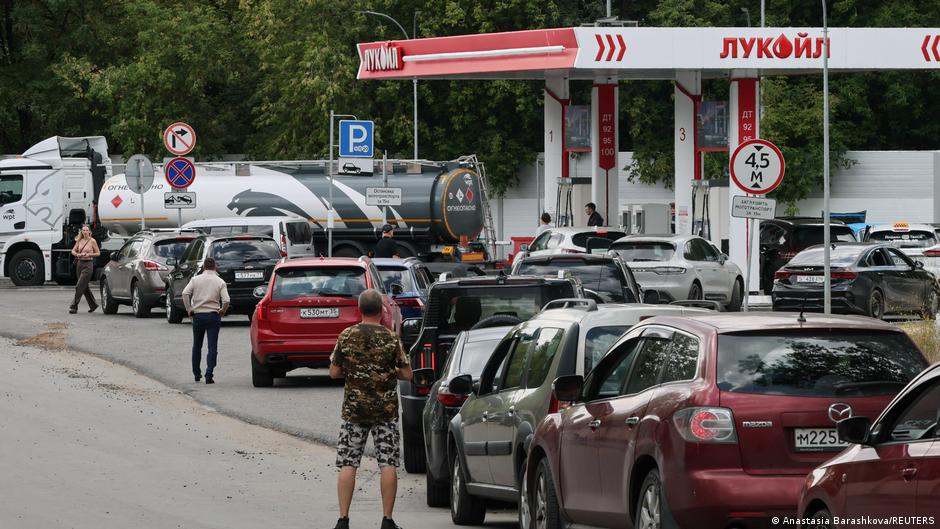
Authorities in Russia's Kaluga region and Zabaykalsky Krai are bringing back restrictions on petrol sales after an intensification of Ukrainian attacks on oil refineries exposed renewed strains in the domestic fuel supply chain. The measures, which take effect on September 23, point to a second wave of fuel-market disruption in Russia and highlight the widening economic consequences of damage to refining capacity.
In Kaluga, a region bordering Moscow and the Moscow region, Governor Vladislav Shapsha said on Tuesday, September 22, that petrol sales would again be regulated under an odd-even system. Drivers will be allowed to refuel on alternating days depending on the first digit of their vehicle registration number. Petrol may also be dispensed only directly into a vehicle's tank, limiting the ability to fill separate containers.
The decision follows reports of queues returning to petrol stations as local supply logistics deteriorate. Kaluga had already introduced odd-even petrol restrictions on August 15, before lifting them on September 1. Their return less than a month later suggests that the earlier easing did not resolve underlying vulnerabilities in the region's supply network.
“We are now recording local logistical disruptions in fuel deliveries to individual petrol stations. Queues have returned. This is causing justified dissatisfaction,” Shapsha wrote on Telegram.
Zabaykalsky Krai, in Russia's Far East, is also imposing new limits. The region's operational headquarters said that from September 23 the BRK and Kors filling-station networks would cap sales of AI-92 and AI-95 petrol at 15 liters per vehicle. Buyanto Batomunkuyev, first deputy chairman of the regional government, linked the restrictions to available stocks, saying total fuel reserves at petrol stations and oil depots stood at 17,000 tonnes and that, “at the current rate of release,” they would last only 20 days.
The Zabaykalsky restrictions echo measures introduced there in June and lifted on July 23. Their reinstatement indicates that Russia's fuel shortages are not confined to regions near the main theatre of war or to areas around Moscow, but are affecting distant markets where logistics, distance and storage constraints can amplify refinery disruptions.
Supply Shock Meets Policy Pressure
The renewed restrictions matter beyond regional inconvenience because petrol availability is politically and economically sensitive. Fuel shortages can quickly spill into consumer expectations, transport costs and business confidence, particularly in a large economy where long-distance logistics connect remote regions to national supply chains. For senior decision-makers, the pattern is notable: Russia is not facing a single localized supply failure, but recurring rationing across multiple regions after earlier attempts to normalize the market.
Fuel-sale restrictions were introduced during the summer either by regional authorities or by filling-station networks themselves across almost all Russian regions, as well as in annexed Crimea. Supply problems became serious enough that Russian President Vladimir Putin on June 28 ordered systemic measures to stabilize the market. That intervention underscored the strategic importance of keeping domestic fuel markets functioning even as refinery infrastructure came under pressure.
The shortages emerged after Ukrainian drone attacks on Russian oil refineries. Ukraine has been defending itself for more than four years against Russia's military invasion. The strikes and resulting fires forced refinery operators to cut output or halt production entirely. Although earlier restrictions were later lifted, Ukrainian attacks on refineries intensified again from the beginning of August, and Russia was hit by what the source describes as a second wave of the fuel crisis.
By mid-September, the petrol deficit in Russia had worsened sharply. According to Novaya Gazeta Europe, citing data from the gdebenzin service, fuel was unavailable at almost every second petrol station. That metric, if sustained across regions, implies a market problem larger than temporary station-level disruption: it points to stress across production, distribution and inventory management.
For Moscow, the macroeconomic implications are uncomfortable. Refining capacity is a domestic stabilizer in a commodity-exporting economy: it converts crude output into the fuels needed by households, agriculture, trucking, industry and regional public services. When refineries are damaged or idled, the state may need to choose between prioritizing domestic supply, managing prices, preserving exports and preventing panic buying. Restrictions such as odd-even refueling and per-vehicle caps can slow depletion of stocks, but they also confirm scarcity to consumers and businesses.
The reintroduction of limits also shows how wartime disruption can migrate from military infrastructure into civilian economic management. Each regional rationing measure is small in isolation, but together they signal a growing administrative burden. Local authorities must manage queues, ration access, communicate rules and contain dissatisfaction, while federal policymakers face pressure to devise broader stabilization measures. In an economy already shaped by sanctions, military spending and logistical rerouting, recurring fuel shortages add another source of friction.
Long-Term Risks for Russia's Fuel Market
The longer-term consequence is the potential weakening of confidence in Russia's ability to insulate its domestic market from wartime shocks. Refinery attacks do not have to eliminate national fuel supply to create economic costs. Intermittent outages can force precautionary buying, disrupt regional deliveries, and require administrative rationing that reduces flexibility for consumers and businesses.
Kaluga's proximity to Moscow makes its restrictions especially visible. Zabaykalsky Krai's 15-liter cap, by contrast, illustrates the pressures faced by distant regions where inventories and replenishment cycles are more exposed. Together, the two cases show a dual challenge: maintaining supply near the political and economic center while preventing remote regions from running down stocks too quickly.
For policymakers and corporate planners, the key signal is that refinery disruption is becoming a recurring market variable rather than an isolated event. If attacks continue and production cuts or stoppages persist, Russia may need more durable interventions to stabilize distribution and manage demand. Such measures could reduce immediate pressure at petrol stations, but they may also impose efficiency costs on transport, retail and regional commerce.
The latest restrictions therefore mark more than another episode of local rationing. They reveal how sustained attacks on energy infrastructure can reshape economic governance, forcing a major hydrocarbon producer to manage scarcity inside its own fuel market. The effect is not only operational; it is macroeconomic, touching inflation risks, logistics resilience, regional stability and the credibility of state intervention.