EU and Mexico Sign Comprehensive Trade Agreement to Enhance Economic Partnership
The new EU-Mexico trade deal removes nearly all tariffs and aims to boost bilateral trade and investment by 2030.
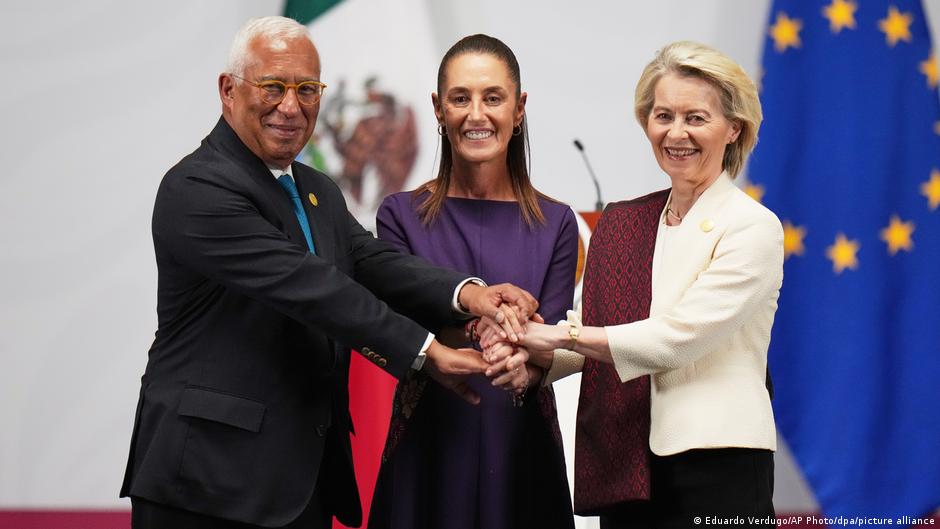
After a decade of negotiations, the European Union and Mexico have formalized a renewed trade and cooperation agreement designed to deepen economic ties and stimulate growth. Signed on May 22 in Mexico City, the deal entails significant tariff reductions, elimination of bureaucratic trade barriers, and improved access to public procurement markets.
Strategic Partnership Amid Global Economic Shifts
EU Council President António Costa emphasized the importance of this partnership amidst current geopolitical uncertainties, stating, "Given the current geopolitical situation, our partnership is more important than ever." The agreement signifies a strategic move by both parties to diversify trade relations and reduce reliance on other global markets amid rising protectionism and shifting international trade dynamics.
Key provisions of the agreement include Mexico's commitment to abolishing nearly all tariffs on imports from EU member states. Additionally, regulations that previously complicated cross-border trade will be streamlined to foster smoother commercial exchanges. The EU, for its part, has pledged an investment package of €5 billion targeted at infrastructure projects within Mexico, reinforcing economic stability and growth prospects.
This agreement marks the first summit between the EU leadership and the second-largest economy in Latin America in over ten years. European Commission President Ursula von der Leyen highlighted the anticipated benefits, noting that the agreement intends to increase Mexico's exports to the EU by approximately 50% by 2030, reaching an estimated €31 billion annually.
Currently, EU exports to Mexico stand at roughly €56 billion per year, with bilateral trade having expanded by 75% over the past decade. The new trade framework establishes tariff-free access for nearly all products, including Mexican poultry and asparagus, and European dry milk, cheese, and pork, though certain quotas will apply.
"This agreement is a decisive step towards strengthening our economic partnership and ensuring resilience amid global trade uncertainties," said Ursula von der Leyen.
The deal also incorporates modern trade considerations such as commitments on climate change, human rights, and international cooperation, reflecting evolving global policy priorities.
Long-Term Economic Implications and Policy Outlook
From a macroeconomic perspective, the EU-Mexico agreement represents a significant policy shift towards open, rules-based trade in a time marked by protectionist tendencies worldwide. By securing tariff eliminations and regulatory harmonization, both economies aim to enhance competitiveness, attract investment, and fortify supply chains.
Mexico’s planned gradual removal of tariffs on key agricultural imports, including poultry, pork, cheese, and chocolate, is expected to benefit consumers and businesses by reducing costs and expanding market access. Moreover, the protection of geographical indications such as Parma ham, Bavarian beer, and Tyrolean bacon safeguards European producers’ intellectual property and market share.
For the EU, the agreement ensures access to vital raw materials from Mexico, essential for various manufacturing sectors, including German automotive and industrial firms that rely on Mexico’s integrated supply chains. Given Mexico’s population of approximately 130 million and its participation in the North American Free Trade Agreement (NAFTA) with the US and Canada, this enhanced relationship bolsters the EU's position in the Americas and offers strategic diversification away from volatile global markets.
The forthcoming ratification process within the EU and Mexico will pave the way for formal implementation, expected to generate lasting economic benefits and reinforce transatlantic economic ties.