EU Airports Face Major Disruptions as New Biometric EES System Causes Long Delays
The rollout of the Entry/Exit System (EES) biometric border control in six EU countries results in hours-long queues, raising concerns over summer travel and economic impacts.
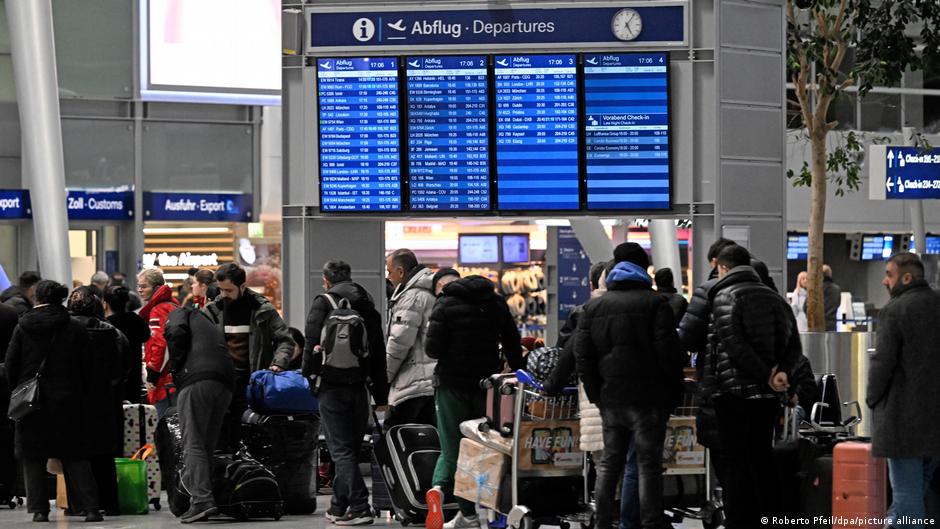
The recent implementation of the European Union's new biometric entry and exit system, known as EES, has led to significant operational disruptions in airports across six member states, triggering concerns about potential economic and policy repercussions for the broader Schengen zone.
Operational Challenges and Economic Implications
The Airports Council International (ACI) Europe reported that since April 10, the EES has caused extensive delays, with passengers facing queues of up to three hours at border control checkpoints in France, Germany, Belgium, Italy, Spain, and Greece. The situation threatens to escalate further as the peak summer travel season approaches, potentially straining tourism-dependent economies and supply chains.
Michael O’Leary, CEO of Ryanair, sharply criticized the system, describing it as "a complete disgrace and chaos," likening it to "a punishment for Brexit." He urged the European Commission to postpone the full-scale implementation of the EES until October, citing reports of wait times reaching four hours in some airports. Such delays disrupt airline operations and could deter travelers, negatively impacting economic activity in the region.
"Passengers are already waiting up to three hours during peak times, which risks collapsing airport operations this summer," said Olivier Jankovec, head of ACI Europe.
Highlighting the severity, an incident at Milan Linate Airport saw only 34 of 156 EasyJet passengers on a flight to Manchester board on time; the remaining 122 missed the flight due to prolonged border checks. While the airline offered free ticket rebookings, it declined liability for the disruption.
Policy Response and System Performance Debate
The European Commission maintains that the system is functioning as intended, stating that the average processing time per traveler is approximately 70 seconds. However, ACI Europe contests this figure, estimating actual processing times to be five times longer, reflecting significant operational bottlenecks.
Introduced in phases beginning October 2025, the EES replaces manual passport stamping with biometric verification, including photo capture and fingerprint scanning, for third-country nationals entering the Schengen area. By April 10, 2026, all 29 Schengen countries have adopted the system, excluding EU citizens, residence permit holders, and diplomats.
Industry groups are pressing the European Commission to allow border authorities to temporarily suspend the system during excessive delays to mitigate operational disruptions. Such a policy shift could indicate a more flexible approach to balancing security and efficiency in border management, with implications for cross-border mobility and economic stability.
Given the central role of seamless travel in supporting tourism, trade, and labor mobility across the EU, ongoing challenges in EES deployment highlight the risks of rapid technological transitions without adequate contingency planning. The situation underscores the need for coordinated policy responses to safeguard the economic health of member states reliant on robust border infrastructure.