Drone Attacks Ignite Fires at Russian Oil Facilities in Rostov and Saratov Regions
Recent UAV strikes on key fuel storage and refining infrastructure highlight vulnerabilities amid escalating regional tensions.
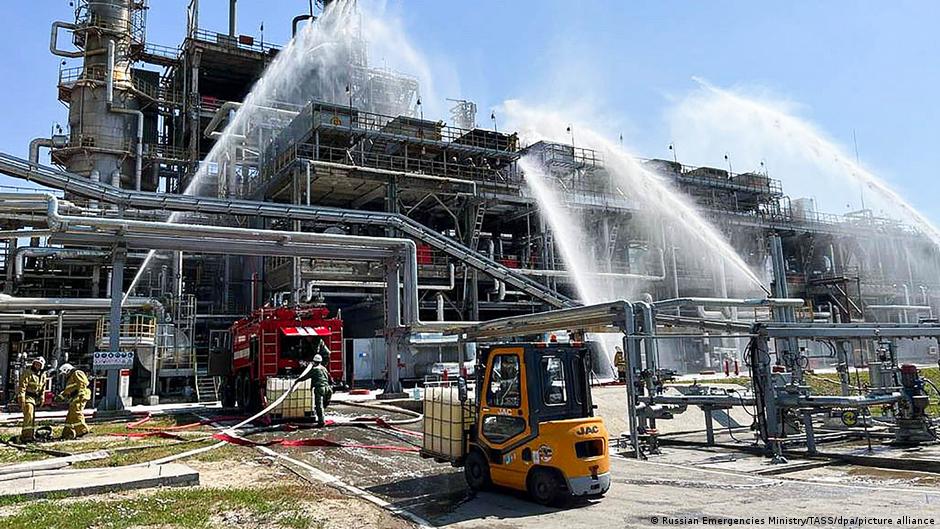
On the night of May 31, a drone attack in Russia's Rostov region caused a fire at a private fuel storage facility, according to local authorities. The incident occurred in the Matveev-Kurgan district, where debris from an unmanned aerial vehicle reportedly ignited a blaze at a site serving agricultural producers.
Governor Yuri Slyusar announced via Telegram that emergency responders evacuated residents from nearby private homes to ensure safety. He confirmed that firefighting crews, including a specialized fire train, were actively working to extinguish the flames. There were no immediate reports of casualties.
Damage was also reported in the settlement of Matveev Kurgan, where a pharmacy, two shops, and a vehicle sustained harm from the attack. Ukrainian-linked Telegram channels identified the targeted site as an oil depot and published videos showing the resultant fire. Eyewitness accounts described an unusual "oil rain" following the strike on the fuel tank.
Impact on Regional Energy Infrastructure and Economic Implications
In parallel, the governor of Saratov region, Roman Busargin, disclosed damage to civilian infrastructure from a separate nighttime drone attack. While specific affected sites were not officially detailed, open-source intelligence (OSINT) sources indicate the target was the Saratov oil refinery, a critical facility in Russia’s hydrocarbon processing network. Extensive photographic and video evidence purportedly from local residents documented the fire at the refinery.
"The repeated targeting of Saratov’s oil refinery underlines the vulnerability of key energy infrastructure amid ongoing conflict," noted analysts following the incident.
These attacks underscore emerging tactical shifts involving unmanned aerial vehicles to disrupt energy supply chains. Given the strategic importance of oil production and processing facilities to both regional economies and national energy exports, the strikes can reverberate far beyond immediate physical damage. Potential consequences include supply shortages, increased operational costs, and heightened insurance premiums, influencing global energy markets.
Repeated assaults on oil assets in the Saratov region reflect a broader pattern of infrastructure vulnerability that poses challenges to energy security and economic stability. Policymakers and industry leaders must consider adaptive security measures and contingency planning to mitigate long-term disruption risks.
As of the latest reports, emergency services continue to contain the fires, and no casualties have been confirmed. The evolving situation remains a critical point of observation for economic analysts tracking the intersection of regional conflict and global energy markets.