Zelensky Says U.S.-Russia Diesel Deal Risks Financing a Longer War
Ukraine's president warned that easing restrictions on Russian fuel exports without a de-escalation bargain would strengthen Moscow.
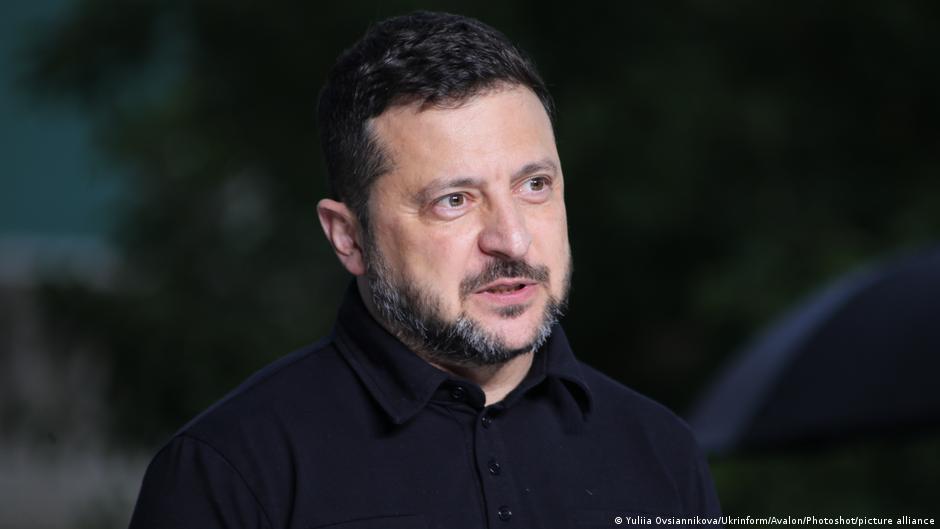
Ukrainian President Volodymyr Zelensky has sharply criticized a U.S.-Russia understanding on global supplies of Russian diesel fuel, calling the White House decision an “investment in war” and warning that Moscow would treat any sanctions relief as a strategic opening rather than an incentive for peace.
The criticism came on Friday, October 9, after U.S. President Donald Trump described talks with Russian President Vladimir Putin as “very successful” and said the two sides had reached an arrangement on Russian diesel deliveries to the United States and the wider global market. The same day, the U.S. Treasury Department announced that the Office of Foreign Assets Control, acting on Trump’s instruction, was immediately issuing a temporary general license permitting supplies of Russian diesel fuel to the global market.
For global energy markets, the decision points to a policy shift with implications beyond the battlefield. Diesel is a key input for freight, agriculture, mining, construction and industrial production, meaning supply disruptions can quickly feed into broader inflationary pressure. Allowing Russian barrels back into wider circulation may ease near-term fuel tightness, but Zelensky argued that the economic relief would come at the cost of increasing Russia’s ability to sustain military operations.
“Permission for Russia to sell petroleum products is an investment in a war that must be ended, not continued,” Zelensky wrote.
Zelensky said “gifts to Putin” would not produce peace and warned that Russia would “thank” others for diesel with further terrorism and hostile actions. His remarks framed the diesel arrangement not as a narrow energy-market measure, but as a test of whether sanctions policy remains tied to measurable de-escalation.
Energy Relief Versus Strategic Leverage
The Ukrainian president’s response highlights a core dilemma for policymakers: whether easing constraints on Russian energy exports can stabilize markets without weakening pressure on Moscow. Since energy revenues remain central to Russia’s fiscal capacity, any loosening of restrictions may carry macroeconomic consequences that extend into defense financing, exchange-rate stability and the durability of wartime spending.
Zelensky argued that any relaxation of sanctions against Russia without a clear agreement on de-escalation would be an obvious sign of weakness. In his view, such a move would play into Moscow’s hands by enabling it to “kill more” and “fight longer.” That assessment places the diesel license within a larger economic-security framework: sanctions are not merely punitive instruments, but bargaining tools whose value depends on how and when they are lifted.
Ukraine also presented an alternative structure for de-escalation. Zelensky said Kyiv was ready for reciprocal steps and urged Washington to increase pressure on Russia to achieve a ceasefire. He proposed that Ukraine would refrain from burning Russian oil refining facilities if Russia stopped destroying Ukrainian energy infrastructure. According to Zelensky, Ukraine had offered the United States precisely such an arrangement and believed Washington had enough leverage to secure that compromise.
The proposal links energy infrastructure attacks directly to broader ceasefire diplomacy. It also reflects the growing economic importance of infrastructure resilience in the war. Strikes on power systems and refineries affect not only military logistics, but also household consumption, industrial output, fiscal spending and investor confidence. For Ukraine, reducing attacks on energy assets could limit winter economic damage and lower the cost of emergency support. For Russia, preserving refinery operations would protect a critical export and domestic supply base.
Russia Moves to Accelerate Diesel Exports
Russian Deputy Prime Minister Alexander Novak told TASS that Russia was “immediately” beginning to lift restrictions on diesel exports earlier than planned. He also confirmed Trump’s statement that Russian diesel exports could eventually reach 3 million tonnes per month.
That prospective volume matters for both market pricing and sanctions leverage. If Russian diesel returns at scale, it could influence global refined-product balances, especially in markets sensitive to transport and industrial fuel costs. Lower diesel prices may be welcomed by businesses and governments concerned about inflation and supply-chain costs. Yet the same flows could increase Russia’s external earnings unless the arrangement is paired with restrictions, monitoring or a broader ceasefire framework.
The White House move therefore creates a trade-off for senior economic decision-makers. On one side is the possibility of easing pressure in global diesel markets, supporting logistics-intensive sectors and limiting energy-driven inflation. On the other is the risk that an easing of restrictions before de-escalation may reduce the cost of continued conflict for Russia and weaken the credibility of sanctions as a policy instrument.
Zelensky’s message was that sequencing is decisive. In his framing, sanctions relief should follow verifiable restraint, not precede it. If Washington grants Russia access to diesel markets first and seeks concessions later, Ukraine fears Moscow will bank the economic benefit while continuing attacks on Ukrainian infrastructure.
The dispute also signals a potential divergence between U.S. energy-market priorities and Ukrainian security objectives. Trump’s description of the talks as successful suggests a focus on practical supply outcomes, while Zelensky’s reaction underscores the geopolitical price that Kyiv sees attached to those outcomes. For governments and companies exposed to energy costs, the arrangement may look like a stabilizing intervention. For Ukraine, it is a policy reversal that risks extending the war’s economic and human costs.
As the temporary OFAC license takes effect, the central question is whether the diesel deal becomes part of a wider de-escalation package or stands alone as a market-access concession. Zelensky’s warning is that without a clear ceasefire-linked bargain, the macroeconomic benefit of additional diesel supply could be outweighed by the strategic cost of giving Russia more room to finance a longer conflict.