Ukraine Strike in Donetsk Highlights Russia’s Command-Level War Losses
The reported deaths of at least 20 Russian officers point to operational vulnerabilities with potential consequences for Moscow’s military and fiscal strategy.
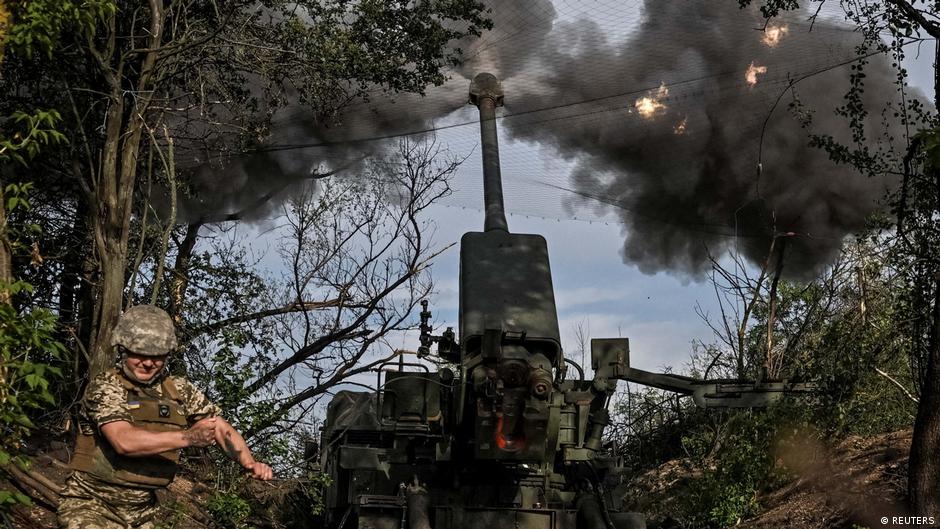
At least 20 Russian officers were killed after a Ukrainian missile strike on Russian-occupied Donetsk on August 26, according to findings reported by Mediazona. The outlet said it had established the names of the officers who died and described the incident as the largest known single loss of Russian officer personnel since the start of the full-scale invasion of Ukraine.
The reported casualties are significant beyond the battlefield. For senior economic and policy decision-makers, losses within headquarters structures matter because command personnel are costly to train, difficult to replace quickly and central to the functioning of military organizations. The death of officers serving in command staffs can impose longer-term costs on operational continuity, force management and the state’s broader war-planning apparatus.
According to Mediazona, 18 of the 20 officers died on the day of the strike, while two others later succumbed to their wounds. The officers served in headquarters connected to Russia’s “Center” group of forces: the headquarters of the Central Military District and the headquarters of the 41st Combined Arms Army.
A Command-Level Loss With Wider Economic Implications
The reported deaths included seven colonels and four lieutenant colonels, according to the publication’s findings. Such ranks are not simply battlefield titles; they represent institutional experience accumulated over years. In any protracted conflict, attrition among senior and mid-level officers can affect the efficiency of deployments, logistics, training pipelines and coordination between units.
For Russia, the war has already required sustained public spending, mobilization of industrial capacity and long-term allocation of fiscal resources toward defense. A high-profile loss of headquarters personnel, if confirmed in the scale described, underlines the non-material costs of the conflict. Military hardware can be manufactured, repaired or imported through constrained channels; experienced command personnel are harder to replace at speed.
Mediazona said its journalists established the names of those killed by comparing personnel lists from the two headquarters with inheritance-case records, other state registers and military obituaries. That methodology also illustrates how open records and public memorial notices continue to shape outside assessments of the war’s human and organizational toll.
Mediazona described the August 26 strike as the largest known single loss of Russian officer personnel since the beginning of the full-scale invasion of Ukraine.
The strike took place in the evening of August 26 in Donetsk, a city occupied by Russia. Denis Pushilin, head of the occupation administration, said on his Telegram channel that the target was the Donetsk City shopping center. He added that Storm Shadow/SCALP-EG missiles were used in the attack.
Ukrainian Telegram channel Exile+ claimed that one strike hit a building that had housed research and industrial institutions before the war. Another channel, KiberBoroshno, added that one of the targets was an underground parking facility with 600 spaces beneath an unfinished residential complex. OSINT projects suggested that both sites were being used as Russian army command posts.
Policy Signals From a War of Attrition
The Donetsk strike points to a central feature of the conflict: Ukraine’s effort to degrade Russian military capacity not only at the front line but also through attacks on command infrastructure. For policymakers, this reinforces the importance of long-range precision weapons in shaping the cost structure of the war. The reported use of Storm Shadow/SCALP-EG missiles, as cited by Pushilin, places the incident within a broader contest over Western-supplied capabilities, Russian air defense and the vulnerability of rear-area military facilities.
From a macro-economic perspective, the implications are indirect but meaningful. Command losses can increase the cost of sustaining offensive operations, complicate planning cycles and generate pressure for additional training, recruitment and organizational restructuring. Those demands compete with other fiscal priorities, especially in an economy already oriented toward prolonged wartime expenditure.
The deaths of officers from the Central Military District headquarters and the 41st Combined Arms Army headquarters also underscore the concentration of expertise inside command nodes. If such nodes are increasingly exposed to strikes, military planners may need to disperse operations, harden facilities or relocate headquarters functions. Each of those responses carries costs: infrastructure spending, communications investment, security measures and potential reductions in efficiency.
For global decision-makers tracking the war’s economic trajectory, the event is another reminder that the conflict’s costs are not measured only in territorial control or equipment losses. The erosion of trained military leadership can affect the durability of campaigns and the pace at which states must invest in replacement capacity. In a long war, those hidden costs can accumulate into structural burdens.
The reported strike also intersects with broader policy debates among Ukraine’s partners. Long-range precision systems have become a crucial variable in Ukraine’s ability to strike command, logistics and military infrastructure in occupied territory. Each successful attack on such targets may influence assessments of military aid effectiveness, escalation risk and the expected duration of the conflict.
At the same time, the source material does not provide an official Russian casualty confirmation matching Mediazona’s findings. The claims rest on the outlet’s identification work and related public records, as well as statements and assertions from occupation officials, Ukrainian Telegram channels and OSINT projects regarding the alleged targets and weapons used.
Even with those limits, the reported death of at least 20 officers in a single strike marks a notable development in the war’s attritional dynamics. For economic leaders and policy strategists, the key issue is not only the immediate loss of personnel, but what it suggests about the vulnerability of command systems, the rising value of precision strike capabilities and the long-term fiscal consequences of a conflict that continues to consume both material and human capital.