US-Mediated Ceasefire Between Israel and Lebanon Signals Shift in Middle East Conflict Dynamics
Israel and Lebanon, facilitated by the US, agree on ceasefire terms aimed at de-escalating regional tensions and stabilizing the border area.
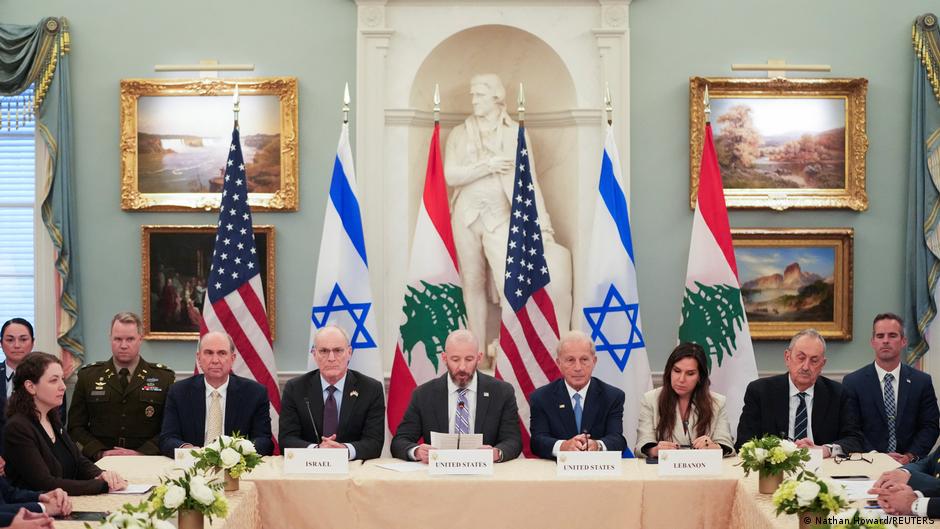
The United States Department of State announced a landmark ceasefire agreement between Israel and Lebanon, brokered under Washington's mediation. This truce marks a critical development in the volatile Levant region, with significant implications for regional stability and global economic conditions.
Terms and Conditions of the Ceasefire
The ceasefire requires a full cessation of hostilities from the Lebanese militant group Hezbollah and the withdrawal of its fighters from the area south of the Litani River in Lebanon. The agreement includes the establishment of pilot zones monitored exclusively by the Lebanese Armed Forces, reinforcing Lebanon’s sovereign control over its territory.
The ceasefire was formalized after two days of intensive negotiations in Washington involving representatives from both Israel and Lebanon. Both parties committed to continue direct talks starting the week of June 22, aiming for a comprehensive peace accord addressing outstanding issues.
"Adherence to the agreement hinges on Hezbollah's complete ceasefire and troop withdrawal, with Lebanese forces assuming exclusive control over designated buffer zones."
Context and Broader Implications
The conflict escalation traced back to March, following intensified US and Israeli military actions targeting Iran and its proxies. Hezbollah resumed rocket attacks on Israeli territory in retaliation for the death of Iran’s Supreme Leader Ayatollah Ali Khamenei, a casualty of combined American-Israeli strikes. Israel's response included heavy aerial bombardments of southern Lebanon and the Lebanese capital Beirut, alongside a ground offensive to establish a security buffer zone along its northern border.
The human cost has been severe, with Lebanese health authorities reporting approximately 2,200 casualties, including numerous civilians, and Israeli military sources estimating over 1,700 Hezbollah fighters killed since March. The precise toll among non-combatants remains uncertain.
This ceasefire and the ongoing negotiations come amid significant political shifts. Notably, the April 14 Washington talks marked the first direct diplomatic engagement between Israeli and Lebanese ambassadors since 1993. The intermittent ceasefires and subsequent escalations have underscored the fragile nature of peace in the region.
Economic and Geopolitical Consequences
For senior policymakers and economic strategists, this ceasefire represents more than a localized conflict resolution. Stability in Israel and Lebanon is pivotal for global energy markets and supply chains, given the region’s proximity to vital oil and gas transit routes. Prolonged hostilities risk disrupting these channels and elevating energy prices worldwide, exacerbating inflationary pressures.
Moreover, the US role as mediator underlines Washington’s strategic interest in curbing Iranian influence and stabilizing the Levant, which could recalibrate power balances and reduce risks to international investment and economic development in the broader Middle East.
Continued US diplomatic engagement signals a potential policy shift toward conflict mitigation through negotiation rather than escalation, which may influence future US foreign policy and economic sanctions frameworks affecting the region.
In summary, the ceasefire agreement is a pivotal step towards de-escalation, yet the path to lasting peace remains complex and contingent on sustained political will and compliance by all parties involved.