US Considers Allowing Saudi Arabia Uranium Enrichment Amid Nuclear Energy Pact Talks
US administration proposes uranium enrichment rights for Saudi Arabia without stringent IAEA safeguards, raising global proliferation concerns.
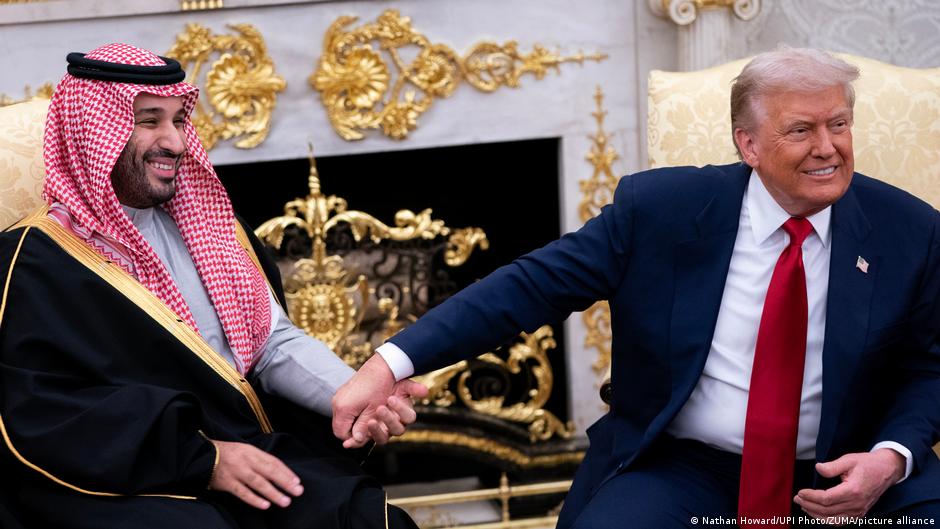
The Trump administration has reportedly agreed in principle to allow Saudi Arabia to enrich uranium without demanding full adherence to enhanced International Atomic Energy Agency (IAEA) safeguards, according to sources familiar with the negotiations. This policy shift could pave the way for Riyadh’s potential development of nuclear weapons, intensifying geopolitical tensions in the Middle East.
US-Saudi Nuclear Cooperation and Global Implications
The proposed bilateral agreement between Washington and Riyadh aims to support Saudi Arabia’s development of civilian nuclear energy. However, unlike previous US nuclear cooperation agreements with other countries, this deal reportedly lacks requirements for Saudi Arabia to join the IAEA’s Additional Protocol. This protocol grants inspectors broader access to undeclared nuclear sites, a key measure to prevent nuclear weapons development under the guise of peaceful programs.
"Allowing uranium enrichment without stringent IAEA safeguards could inadvertently facilitate Saudi Arabia’s path to nuclear weapon capabilities," experts told CNN.
Crown Prince Mohammed bin Salman of Saudi Arabia has explicitly stated that if Iran acquires nuclear weapons, Saudi Arabia would pursue the same capability. This statement underscores Riyadh’s strategic rationale amid escalating regional rivalry.
While the US and Saudi Arabia have completed their nuclear cooperation negotiations, with expectations to finalize by late 2025, the agreement remains unsigned. Delays are reportedly linked to the US-Israel conflict with Iran, which complicates the geopolitical calculus and risks undermining non-proliferation norms.
Long-Term Economic and Strategic Consequences
From a macroeconomic perspective, the US decision to permit uranium enrichment under relaxed safeguards signals a shift in non-proliferation policy that could have far-reaching implications. It risks catalyzing a nuclear arms race in the Middle East, destabilizing energy markets and global trade routes critical for oil exports.
The introduction of Saudi Arabia as a nuclear-capable state could trigger increased military expenditures across the region, diverting resources from economic development to defense. Additionally, heightened instability might deter foreign investment and complicate global energy supply chains, with potential ripple effects on inflation and growth worldwide.
Policy-makers must balance the benefits of expanding civilian nuclear energy for economic diversification against the risks of undermining international non-proliferation frameworks. The evolving US-Saudi nuclear deal exemplifies the complex interplay between strategic alliances, energy security, and global economic stability.