U.S.-Denmark Greenland Deal Signals New Economic Stakes in Arctic Security
Washington says the expected agreement would expand its military role in Greenland while reinforcing NATO’s Arctic posture and resource-security priorities.
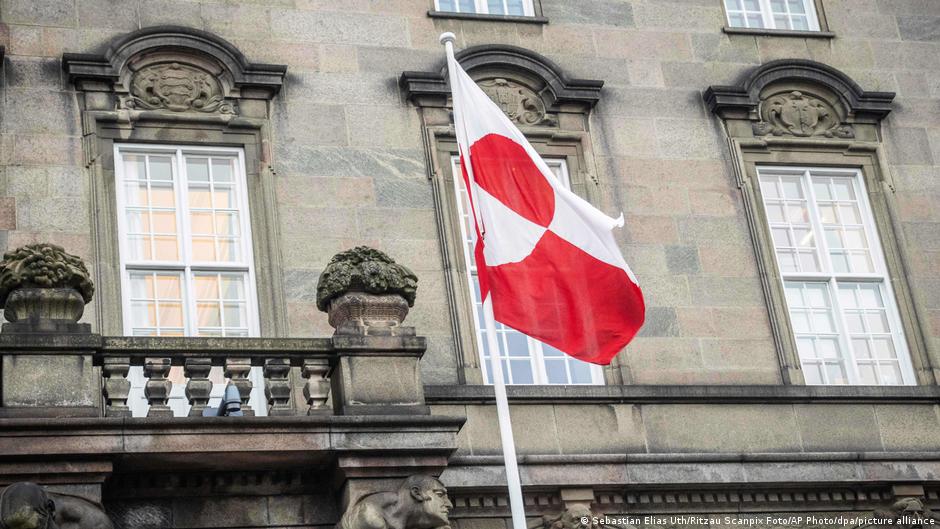
The United States, Denmark and Greenland have announced an understanding that could significantly expand Washington’s military presence on the island, a move with implications that extend well beyond defense policy into the economics of Arctic security, critical minerals and transatlantic bargaining.
U.S. President Donald Trump said the parties had reached an agreement on “Greenland’s security,” writing on Truth Social on Friday evening, September 18, that the arrangement would give the United States “permanent control over security and all other needs in Greenland.” The leaders of Denmark and Greenland confirmed that understandings had been reached with Washington, while describing the arrangement as an expected agreement rather than a finalized deal.
According to Trump, Washington has received an indefinite right to “do everything necessary in Greenland to ensure and protect the security” of both the island and the United States. He also said that, without U.S. approval, “adversaries of the United States” would be unable to establish military bases in Greenland or make “sensitive investments” in the Danish autonomous territory. Trump insisted the agreement would cost the United States “nothing.”
The White House framing presents the Greenland arrangement as a strategic victory secured without direct fiscal burden. For senior economic decision-makers, however, the broader signal is more consequential: Arctic security is becoming increasingly intertwined with investment screening, alliance burden-sharing and access to strategic resources. The agreement, if completed, would put the United States in a more durable position to shape security conditions around Greenland, a territory located off the coast of North America but formally part of the Kingdom of Denmark.
Arctic Security Becomes an Economic Policy Instrument
Trump said the United States would immediately begin expanding its military presence in several parts of Greenland. He also praised himself for concluding a deal that, in his words, his predecessors had been unable to secure for 100 years, saying its results would be highly valued by the American people.
Governments in Copenhagen and Nuuk welcomed the understandings with Washington. Danish Prime Minister Mette Frederiksen said the agreement would benefit NATO by strengthening “our common security in the Arctic and the North Atlantic region.” At the same time, a joint statement by Copenhagen and Nuuk stressed that the arrangements recognize Denmark’s “sovereignty and territorial integrity” as well as “the right of the people of Greenland to self-determination.”
“The agreement ensures and strengthens the security of Greenland, the Kingdom of Denmark, the United States and the Western alliance,” Greenland Prime Minister Jens-Frederik Nielsen said.
Nielsen added that the agreement also recognizes Greenland’s interests and its place in international cooperation. That language is economically important because Greenland’s status has long been central to any discussion of external investment, infrastructure development and resource access. A stronger U.S. security role may increase Washington’s influence over what types of capital and projects are considered acceptable in the autonomous region.
The statement presented by Nuuk and Copenhagen was titled as a press release concerning an “expected agreement” with the United States. That wording may indicate that the documents themselves have not yet been signed. Under Trump, negotiations between various countries and Washington have repeatedly broken down at the last moment, followed by accusations that the White House attempted to change deal terms “at the last minute.”
That caveat matters for markets and governments assessing the policy trajectory. An announced understanding is not the same as a fully executed agreement, particularly when it concerns sovereignty-sensitive military access, foreign investment restrictions and NATO strategy. Until the documents are signed and the legal terms are clear, companies and allied governments will have to evaluate the deal as a political signal rather than a settled operating framework.
Resource Security and Alliance Burden-Sharing
U.S. Secretary of State Marco Rubio, speaking to Fox News Digital, called the Greenland deal a “huge victory” for the United States and Americans. He said the agreement “forever guarantees U.S. security interests in the Arctic at no cost to American taxpayers.”
Rubio also suggested that the deal was made possible by Denmark and Greenland’s assessment of their own defense capabilities. “Denmark and Greenland understand that they do not have the necessary financial resources to defend Greenland in the event of an attack or threat. The United States has the necessary resources to do so,” Fox News quoted him as saying.
That argument reflects a broader shift in the economics of Western security. Smaller allied economies facing rising defense demands may increasingly accept deeper U.S. involvement in strategic territories where they lack the resources to provide full-spectrum protection. In return, Washington gains a larger role in shaping the security architecture around assets that have military, logistical and resource value.
The potential agreement could mark the end of Trump’s years-long pursuit of control over Greenland. During his first term, he said he wanted to buy the island. After returning to the White House, he intensified pressure on Denmark and its European allies, even threatening them with large customs tariffs. Trump justified his ambitions by citing U.S. security needs, while officials close to him have repeatedly noted that Greenland is rich in rare earth resources.
For global economic policy, that resource dimension is central. Rare earths are crucial to defense systems, clean-energy technologies and advanced manufacturing supply chains. Even without a direct U.S. acquisition of Greenland, a security arrangement that allows Washington to block hostile bases and “sensitive investments” could give the United States a stronger hand in determining who participates in Greenland’s future economic development.
The result is a possible new model for strategic economic statecraft: rather than purchasing territory or relying solely on commercial investment, Washington may seek long-term security rights that shape the investment environment around critical assets. For Denmark and Greenland, the trade-off is delicate. The arrangement may strengthen NATO deterrence and bring greater security guarantees, but it also raises questions about how much practical influence the United States will exercise over Greenland’s economic choices.
If finalized, the deal would reinforce the Arctic’s transition from a peripheral defense theater into a core arena of geopolitical economy. For NATO, it promises a stronger position in the North Atlantic. For Washington, it offers leverage over security and investment flows in a resource-rich region. For Greenland and Denmark, it may deliver protection while sharpening debates over sovereignty, self-determination and the future terms of economic development.