Russia Opens Three-Day Duma Vote With Occupied Territories Included
The parliamentary election extends voting across Russian-held Ukrainian regions, raising verification concerns and underscoring Moscow’s wartime policy trajectory.
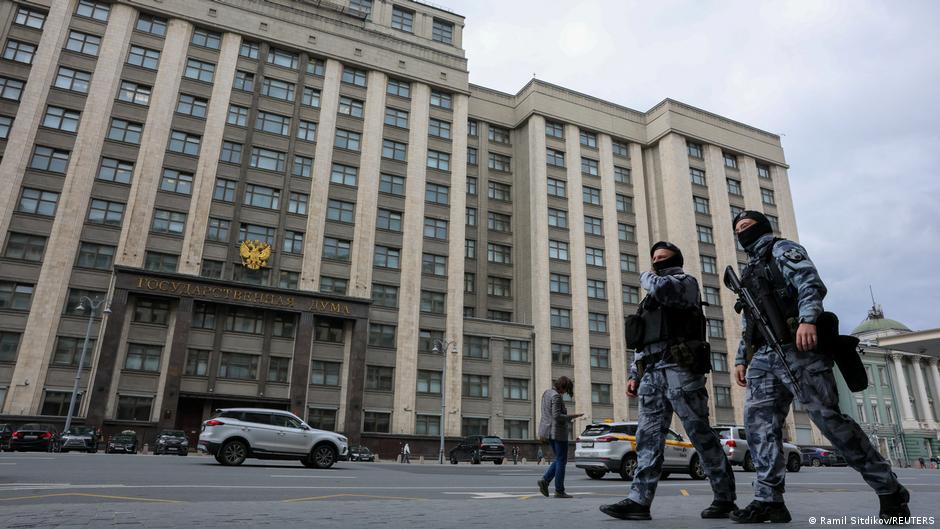
Russia formally opened three days of voting for the State Duma on Friday, September 18, beginning a parliamentary election whose economic and policy significance extends beyond the composition of the lower house. Polling stations first opened at 8:00 a.m. local time in Kamchatka and Chukotka, with voting set to continue through September 20 and regional stations scheduled to remain open until 8:00 p.m. local time.
The election is being held over three days, with early voting also conducted beforehand, including in Ukrainian territories occupied by Russia. Representatives of various Russian structures reported that participants in Russia’s full-scale invasion of Ukraine, as well as residents of regions occupied by Russia, voted early from late August through September 17.
For senior decision-makers assessing Russia’s policy direction, the vote offers a signal less about electoral competition than about institutional consolidation during wartime. The Duma’s next composition will operate in an environment shaped by military spending, sanctions pressure, restricted political competition and the continuing incorporation of occupied territories into Russia’s administrative and political framework.
Electoral Architecture and Wartime Governance
Under the current format, half of the 450 seats in the new State Duma are expected to be filled through single-mandate electoral districts, which are designed to allow voters to select individual candidates. The remaining 225 seats will be distributed through party lists. Ten parties appear on the party-list ballot after Yabloko, a party that had consistently criticized the war, was removed from participation on formal grounds. Yabloko candidates, however, remain represented in some regions as single-mandate contenders.
The previous Russian State Duma elections were held in 2021. This time, voting has been expanded to include occupied territories of Ukraine, a move that carries implications for Russia’s domestic political narrative and for the country’s long-term economic positioning. The integration of these territories into electoral procedures reinforces Moscow’s policy of administrative entrenchment, while also deepening the dispute over legitimacy that affects sanctions, diplomatic relations and investor perceptions of sovereign and legal risk.
Observers have noted that even setting aside the question of legitimacy in those regions, the Russian Central Election Commission organized the process in ways that make the results nearly impossible to verify. Authorities did not publish data on members of regional election commissions or addresses of polling stations. Open video monitoring was not organized at those sites, and the use of mobile ballot boxes was permitted.
Observers say the organization of voting in occupied regions makes the results practically impossible to verify.
The Central Election Commission also allowed local election commissions, if necessary, to print ballots on site and not transfer them to higher-level bodies immediately after the count. These procedural features matter for political risk analysis because they point to an election infrastructure in which transparency is subordinate to administrative control.
Information Control and Political Risk
Ahead of the election, pro-government media resources in Russia circulated videos suggesting that footage of ballot stuffing or manipulation at polling stations could be generated by artificial intelligence. Ella Pamfilova, chair of the Russian Central Election Commission, also stated that such technologies could allegedly replace the live image from polling stations in real time.
The framing is notable for businesses and policymakers tracking Russia’s operating environment. By warning in advance that compromising footage may be fabricated, the authorities and aligned media appear to be preparing an information environment in which documentary evidence can be challenged more readily. That dynamic increases uncertainty around institutional accountability, a factor that can feed into broader assessments of governance quality, rule of law and the reliability of public data.
None of the ten parties represented in the 2026 State Duma election has condemned the continuing war in Ukraine. Yabloko was initially allowed to participate before being removed on formal grounds. While the party was struck from the party lists, some of its members are running in single-mandate districts. Later, some of those candidates also faced pressure and removals from the ballot on various grounds, often related to older photographs and social media posts, including references to Alexei Navalny.
Shortly before the election, opposition figures Yulia Navalnaya and Maxim Katz urged Russians to vote for the strongest single-mandate candidates who are not members of United Russia. Yabloko criticized that strategy and instead advised voters to spoil their ballots.
For economic policymakers and corporate leaders, the immediate outcome of the vote is unlikely to alter the central direction of Russian policy. The more important signal lies in the structure of the election itself: the incorporation of occupied territories, the marginalization of anti-war political forces, and the use of administrative and informational controls around the voting process. Together, these factors suggest continuity in a wartime governance model that prioritizes political discipline and territorial claims over institutional openness.
That trajectory has long-term economic consequences. A Duma elected under these conditions is likely to reinforce, rather than challenge, the fiscal and regulatory choices associated with the war economy. Those choices include sustained military-related expenditure, continued adaptation to sanctions, and a greater role for the state in directing economic resources. For external decision-makers, the vote therefore serves as another marker of Russia’s structural shift toward a more insulated and politically managed economic system.