Trump Signs Graham Sanctions Law Targeting Russian Energy Buyers
The measure gives the U.S. president broad discretion to impose 100% tariffs on major buyers of Russian oil and gas.
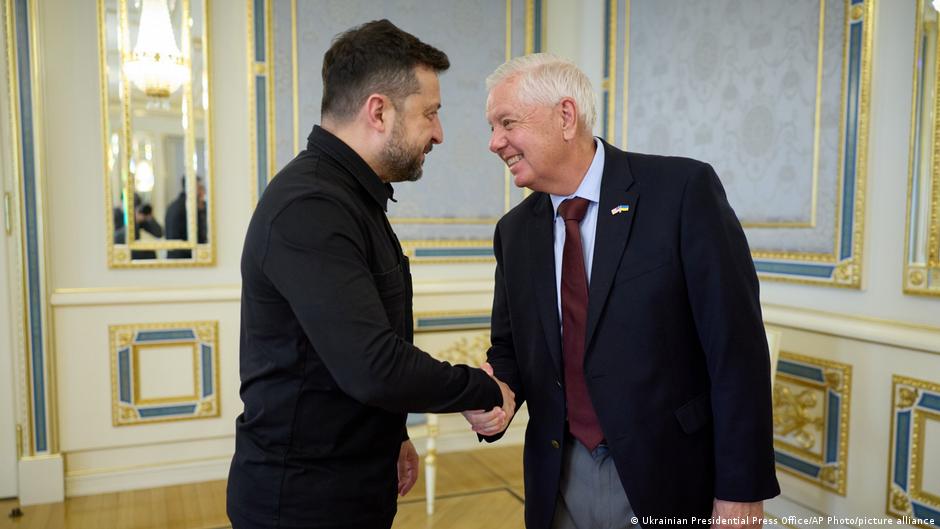
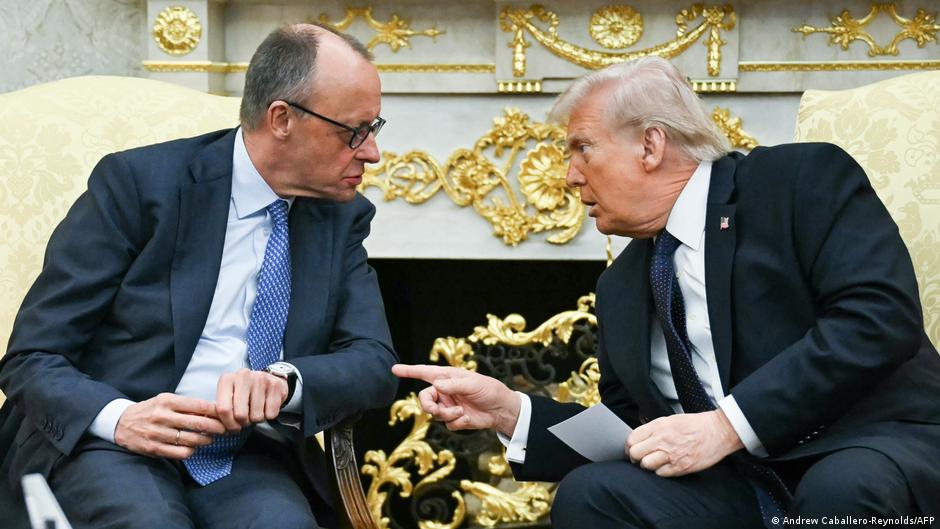
U.S. President Donald Trump on Friday, September 18, signed legislation tightening sanctions on Russia over its continuing war against Ukraine, enacting a package long associated with the late Republican senator Lindsey Graham. The law marks a significant shift in Washington’s economic pressure campaign: it targets not only Russian officials, banks, businessmen and the so-called shadow fleet, but also the international demand channels that continue to support Russian energy revenues.
The bill allows the U.S. president to impose 100% tariffs on the five largest buyers of Russian oil and gas, as well as on five countries judged to be helping Moscow circumvent energy sanctions. For global markets, the central question is not only whether the measures will be applied, but how selectively. By giving the president discretion over when to introduce or lift the measures, the law turns sanctions into a flexible instrument of economic statecraft with potential implications for energy trade, inflation and U.S. relations with major emerging economies.
The legislation includes exemptions for countries that receive less than 15% of their consumed natural gas from Russia and are taking steps to reduce that import dependence. That carve-out reflects the policy tension at the heart of sanctions design: Washington is seeking to narrow Russia’s revenue base without triggering excessive collateral damage for allies or countries still managing difficult energy transitions.
Energy Sanctions Become a Tariff Tool
The law, known in media and public debate as HR 5334 and widely referred to as the “Lindsey Graham law,” was introduced in April 2025 by Graham and Democratic senator Richard Blumenthal. Graham’s name became closely associated with the package as Trump preferred to communicate with his Republican ally during the legislative process. Over time, the proposed measures became known as “Graham sanctions.”
The original draft envisaged customs duties of up to 500% on products from Russia while Moscow continued its war against Ukraine and refused peace dialogue. The concept was that the U.S. president would periodically determine whether Russia was prepared to engage in talks and, if not, impose sanctions. Because of the 500% threshold, the proposed measures were described as “hellish.”
Those provisions were later softened. The tariff ceiling for importers of Russian oil was reduced to 100%, but the economic reach of the bill remains substantial. A 100% tariff on major buyers of Russian energy would not merely penalize Russia; it could alter pricing incentives across global commodity chains, affect refining margins and complicate trade flows for countries that depend on discounted Russian crude or gas.
The bill also extends U.S. sanctions related to Iran until 2031, adding another long-term geopolitical variable for companies, banks and governments planning exposure to sanctioned energy markets.
“I thank President Trump for signing this extremely important law. I thank all senators and members of the House of Representatives who supported it,” Ukrainian President Volodymyr Zelensky wrote on Telegram.
Zelensky emphasized the importance of increasing pressure on Moscow to end the war. He also invoked Graham’s conviction that the United States had sufficient power to confront dictators and achieve results if it acted “correctly.”
Presidential Discretion Raises Policy Stakes
The most consequential macroeconomic feature of the final law may be institutional rather than numerical. By the time Trump signed the legislation, the bill had changed in ways that significantly expanded presidential authority. Trump now has the power to decide whether to impose or cancel the measures specified in the law, differing from the usual practice in which such actions require coordination with Congress.
That discretion gives the White House a potentially powerful negotiating lever. It may allow the administration to calibrate tariffs in response to battlefield developments, diplomatic signals from Moscow, or the behavior of third countries. But it also increases uncertainty for firms and governments, especially those exposed to Russian energy purchases, dollar settlement channels or cross-border shipping networks.
The source article notes that the final form of the legislation also allows Trump to use its provisions in the continuation of his trade war against China. That possibility expands the law’s relevance beyond the Russia-Ukraine war. If applied against major energy buyers, the sanctions could become part of a broader trade confrontation, linking security policy, tariff policy and global energy pricing in a single framework.
Democratic minority leader Hakeem Jeffries criticized the breadth of the authority granted to the president, warning of negative consequences for Americans already facing high living costs.
“Life in the United States is too expensive. Why should Congress or the House of Representatives give the president unlimited powers to impose new tariffs around the world that will have negative economic consequences for the American people? I cannot do that,” Jeffries said.
His objection points to a broader macroeconomic risk. Tariffs aimed at constraining Russia’s energy revenues may raise costs along supply chains if they disrupt trade patterns or push energy buyers toward more expensive alternatives. Even if the measures are not immediately deployed, their existence can influence risk premiums, contractual terms and hedging behavior in global energy markets.
During the debate over the Graham-Blumenthal initiative, Trump alternated between supporting and opposing such measures. Lobbying for the document continued for about a year and a half. Graham did not live to see the bill become law; the senator died on July 11, 2026.
Supporters argue that the law sends an important signal of U.S. backing for Ukraine at a time when the intensity of fighting is increasing. For senior economic decision-makers, however, the signal is also structural. Washington is reinforcing a sanctions model that increasingly targets networks around sanctioned states, not only the states themselves. The practical effect will depend on enforcement choices, exemptions and how other governments respond to the threat of U.S. tariffs.
The new law therefore sits at the intersection of war financing, energy security and trade policy. Its immediate political purpose is to increase pressure on Moscow. Its longer-term economic consequence may be to normalize the use of tariff authority as a sanctions instrument against third-country energy relationships, reshaping how governments and corporations price geopolitical exposure in global commodity markets.