Merz Says Era of Unconditional Transatlantic Friendship Has Likely Ended
Germany’s chancellor frames worsening ties with Washington as a strategic inflection point for Europe’s largest economy.
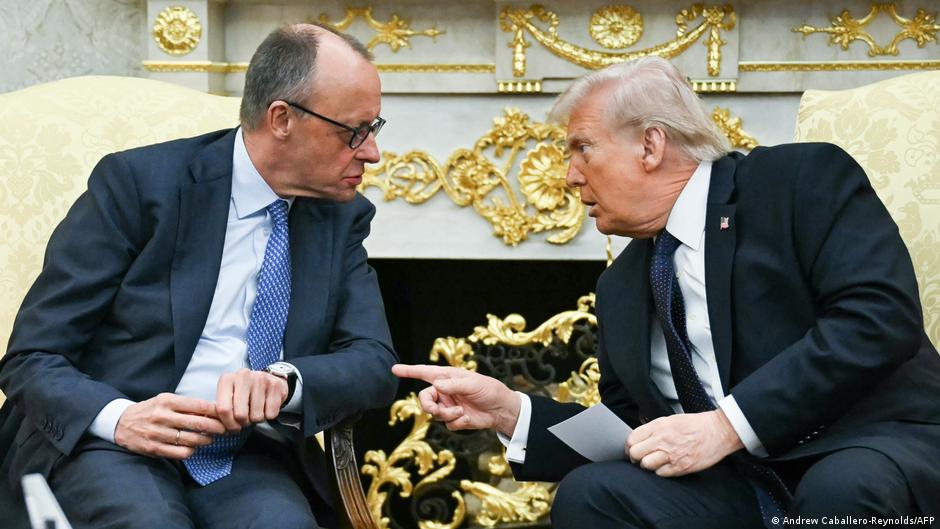
German Chancellor Friedrich Merz has signaled a lasting break in Berlin’s assumptions about its relationship with Washington, saying the period of “unconditional transatlantic friendship” has probably receded into the past for a long time. Speaking at a Christian Democratic Union campaign event in Berlin on Thursday, September 17, Merz described a shift in U.S. political thinking and in Washington’s assessment of the transatlantic alliance that, in his words, Germany may once have found difficult to imagine.
The remarks point to a broader economic and strategic recalibration inside Europe’s largest economy. For senior decision-makers, the significance lies not only in the deterioration of relations between Berlin and Washington under U.S. President Donald Trump, but also in the policy response Merz is urging: greater German responsibility for security, development and long-term competitiveness at a time of geopolitical fragmentation.
“We are observing on the other side of the Atlantic a change in political approaches and in the assessment of the transatlantic alliance that we perhaps could not have imagined,” Merz said, according to dpa.
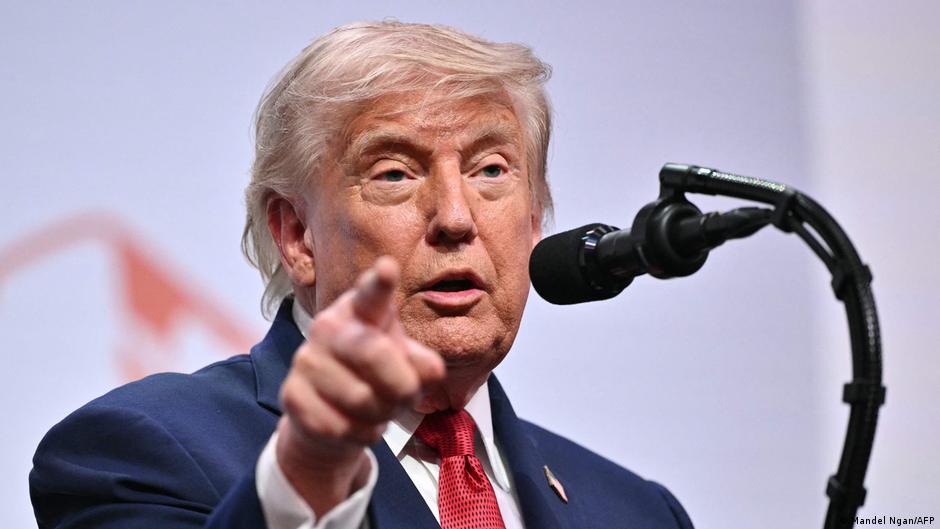
The statement came against a backdrop of worsening relations with Trump over disagreements surrounding the U.S. and Israeli war against Iran, as well as trade wars initiated by the White House. At the start of Trump’s second presidential term, his attitude toward Merz had been favorable. Relations deteriorated, however, after Merz declined to support the United States in the war with Iran. Trump subsequently began criticizing German authorities, including by attributing false statements to Merz.
A Strategic Shock With Economic Consequences
For Germany, the erosion of automatic alignment with Washington comes at a sensitive moment. The country is emerging from several years of economic stagnation, while its export-driven model faces pressure from trade conflict, supply-chain risk and higher security costs. Merz’s comments suggest that Berlin sees the transatlantic rupture not only as a diplomatic challenge, but also as a macroeconomic forcing mechanism.
The chancellor argued that tensions between Europe, including Germany, and the United States create new opportunities that should not be missed. Germany, he said, must seize the moment and assume more responsibility for its own security and development. He pointed in particular to the federal government’s significant increase in defense spending, a shift with direct implications for fiscal priorities, industrial policy and Europe’s defense production base.
That framing matters for investors and corporate leaders because it links foreign policy uncertainty with domestic economic restructuring. Higher defense expenditure may support parts of the German industrial sector, but it also raises questions about budget trade-offs, procurement capacity and the longer-term balance between military readiness and productivity-enhancing reform.
Merz also sought to connect the strategic debate to signs of economic stabilization. He said forecasts indicate that Germany’s economy is expected to grow by around 1.3 percent in 2026. Germany, he said, has emerged from the “valley” of a shrinking or stagnant economy, while stressing that reforms remain necessary.
“We have come out of this valley of a shrinking or stagnating economy,” Merz said, while adding that the country still needs reforms.
The growth figure is modest, but politically important. After years of weak performance, even a limited recovery gives Berlin more room to argue for a new economic policy mix. Yet the chancellor’s insistence on reform underscores that the recovery is not being presented as self-sustaining. The broader message is that Germany’s next phase of growth will need to be built in a less predictable geopolitical environment, with fewer guarantees from its most important security partner.
Political Frictions Add to Policy Risk
The deterioration in relations has also taken a domestic political turn. Earlier in September, Trump congratulated the far-right Alternative for Germany on its victory in state elections in Saxony-Anhalt. The gesture marked another instance of support from Washington for German right-wing populists, which had already drawn criticism in Berlin.
German officials reacted with irritation. Metin Hakverdi, the federal government’s coordinator for transatlantic cooperation, said Germans were capable of deciding for themselves how to address migration and whom to elect. He added that Germany did not need advice from the White House on the matter.
For policymakers, the episode highlights how transatlantic friction is no longer limited to defense burden-sharing or trade policy. It now intersects with domestic electoral politics, migration and the legitimacy of mainstream institutions. That increases policy risk for companies and governments operating across the Atlantic, because political signaling from Washington can reverberate inside European electoral systems and complicate consensus-building in Berlin.
Later on Thursday, German government spokesperson Stefan Kornelius said Merz and Trump had held a phone call that Berlin had previously postponed. According to Kornelius, Merz discussed with Trump the “next steps to end” Russia’s war against Ukraine, welcomed the U.S. Congress’s adoption of a sanctions package against Russia initiated by Senator Lindsey Graham, and addressed shipping problems in the Strait of Hormuz and the Red Sea caused by the war in Iran.
The call had originally been planned around the anniversary of the September 11, 2001 terrorist attacks, which Merz also recalled during the conversation. But one day before the scheduled call, Berlin postponed it indefinitely without giving reasons. The postponement followed Trump’s praise for the Alternative for Germany after its strong victory in the Saxony-Anhalt state parliament election.
The sequence illustrates the new operating environment for German policy: cooperation with Washington remains necessary on Ukraine, sanctions, maritime security and global trade routes, even as political trust weakens. For the global economy, that combination is consequential. Germany still depends on stable shipping corridors, predictable trade rules and coordinated sanctions policy. But if the political foundation of the alliance becomes more conditional, businesses may face a more fragmented risk landscape.
Merz’s intervention therefore reads less as a rhetorical break with the United States than as a warning that Germany must price in a durable change in U.S. behavior. The economic implications are substantial: more defense spending, deeper European security coordination, a stronger push for domestic reform, and a likely reassessment of supply chains and investment assumptions shaped over decades by U.S.-European alignment.
For senior decision-makers, the message from Berlin is clear. The transatlantic relationship is still operationally important, but it can no longer be treated as an unconditional anchor for German strategy. In Merz’s view, that shift creates risk, but also an opening for Germany to redefine the foundations of its security, growth and economic sovereignty.