Drone Strikes Halt Major Yaroslavl Refinery, Deepening Russia’s Fuel Stress
The shutdown of the YANOS refinery adds pressure to Russia’s fuel market and exposes a widening vulnerability in its energy infrastructure.
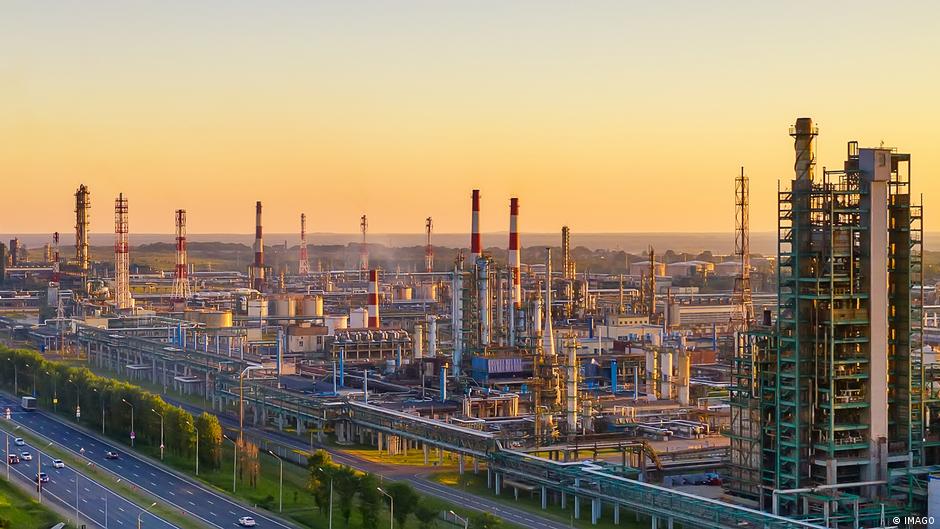
A major Russian oil refinery in Yaroslavl has stopped crude processing and fuel shipments after Ukrainian drone attacks damaged key production units, according to Reuters, intensifying strains in Russia’s domestic fuel market and raising broader questions about the resilience of the country’s energy infrastructure.
The Slavneft-Yaroslavnefteorgsintez refinery, known as YANOS, is one of Russia’s largest refining facilities and had supplied fuel to the Moscow region. Industry sources cited by Reuters said the plant halted oil processing and fuel loadings after a drone attack during the night of September 17 damaged its AVT-3 crude distillation unit. The unit accounted for 40 percent of the refinery’s capacity.
Yaroslavl regional governor Mikhail Yevrayev confirmed that the plant sustained damage and that a fire broke out at the site. The blaze took several hours to extinguish. The incident followed an earlier attack on the night of August 28, when another unit, AVT-4, was put out of service. That unit represented about 33 percent of YANOS capacity and had not resumed operations.
The combined impact has left one of Russia’s top refineries unable to continue exchange-based fuel shipments, at a time when the country is already dealing with acute shortages of gasoline in multiple regions.
A refinery outage with macro-economic implications
YANOS is ranked by media reports among Russia’s five largest refineries by crude-processing volume and is also described as being in the country’s top 10 refining plants. Its stated capacity is 15 million tonnes of crude per year. The AVT-3 unit alone was capable of processing around 17,000 metric tonnes of feedstock per day.
Before the latest disruption, the refinery supplied more than 2.6 million tonnes of gasoline and 4 million tonnes of diesel annually to markets, including the Moscow region. That role makes the outage economically significant beyond the immediate damage to a single industrial facility. In an economy where fuel availability affects logistics, agriculture, consumer mobility and regional price stability, the shutdown adds another layer of pressure to Russia’s wartime economic management.
The Yaroslavl refinery is now the second major refinery in the region to suspend operations in September because of the consequences of drone attacks. Since September 6, Rosneft’s refinery in Ryazan, which has capacity of 17 million tonnes of crude per year, has not been shipping fuel. Together, the Yaroslavl and Ryazan disruptions point to a growing vulnerability in Russia’s refining network rather than isolated operational incidents.
Russia’s refining sector is increasingly being tested not only by the direct physical damage from strikes, but by the cumulative market effects of repeated outages.
For senior economic decision-makers, the key issue is not simply the loss of refinery capacity. It is the interaction between infrastructure risk, fuel market tightness and policy credibility. Repeated attacks can force the government to balance military priorities against domestic economic stability, particularly if shortages spread or persist.
Fuel shortages test the Kremlin’s policy response
Ukrainian strikes on Russian oil-refining facilities contributed to a fuel crisis in Russia over the summer. The Kremlin and President Vladimir Putin have acknowledged the problem only reluctantly. Putin has described fuel difficulties as “temporary” and said attacks on refineries are not capable of influencing developments on the front.
However, data cited from Gdebenzin, a service aggregating websites and tools related to fuel searches in Russia, suggest a sharper domestic supply problem. In mid-September, gasoline grades AI-92 and AI-95 were unavailable at roughly half of the country’s filling stations. The figures fluctuated day to day, but a chart cited by Novaya Gazeta Europe showed that acute fuel shortages had continued in Russia since mid-August.
Such shortages matter because refined fuels are a central input across the economy. Sustained disruption can raise transport costs, complicate supply chains, pressure regional budgets and feed into consumer inflation. Even if headline macro indicators remain managed through state intervention, local shortages can undermine confidence in the government’s ability to insulate households and businesses from the economic consequences of war.
The repeated fires at YANOS also indicate a pattern of operational stress. Since the start of Russia’s full-scale war against Ukraine, the Yaroslavl plant has been struck repeatedly by Ukrainian drones. In 2026, fires occurred at the enterprise at least eight times.
Energy infrastructure becomes a policy bargaining point
The refinery disruptions are also feeding into diplomacy around energy infrastructure. In mid-September, Kremlin spokesman Dmitry Peskov spoke positively about U.S. President Donald Trump’s idea of an “energy truce,” under which Ukrainian attacks on Russian refineries would stop. Asked whether Russia would in return cease strikes on Ukrainian infrastructure, Peskov did not answer.
That asymmetry is politically significant. Moscow is signaling interest in protecting its own refining system from further damage while avoiding a public commitment to halt attacks on Ukraine’s infrastructure. For policymakers and investors monitoring the conflict’s economic spillovers, this suggests that energy assets remain both strategic targets and bargaining instruments.
The shutdown at YANOS therefore has consequences beyond regional fuel supply. It highlights the extent to which Russia’s downstream oil sector has become exposed to wartime disruption, even far from the front line. It also underlines the limits of a policy approach that treats fuel shortages as temporary while repeated outages erode refining capacity and complicate distribution.
For global markets, the immediate effect is not necessarily a crude supply shock, since the disruption concerns refining rather than extraction. But the longer-term implications are broader. If Russian refining capacity remains vulnerable, domestic fuel imbalances could shape export policy, product flows and Moscow’s willingness to negotiate limits on infrastructure targeting. In that sense, the Yaroslavl outage is both an industrial incident and a signal of how the war is increasingly pressing into the economic machinery behind Russia’s energy system.