Ukraine's Zelensky Proposes National Pantheon and European Order Amid Diplomatic Strains with Poland
President Zelensky initiates new Ukrainian national honors to reinforce national identity amid tensions with key EU ally Poland.
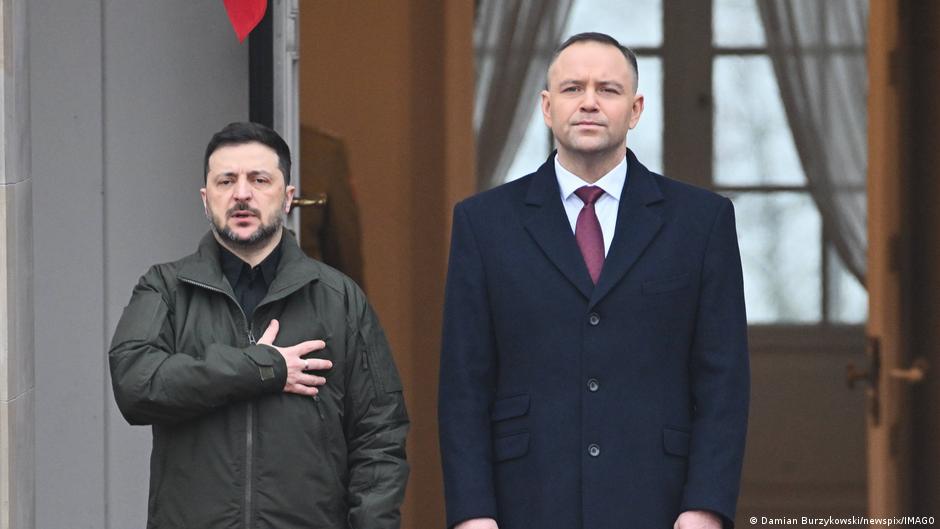
On June 28, Ukrainian President Volodymyr Zelensky called for the establishment of a Ukrainian National Pantheon to honor heroes who have fought for Ukraine across centuries. Speaking at the Constitution Day celebrations, Zelensky emphasized the importance of commemorating those who inspired the nation, stating that these names "will be united and forever inscribed in our history with great respect and attention from the state." He further asserted, "No one will ever dictate how we live, speak, whom to love, to whom to be grateful, and which heroes to honor."
National Identity and Diplomatic Frictions
This initiative comes amid escalating diplomatic tensions between Ukraine and Poland. The dispute centers on Zelensky’s recent decision to name a Ukrainian Armed Forces unit after the "heroes of the Ukrainian Insurgent Army" (UPA), a move sharply criticized by Warsaw. The UPA is associated in Poland primarily with the Volhynia massacre during World War II—a tragic episode officially recognized by Poland as genocide.
Polish President Karol Nawrocki responded by revoking Zelensky's highest Polish honor, the Order of the White Eagle. Zelensky dismissed this action with irony, noting that the order had never been revoked from historical figures such as Catherine the Great, Benito Mussolini, or Gerhard Schröder, and remarked that Ukraine would not contest the issue. Warsaw countered that the award is not revoked posthumously and that Schröder never committed acts offending the Polish nation.
The revocation triggered a chain reaction whereby several of Zelensky’s associates returned Polish awards, and similarly, some Polish politicians returned Ukrainian state honors to Kyiv. Among these figures was Jarosław Kaczyński, leader of the national-conservative Law and Justice Party (PiS), currently in opposition. Kaczyński also urged the Polish government to block EU accession negotiations with Ukraine. According to the Financial Times, PiS appears to leverage this diplomatic dispute to mobilize voters ahead of Poland’s October 2027 parliamentary elections.
"No one will ever dictate how we live, speak, whom to love, to whom to be grateful, and which heroes to honor," Zelensky declared, underscoring Ukraine's assertion of sovereign cultural identity.
Public opinion in Poland reflects the diplomatic strain. A mid-June poll found that 58.3% of Poles view Zelensky’s stance toward Poland negatively, with only 30.1% expressing the opposite. The revocation of his award was generally well-received, coinciding with a record-high trust rating for President Nawrocki at 54.8%.
The Order of Europe: A Symbol of Ukraine’s Euro-Atlantic Aspirations
Alongside the National Pantheon proposal, Zelensky submitted legislation to the Verkhovna Rada to establish a new state decoration—the Order of Europe. He asserted that Ukraine "deserves to have an order with this name" due to its continuous struggle for Europe’s survival.
The Order of Europe would be awarded to Ukrainians who defend security and advance the future of Europe, as well as to foreigners with similar meritorious contributions. Notably, the European Union itself does not currently have an award titled "Order of Europe." The EU’s sole distinction, the European Order of Merit, was instituted in 2025, and Zelensky is among the first recipients.
These moves symbolize Ukraine’s effort to solidify national historical narratives and deepen its integration with European institutions amid ongoing geopolitical challenges, particularly as it seeks EU membership. However, the diplomatic fallout with Poland, a key EU member state and strategic ally in Ukraine’s defense against Russian aggression, highlights the complex interplay between national memory, international diplomacy, and long-term geopolitical alignments.
For senior policymakers, the Ukrainian initiatives reflect a broader pattern of nation-building that intersects with external alliances. Balancing historical recognition with sensitive international relationships will remain a critical challenge for Kyiv as it navigates its Euro-Atlantic trajectory.