Polish Opposition Leader Calls to Block Ukraine’s EU Accession Amid Bilateral Tensions
Jarosław Kaczyński urges Warsaw to halt Ukraine’s EU talks, citing escalating conflicts and domestic political considerations.
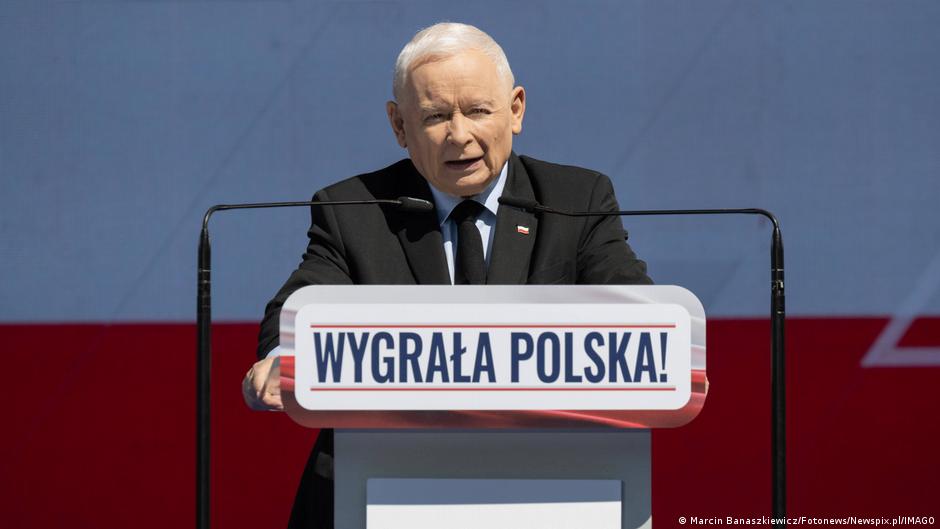
Jarosław Kaczyński, leader of Poland's opposition national-conservative Law and Justice party (PiS), has publicly called on the Polish government to block negotiations on Ukraine's accession to the European Union. This move underscores rising tensions between Warsaw and Kyiv, with significant implications for EU enlargement and regional stability.
Kaczyński leveled accusations against Kyiv for exacerbating diplomatic conflict with Poland, pointing specifically to recent symbolic gestures and historical disputes. He emphasized his disapproval by announcing his intention to return a medal awarded to him by Ukraine, framing his protest as directed more at the Ukrainian elite than the Ukrainian people.
Escalating Bilateral Disputes and Political Stakes
"The Ukrainian leadership has violently escalated a war of orders with Warsaw," Kaczyński stated, highlighting the depth of current disagreements.
The immediate catalyst for the deterioration in relations was Ukrainian President Volodymyr Zelensky's decision to name a unit of the Ukrainian Armed Forces after the Ukrainian Insurgent Army (UPA), a group regarded in Poland as responsible for atrocities during World War II. In response, Polish President Andrzej Duda (note: the source mentions Karol Nawrocki, head of the Polish Institute of National Remembrance, but the highest authority awarding state decorations is the President) revoked Ukraine’s highest honor, the Order of the White Eagle, previously bestowed on Zelensky. This act of diplomatic sanction was followed by several senior Ukrainian officials returning their Polish decorations in protest, and Zelensky ultimately withdrew from attending the Ukraine Recovery Conference held in Gdańsk.
The contrasting historical narratives of UPA contribute to the diplomatic crisis. In Ukraine, the UPA is commemorated as a resistance force fighting for independence, while in Poland, it is primarily associated with the Volhynia massacres of 1943-1944, a highly sensitive topic in Polish collective memory.
This intensified discord unfolds against the backdrop of divergent political strategies within Poland. While Kaczyński adopts a confrontational stance, Poland’s Prime Minister Donald Tusk recently inaugurated the Ukraine Recovery Conference, which culminated in the signing of over 160 agreements valued at more than €10 billion, underscoring Poland’s ongoing commitment to Ukraine’s post-conflict reconstruction and European integration.
Observers link Kaczyński's position to domestic politics ahead of Poland’s parliamentary elections scheduled for October 2027. The Law and Justice party appears to be courting voters concerned about the economic impact of Ukrainian agricultural imports and the fiscal burden associated with hosting a large population of Ukrainian refugees.
Broader Economic and Political Ramifications
Should Warsaw follow through on blocking Ukraine’s EU accession talks, the consequences could ripple across the continent. The EU's enlargement policy, already fraught with complications, would face a potent challenge, complicating Kyiv’s integration prospects amid its ongoing conflict with Russia. This stance may also signal shifting priorities within the EU’s eastern neighborhood policy, potentially encouraging other member states to adopt more cautious or transactional approaches toward Kyiv.
Furthermore, the Polish opposition’s framing taps into broader populist economic anxieties. Ukrainian agricultural imports have indeed affected Polish farmers, intensifying competition in domestic markets. Simultaneously, the long-term costs of refugee support and integration are emerging as politically sensitive topics across the EU, making Poland’s internal debate a microcosm of wider European challenges.
As Poland navigates these complex dynamics, its position will significantly influence the trajectory of Ukraine’s European integration and the EU’s geopolitical posture in Eastern Europe.