US-Iran Military Strikes Escalate Tensions Affecting Strait of Hormuz and Global Supply Chains
US retaliates against Iran’s attack on commercial vessel with targeted strikes, triggering reciprocal missile fire and raising global economic concerns.
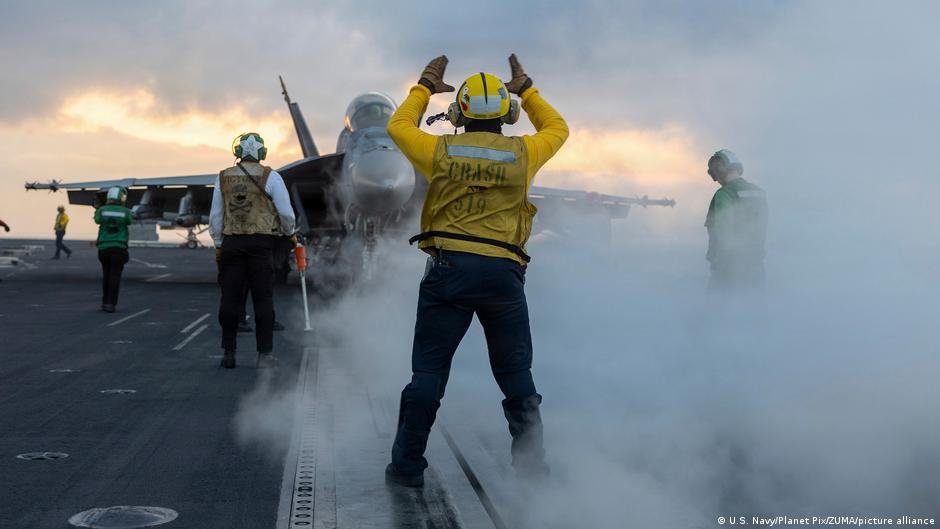
On June 26, US military forces executed precision strikes against Iranian missile and drone storage sites as well as coastal radar installations following an Iranian drone attack on a commercial vessel transiting the Strait of Hormuz. This military exchange between the United States and Iran marks a significant escalation in tensions within a strategically critical maritime corridor responsible for a substantial share of global oil shipments.
Strategic and Economic Implications of the Conflict
The US Central Command (CENTCOM) confirmed that the strikes were a calculated response to Iran’s assault on the Singapore-flagged cargo ship Ever Lovely on June 25. The vessel was navigating out of the Strait of Hormuz along the Omani coastline when targeted by an Iranian kamikaze drone. According to CENTCOM, this attack was an unprovoked breach of the recently agreed ceasefire framework and disrupted the fragile stability in a region essential for international maritime trade.
In retaliation, Iran’s Islamic Revolutionary Guard Corps (IRGC) launched missile strikes on US military bases in the Middle East and issued stern warnings of more extensive responses should American forces engage in further actions. Iranian officials maintain that their actions are justified under a deal signed with the US, which purportedly grants Iran authority over shipping routes in the Strait of Hormuz. They accuse Washington of provocations aimed at undermining this agreement.
"The United States attempted provocations to violate the commitments, to which Iran has responded appropriately," stated the IRGC.
This confrontation comes shortly after a June 17 framework agreement intended to halt hostilities and facilitate the reopening of this crucial waterway. The attack on Ever Lovely was the first of its kind since the accord and occurred mere hours after the IRGC declared that maritime passage would only be guaranteed along routes under Iranian control, raising concerns over navigational freedom and security for international vessels.
The International Maritime Organization (IMO), a United Nations specialized agency, has consequently suspended evacuation operations for hundreds of vessels and over 11,000 sailors stranded in the Persian Gulf amid the ongoing US-Israel military campaign against Iran. Furthermore, these developments have precipitated a surge in global oil prices, exacerbating volatility in energy markets and amplifying the risk profile for supply chains that depend on stable transit through the Strait of Hormuz.
US President Donald Trump publicly condemned Iran’s actions as a "stupid" violation of the ceasefire, highlighting that Iran deployed at least four drones against vessels in the strait. This rhetoric underscores the fragile geopolitical environment and the potential for further destabilization, with significant repercussions for global trade and energy security.
Long-Term Economic Consequences and Policy Challenges
The ongoing military exchanges between the US and Iran in the Strait of Hormuz threaten to disrupt one of the world's most vital choke points for oil transportation. Approximately 20% of global oil trade passes through this narrow waterway. Hence, any sustained instability poses a risk of prolonged oil supply disruptions, which could elevate energy prices worldwide and impair economic growth, especially in energy-importing nations.
Policymakers face complex challenges in balancing deterrence and de-escalation to maintain open sea lanes critical for global commerce. The conflict illustrates how regional military confrontations can rapidly escalate into broader economic shocks, emphasizing the interconnectedness of geopolitical stability and macroeconomic performance.
As tensions evolve, international stakeholders must consider the potential consequences on global energy markets, shipping insurance costs, and the broader global economy. Strategic diversification of energy sources and increased diplomatic efforts to reinforce maritime security protocols are increasingly imperative to mitigate risks stemming from such regional conflicts.