Austrian City of Graz Elects Communists, Signaling Shifts in Urban Political Economy
Communist Party secures leading position in Graz city council elections with housing policy focus, reflecting broader socio-economic trends.
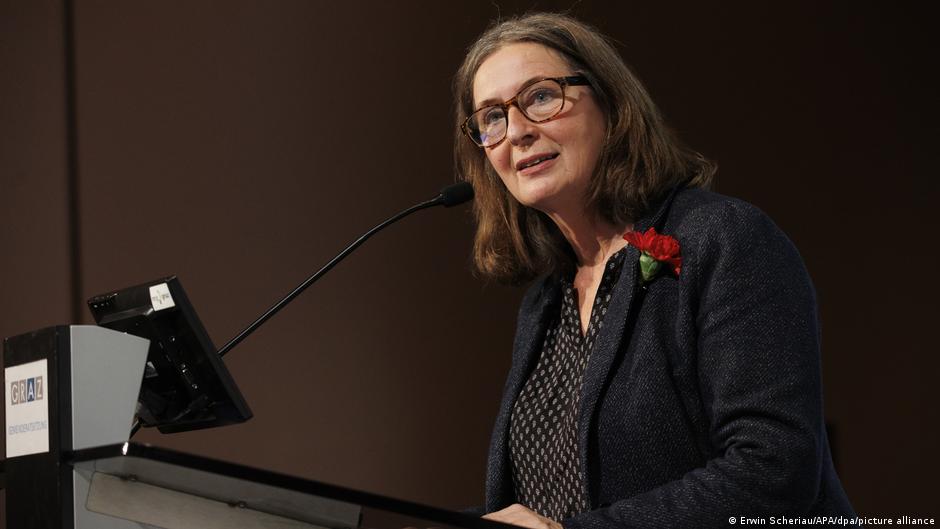
In a notable political development, the Communist Party of Austria (KPÖ) has won the city council elections in Graz, the country's second-largest city, securing 35.63% of the vote. This victory, marking their second consecutive win since 2021, highlights a distinctive urban political landscape diverging from national trends.
Urban Policy Priorities and Voter Sentiment
The KPÖ’s electoral success is largely attributed to its emphasis on pragmatic housing policies and a restrained rhetoric style that resonates with the local electorate. The party's rise in Graz—from 28.84% in 2021 to 35.63% in 2024—reflects sustained public demand for affordable housing and social welfare measures amid growing economic pressures. KPÖ’s 18 seats out of 48 in the city council allow it to maintain significant influence over municipal governance.
Elke Kahr, elected mayor in 2021 with support from Social Democrats and Greens, played a central role in consolidating the party’s position. Known for her expertise in housing and urban development, Kahr’s leadership signals an urban policy approach that balances social objectives with political pragmatism, avoiding overt populism or polarizing debates.
“Graz votes differently” continues to hold true, as the city’s electorate favors socially focused, moderate communist policies despite the party’s lack of national parliamentary representation for over six decades.
Indeed, while KPÖ remains outside the federal parliament—persistently falling short of the national electoral threshold—their localized strength challenges traditional political dynamics and underscores socio-economic disparities influencing voter behavior.
Implications for Austria’s Political Economy and EU Policy
On the broader stage, the Graz election outcome signals potential shifts in urban economic governance models amid wider European challenges. With rising living costs and housing shortages exerting pressure on city populations, Graz exemplifies how leftist municipal governance can offer alternative frameworks focused on social equity and public welfare.
However, some policy positions raise complex questions. Mayor Kahr has openly criticized EU sanctions imposed on Russia following the 2022 invasion of Ukraine, describing them as ineffective and burdensome to ordinary citizens despite condemning the aggression itself. This nuanced stance reflects tensions between geopolitical alignment and local economic consequences, illuminating the intricate balance between international policy and domestic socio-economic stability.
Nationally, the election results contrast with Austria’s federal parliamentary landscape, where conservative Austrian People’s Party (ÖVP) leads a coalition government and right-wing populists maintain significant support. In Graz, the ÖVP secured 25.35% of votes, and the Greens 14.84%, while the far-right Freedom Party (FPÖ) received 12.2%, placing them fourth in the city council race despite their national prominence.
This divergence underlines the complexity of Austria’s political economy, where localized political models can deviate significantly from national trends, reflecting varied socio-economic conditions and policy priorities.
Experts suggest that Graz’s model—prioritizing housing affordability and measured social policies under communist leadership—may offer insights for urban centers across Europe grappling with socio-economic inequalities and housing crises.
As European policymakers evaluate responses to inflation, housing shortages, and geopolitical tensions, Graz’s experience may inform more nuanced approaches to municipal governance, emphasizing social equity without succumbing to divisive political rhetoric.