Trump Plans Putin Call as Russia Faces Questions Over Possible Plague Case
Reports of a laboratory worker’s death in Irkutsk have prompted WHO requests for more information and raised the stakes for health transparency.
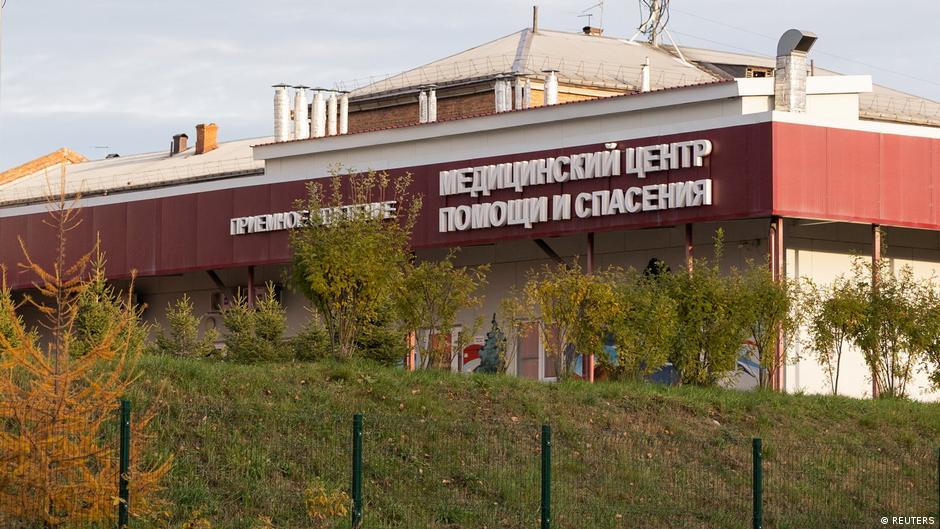
U.S. President Donald Trump plans to speak by phone with Russian President Vladimir Putin amid reports that a 28-year-old laboratory worker at the Irkutsk Anti-Plague Institute may have died from plague, a development that has quickly moved from a regional public health concern into a matter with international policy implications.
The White House said on Tuesday, October 6, that a call between the two leaders had been “scheduled” after Trump was asked by reporters whether he had discussed the events in Irkutsk with Putin. The issue has attracted attention because of the possible involvement of a high-risk pathogen, the death of a specialist working at an anti-plague institution, and the apparent gap between local reports, official Russian statements, and the World Health Organization’s request for further clarification.
For senior economic decision-makers, the episode underscores a recurring macroeconomic lesson from recent years: health security is no longer a separate public policy category. Uncertainty around infectious disease risks can affect labor mobility, industrial operations, cross-border confidence, public spending priorities, and geopolitical communication. Even when a suspected outbreak is ultimately contained or disproven, the policy response and information flow can shape market and diplomatic assessments.
WHO Seeks Additional Information From Russia
WHO Director-General Tedros Adhanom Ghebreyesus said overnight on October 7 on X that the organization was in contact with Russian health authorities and had offered technical support. According to his account, Russian health authorities told WHO that no plague cases had recently been registered in the Irkutsk region.
Russian authorities said an epidemiological investigation had been carried out, preventive and control measures had been taken, and identified contacts had been placed under medical observation and tested.
Tedros added that the authorities informed WHO that no high-threat pathogens had been detected among the contacts and that medical monitoring of all identified contacts had been completed. At the same time, WHO requested additional information to clarify the cause of the severe pneumonia, the pathogen that prompted public health measures, and media reports about a second employee with pneumonia of unknown origin.
The request for more detail is significant because, in global health governance, the credibility of containment measures depends not only on whether they are implemented but also on whether outside institutions can assess the data behind them. That is especially important when reports concern a disease such as plague, which is historically associated with severe outbreaks but is also treatable under modern medical conditions when identified and managed promptly.
Russian Officials Point to Pneumonia, Not Confirmed Plague
The case centers on the death of Daria Shipilova, a 28-year-old laboratory assistant at the Irkutsk Anti-Plague Institute. She died overnight on October 2 at Shelekhov District Hospital in the Irkutsk region. Alexey Tsydenov, the head of neighboring Buryatia, initially wrote on the Max platform that the cause of death was plague. He later edited the message to add the word “possibly.”
Russia’s consumer health watchdog, Rospotrebnadzor, said the deceased woman had been diagnosed with pneumonia of unknown cause. Igor Kobzev, the governor of the Irkutsk region, said there was suspicion of a “particularly dangerous infection,” but did not name the presumed diagnosis.
The economic relevance of these distinctions is not semantic. For governments, companies, and investors, the difference between an unconfirmed pneumonia case, a laboratory exposure, and a confirmed high-risk infection determines the scale of operational disruption. It affects decisions over workplace controls, transport precautions, medical procurement, and public communication. In this case, uncertainty has already produced localized measures that matter for industrial continuity.
The outlet Lyudi Baikala reported on October 4 that Irkutsk city clinical hospitals No. 1, 3 and 10 had been closed for quarantine, along with a maternity hospital and the Ivano-Matreninskaya Children’s Clinical Hospital. In Shelekhov, a mask mandate is being introduced at the Irkutsk Aluminum Plant, known as IrkAZ, according to a statement made the previous day by the plant’s director, Artyom Fominykh.
Health Transparency Becomes a Strategic Economic Variable
Trump had already said on October 5 that the United States was “watching very closely” what was happening in Russia. Responding to a question about whether the White House would react to the reports, he said U.S. officials had only just heard about the matter and that Russian authorities were calling it pneumonia. He added that pneumonia had previously been easier to treat, but that microbes and bacteria had become disproportionately stronger, and said the United States would help Russia.
The planned Trump-Putin call suggests that public health uncertainty can quickly become a channel for high-level diplomacy. For policymakers, the immediate issue is epidemiological clarification. For economic planners, the broader issue is resilience: whether national systems can share information quickly enough to prevent localized medical incidents from generating wider institutional distrust.
Russia’s position, as relayed to WHO, is that there have been no recent registered plague cases in the Irkutsk region and that contacts have tested negative for high-threat pathogens. Yet WHO’s request for further information shows that the international process has not concluded. The unresolved questions include the cause of the severe pneumonia, the nature of the pathogen that triggered public health measures, and whether reports of a second worker with unexplained pneumonia are accurate.
If the situation remains limited, the direct economic impact may be local: temporary quarantine measures, industrial health protocols, and additional strain on regional medical facilities. But the long-term implication is larger. In an era of fragile supply chains and heightened geopolitical mistrust, the way major states handle ambiguous health threats can influence confidence well beyond the affected region.
For global business leaders, the practical takeaway is that health surveillance, workplace preparedness, and government transparency now belong in the same risk framework as energy security, sanctions exposure, logistics, and currency volatility. The Irkutsk reports may or may not lead to confirmation of plague. But the policy response already demonstrates how quickly a medical uncertainty can become a macroeconomic and diplomatic signal.