Trump Jr. Repaid Russian Boxing Chief for Wedding Event Costs, Kremlin Ally Says
The episode highlights how personal financial ties around political families can become governance risks with wider implications for markets and policy credibility.
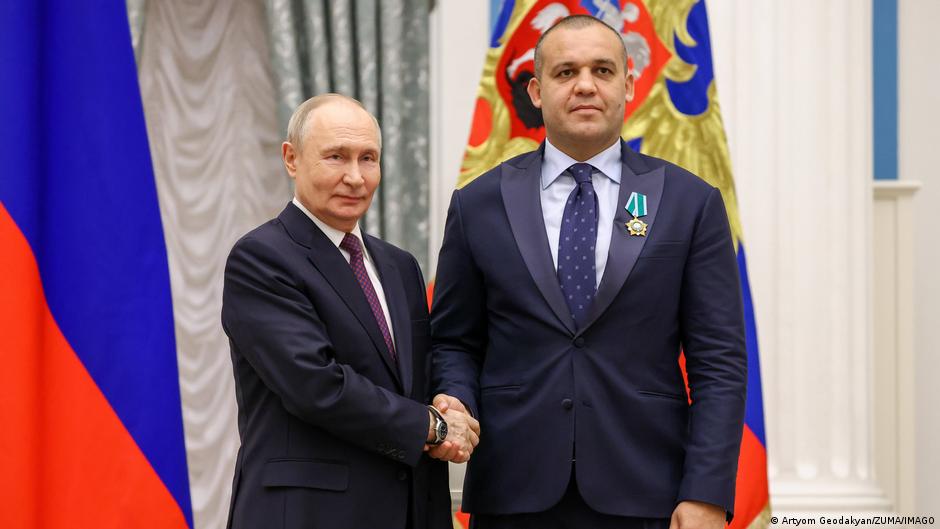
Donald Trump Jr. repaid Russian businessman Umar Kremlev for money spent on part of his wedding celebrations, Kremlev said on Tuesday, October 6, adding another political and governance dimension to a controversy already drawing attention in Washington.
Kremlev, a Russian entrepreneur close to Vladimir Putin and president of the International Boxing Association, told a press conference in Istanbul that the U.S. president’s son had returned the funds. The statement followed earlier comments from President Donald Trump, who had also said that his son had repaid Kremlev.
“As for whether he returned the expenses or not, yes, he returned them,” Kremlev said, according to Russia’s TASS news agency.
For senior economic decision-makers, the importance of the episode lies less in the personal details of a private celebration than in what it reveals about the growing overlap between politics, wealth, foreign relationships and institutional risk. In an environment where markets are highly sensitive to policy uncertainty, even private financial arrangements involving the family of a sitting president can become a matter of public scrutiny if they raise questions about influence, access or foreign ties.
Kremlev said he was puzzled by the reimbursement, arguing that the gathering was not a special gift but part of a broader shared event. He compared it to inviting guests to a country house and then issuing them a bill, calling such an idea foolish. He also said he has friendly relations with Donald Trump Jr. and had “never asked him or anyone else” to help him.
Political Scrutiny Becomes an Economic Variable
The issue first entered the public domain after ProPublica published an investigation on September 14 reporting that Kremlev had paid part of the expenses for wedding-related celebrations involving Donald Trump Jr. in the Bahamas. The report triggered questions about whether a businessman close to Russian authorities had financed events connected to the U.S. president’s family.
On September 18, President Trump confirmed that his son had returned money to Kremlev. Speaking with reporters, he said that, as he understood it, his son had repaid the debt. Trump also said he considered it a normal practice for a friend to pay for a wedding celebration, and he appeared to regard the involvement of a businessman close to Russian authorities in financing his son’s festivities as acceptable.
Trump had separately told Axios that he had no idea who Umar was, had never heard of him, and that Kremlev had not paid for Don and Bettina’s wedding, which, Trump said, took place in a completely different location and on a different day from the party in question. He described the event as an after-party held in their honor, said there was nothing wrong with it, and added that he did not attend.
The distinction between a wedding and an after-party may matter politically, but for investors, multinationals and policy advisers, the more significant issue is reputational exposure. Allegations or investigations involving foreign-linked financing around senior political families can alter perceptions of governance standards, complicate diplomatic messaging and intensify partisan battles over ethics rules.
Those dynamics can have downstream economic consequences. Congressional investigations can consume political bandwidth, affect legislative priorities and harden partisan positions around foreign policy, sanctions, procurement, financial disclosure and executive oversight. Even when no legal breach is established, prolonged scrutiny can contribute to uncertainty around policy continuity.
Foreign Influence Concerns and Policy Risk
Axios also reported that a senior Democratic member of the U.S. House Oversight Committee could investigate reports that Kremlev paid for celebrations involving Trump Jr. Representative Robert Garcia of California sent a letter to White House Chief of Staff Susie Wiles saying Democrats on the committee were investigating the many ways in which the Trump family had allegedly sought to enrich itself by using proximity to the head of state.
Axios wrote that if Democrats win control of the House of Representatives in the upcoming November 3 midterm elections, Garcia would likely become the lead congressional investigator. The outlet added that the inquiry offered a clear indication of the direction he would take in that role.
For corporate leaders and macro strategists, this signals a familiar pattern: personal conduct around political power can become institutional conflict, and institutional conflict can become policy risk. The U.S. political system already faces intense polarization around Russia-related issues, foreign lobbying, corruption risks and the boundaries between public office and private family business. Any new investigation would likely deepen those divides.
The Russia dimension is particularly sensitive. U.S. sanctions policy, energy security, defense spending and financial restrictions on Russian-linked entities remain core issues for global markets. A renewed ethics dispute involving a Russian businessman close to Moscow could increase pressure on lawmakers to tighten oversight or revisit disclosure requirements, especially if control of Congress changes.
There is also a reputational lesson for global business figures operating near political power. Kremlev’s position at the International Boxing Association and his proximity to Russian leadership make any financial connection to the family of a U.S. president more than a social footnote. In a fragmented geopolitical economy, relationships that may be described privately as friendships can be interpreted publicly through the lens of influence and strategic alignment.
The factual record, as currently presented by the participants and media reports, is that Kremlev says Trump Jr. reimbursed him, President Trump says he understands the money was repaid, and U.S. Democratic lawmakers may pursue further scrutiny. No specific amount was cited in the source account, and Kremlev denied that he had sought assistance from Trump Jr. or anyone else.
Still, the episode is a reminder that macroeconomic risk is no longer confined to interest rates, trade flows and fiscal balances. Governance credibility, political ethics and perceptions of foreign influence now form part of the broader risk environment in which executives allocate capital, assess regulatory exposure and judge the durability of policy commitments.