Yemen offensive against Houthis raises risks for Red Sea trade and oil markets
Government forces and Houthi rebels both claim battlefield gains as regional powers weigh a broader military response with global economic stakes.
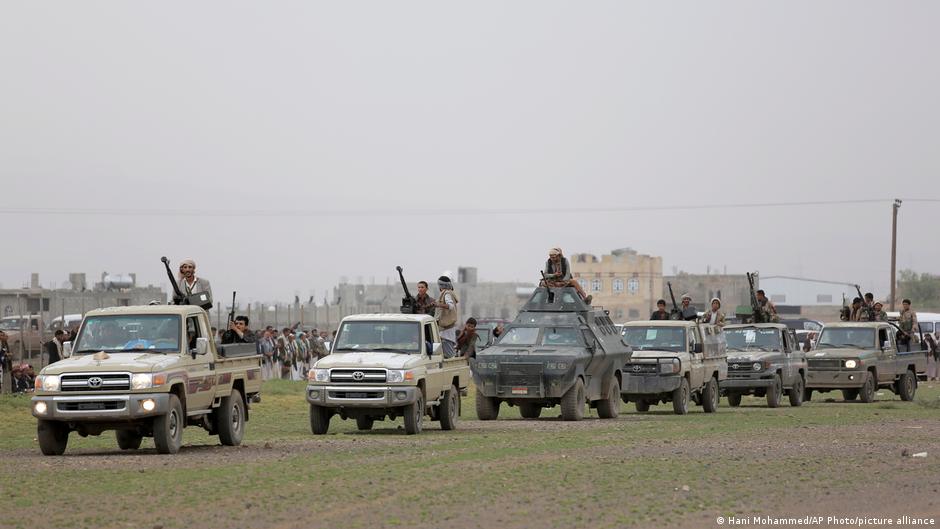
Yemen’s internationally recognized authorities say their forces have advanced toward the port city of Mokha, opening a new phase in a conflict whose consequences extend well beyond Yemen’s borders. The offensive, announced after a nationwide mobilization, is aimed at restoring government control over territory held by the Houthi movement, known formally as Ansar Allah.
The push toward Mokha, reported on Monday, October 5, marks one of the first accounts of government strikes against Houthi positions since Rashad al-Alimi, chairman of Yemen’s Presidential Leadership Council, declared the start of a large-scale military operation on October 4. The government’s stated objective is to return all Yemeni territory to the control of the internationally recognized authorities.
That goal implies a prolonged and costly campaign. The Houthis still hold large parts of the country, including Yemen’s most densely populated areas and the capital, Sanaa. In late September, the Yemeni authorities announced the start of a general mobilization to fight the Houthis and promised amnesty to members of Ansar Allah who defect to government forces.
A local battle with global exposure
For senior economic decision-makers, the immediate question is not only who controls Mokha, but whether the fighting further destabilizes the Red Sea and the Bab el-Mandeb Strait, one of the region’s key maritime chokepoints. The Houthis seized Mokha a month earlier, strengthening their position along Yemen’s Red Sea coast and near the strait. Their broader campaign has sought to take control of Yemen’s entire Red Sea coastline.
The source of macroeconomic concern is clear: attacks in and around the Red Sea threaten global trade routes and can contribute to higher energy prices. The article notes that Houthi military gains, including the capture of Mokha on the Bab el-Mandeb Strait, have enabled Iran and its allies to consolidate control over key waterways in the region. Houthi leaders have separately declared that the Bab el-Mandeb Strait is closed to vessels from Saudi Arabia.
Any sustained disruption around Bab el-Mandeb can raise shipping risk premiums, complicate insurance and rerouting decisions, and deepen uncertainty for energy and goods markets. Even where physical supply is not immediately reduced, the perception of increased geopolitical risk can feed into prices and corporate planning assumptions.
Rashad al-Alimi has framed the operation as an effort to bring all of Yemen back under the control of the internationally recognized authorities.
Both sides are claiming success. Yemen’s authorities say their forces have moved deeper into Houthi positions near Mokha. Ansar Allah, meanwhile, has claimed gains of its own. The Yemen Press Agency, citing a representative of the group, reported that the Houthis captured a district in Taiz province as well as a former residence of al-Alimi in the region.
Al Masirah, a Houthi-controlled television channel, also showed footage it said depicted the capture of al-Alimi’s multi-story house. In the video, Houthi fighters raised the group’s flag over the building. These competing claims suggest that the battlefield remains fluid, with each side seeking to project momentum to domestic supporters, regional backers and external observers.
Regional defense alignments move into focus
The conflict’s regional dimension is becoming more explicit. Houthi military spokesman Yahya Saree claimed the group had carried out a series of operations inside Saudi Arabia, including attacks on King Khalid International Airport in Riyadh, an Aramco refinery in Rabigh and several military targets. Saudi Arabia has not confirmed those claims.
At the same time, Riyadh, Ankara and Islamabad have agreed on the rapid deployment of troops in the region under the Mecca Defense Pact concluded in August, according to Reuters as cited in the source text. The pact provides for a collective response by Turkey, Saudi Arabia and Pakistan to an attack on any of the three countries. Riyadh is reportedly prepared to participate in the Yemeni government forces’ offensive against the Houthis by providing air support.
That alignment matters economically because it signals a shift from a largely Yemen-centered confrontation toward a more formalized regional security framework. For investors and policymakers, the possibility of expanded air operations, cross-border strikes and collective defense responses raises the risk of a wider conflict involving major regional economies and critical energy infrastructure.
The escalation did not begin with the latest offensive. In early September, the Houthis announced an expansion of military operations in the Middle East and struck four cities in southern Saudi Arabia. More than 70 people were injured in the heavy bombardment, and fires broke out at oil facilities. Saudi Arabia responded with more than 60 airstrikes on several Houthi-controlled provinces.
On September 19, the Saudi-led Coalition to Restore Legitimacy in Yemen said Yemeni rebels had attempted for the first time the previous night to strike the Saudi capital, Riyadh, with a ballistic missile. Coalition spokesman Brigadier General Turki al-Maliki said on X that the missile had been intercepted and destroyed.
For governments, central banks and multinational companies, the Yemen escalation adds another layer of uncertainty to an already fragile global trade environment. The direct economic impact will depend on whether the fighting remains localized around front lines such as Mokha and Taiz, or whether it intensifies around Saudi infrastructure, Red Sea shipping and the Bab el-Mandeb corridor.
The longer-term consequence may be the hardening of regional blocs around maritime security, energy assets and military deterrence. If the Mecca Defense Pact becomes an operational instrument rather than a political signal, Yemen’s war could increasingly shape defense spending, insurance costs, trade routing and energy-market expectations across a much wider economic map.