Serbia’s Prolonged Anti-Government Protests Escalate Amid Political Uncertainty
Violent clashes in Belgrade highlight persistent unrest and growing demands for political reforms in Serbia.
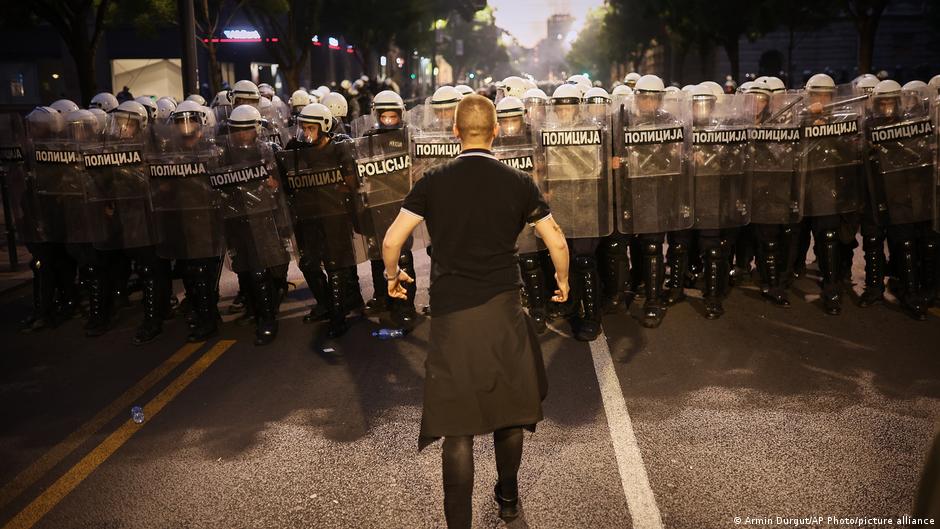
Mass protests in Serbia have escalated into violent confrontations in Belgrade, signaling deepening political instability with significant implications for the country’s governance and regional economic outlook. On May 23, clashes broke out near Pionirski Park during a student-led demonstration, drawing tens of thousands to the central Slavia Square despite government efforts to curb the protests.
Escalation of Unrest and Government Response
The protests, initially sparked by a fatal infrastructure collapse in November 2024, have grown into a sustained movement demanding President Aleksandar Vučić’s resignation and early parliamentary elections. The immediate cause of the unrest was a tragic accident at the Novi Sad railway station, where a concrete canopy collapse killed 16 people, with protesters attributing the disaster to corruption, negligence, and cronyism within the government.
On the day of the latest violent clashes, police reported detaining 23 individuals after demonstrators engaged in confrontations involving firebombs, stones, and improvised explosive devices. Law enforcement deployed tear gas and stun grenades near the parliament building to disperse the crowd, as police pushed protesters toward the Faculty of Law. The Belgrade Prosecutor’s Office condemned attacks on police officers, emphasizing that such actions will lead to legal consequences.
“All those who attacked police officers securing the public assembly will be identified and held accountable in accordance with the law,” the prosecutor’s office stated.
The government also attempted to limit the influx of demonstrators from other cities by canceling all train services to and from Belgrade on the protest day, reflecting concerns about the nationwide scale of dissent.
Political Dynamics and Economic Implications
The protests have already triggered significant political shifts. Following sustained pressure, Prime Minister Miloš Vučević resigned in January 2025, with medical professor Đuro Mačut appointed as his successor in March. However, President Vučić has maintained a firm stance against altering electoral timelines in response to protests, underscoring tensions between demands for reform and institutional continuity.
These ongoing disturbances come at a critical moment for Serbia’s macroeconomic stability. The government faces challenges in maintaining investor confidence amid political uncertainty and risk of policy discontinuity. The protests highlight systemic governance issues, including corruption and accountability deficits, which have direct consequences for infrastructure development, public safety, and economic growth prospects.
As Serbia prepares for early parliamentary elections in 2026, international observers and economic stakeholders are closely monitoring the situation. Persistent unrest threatens to undermine efforts toward EU integration and regional cooperation initiatives, which are pivotal for attracting foreign investment and fostering sustainable economic development.
In summary, Serbia’s protests reflect a broader struggle over governance quality and democratic accountability. The government’s response and ability to address underlying grievances will be decisive in shaping the country’s political trajectory and economic resilience in the coming years.