Serbia Hosts First Joint Military Exercises with NATO Amid Strategic Neutrality Policy
Serbia conducts its inaugural joint military drills with NATO under the Partnership for Peace program, signaling subtle shifts in regional defense cooperation.
Significance of Serbia-NATO Joint Military Exercises
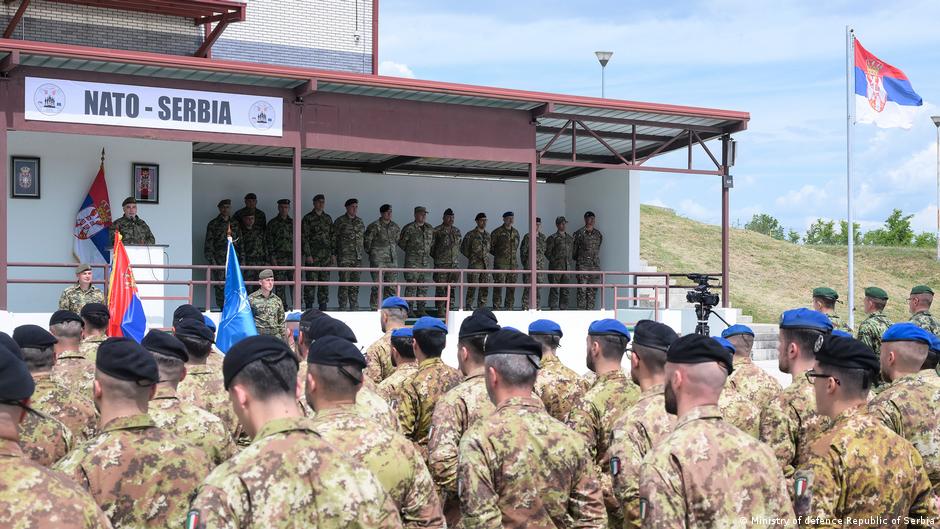
In a historic development, Serbia is hosting joint military exercises with NATO for the first time, marking a nuanced shift in the country's defense cooperation landscape. The drills, named "NATO-Serbia," are held under the framework of NATO's Partnership for Peace program and are scheduled to continue until May 23. Approximately 600 military personnel from Serbia, Italy, Romania, and Turkey are participating, alongside observers from other NATO member states including Germany.
While Serbia maintains a policy of military neutrality and is not a NATO member—unlike many of its Balkan neighbors—the country has been engaged in the Partnership for Peace program for nearly two decades. These exercises are uniquely significant as they are the first to be directly organized in collaboration with NATO's Joint Forces Command based in Naples, Italy, and Serbia’s Land Forces Command. The drills take place at the Borovac training ground near the central Serbian city of Bujanovac.
“These are important exercises. Serbia is the host country, and they are conducted in full compliance with Serbia’s policy of military neutrality,” remarked a NATO representative.
Macro-Economic and Geopolitical Implications
The joint drills come at a critical juncture for regional security dynamics and have broader implications for economic and geopolitical stability in the Western Balkans. Serbia’s engagement with NATO, while maintaining strong ties with Russia and adhering to neutrality, reflects a complex balancing act that could influence foreign investment, economic partnerships, and regional integration efforts.
Historically, Serbia’s relationship with NATO has been fraught; the NATO-led bombing campaign in 1999 during the Kosovo conflict remains a sensitive topic domestically. Kosovo, which declared independence in 2008, is still not recognized by Serbia, and NATO-led peacekeeping forces (KFOR) continue to operate there under an international mandate. This backdrop underscores the delicacy of Serbia’s current cooperative stance with NATO.
From a macroeconomic perspective, Serbia’s participation in NATO exercises may be interpreted as an effort to stabilize its security environment, encouraging investor confidence and supporting sustainable development. The signaling effect to global markets and international policy circles is notable, as defense cooperation can be a barometer for broader political stability and the potential for economic integration within Euro-Atlantic structures.
Moreover, these exercises might influence Serbia’s long-term economic and diplomatic positioning, potentially facilitating deeper engagement with European institutions while accommodating its strategic neutrality and Russian ties. The balance Serbia strikes could impact its access to financial aid, trade partnerships, and infrastructural investments crucial for the country’s economic growth.
Conclusion: Strategic Balancing in a Volatile Region
Serbia’s inaugural joint military exercises with NATO exemplify a pragmatic approach to navigating complex geopolitical realities. This development signals subtle policy shifts that may have enduring consequences for regional security and economic trajectories. For senior decision-makers and global economic strategists, monitoring Serbia’s evolving defense and diplomatic posture offers key insights into the Western Balkans’ stability and its integration into broader economic frameworks.