Russian Strikes on Sumy and Mykolaiv Underscore Ukraine’s Economic Exposure
Fatal attacks on a shopping center area and port infrastructure highlight the continuing pressure on Ukraine’s civilian economy and logistics base.
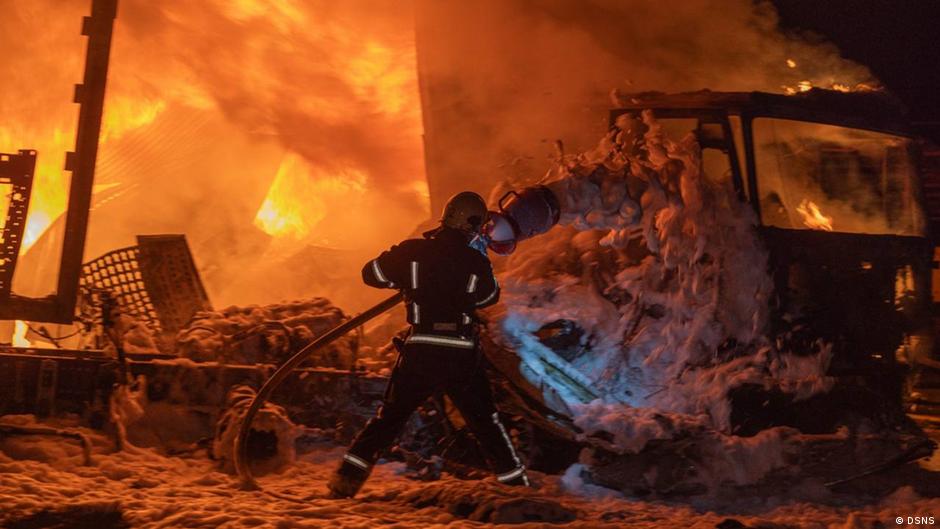
Russian forces struck civilian and logistics targets in Sumy and Mykolaiv on Wednesday, September 9, killing and injuring civilians while reinforcing the economic costs of a war that continues to damage Ukraine’s commercial, municipal and port infrastructure.
In Sumy, a Russian strike hit a parking area near the Manufaktura shopping center on Wednesday evening. Oleh Hryhorov, head of the Sumy regional military administration, said two young people were killed: a 21-year-old man and a 21-year-old woman. Preliminary information indicated that about 20 more people were wounded.
Among the injured, two men and one woman were reported to be in serious condition. Another Sumy resident was described as being in extremely serious condition. Teenagers were also among those hurt. Rescue workers and municipal services operated at the site after the strike, while regional authorities warned that the threat of further attacks remained.
Regional authorities said the risk of repeated attacks in Sumy remained in place after the strike near the shopping center.
The Russian army also continued attacks on Mykolaiv, a southern Ukrainian city with strategic port infrastructure. According to Heorhii Reshetylov, head of the Mykolaiv regional military administration, attacks throughout September 9 damaged port infrastructure, killed two people and injured at least 12 others. A one-year-old child was among the wounded.
Ukraine’s State Emergency Service said that some Russian strikes hit warehouse facilities where vegetables were stored, as well as a post office branch. Earlier, during the night of September 9, Russia had already carried out a mass attack on the region. Drone and ballistic missile strikes damaged port and civilian infrastructure, as well as residential buildings. Authorities had reported one woman killed and four people wounded in that earlier wave.
Infrastructure Damage Carries Wider Economic Costs
For senior economic and policy decision-makers, the significance of the attacks lies not only in their immediate human toll but also in the pattern of damage to facilities that support everyday commerce, food distribution, logistics and regional services. The reported hits on a shopping center parking area, port assets, vegetable storage warehouses and a post office point to the vulnerability of civilian economic nodes far from the front-line combat narrative often used to describe the war.
Mykolaiv’s port infrastructure is particularly relevant in macroeconomic terms. Ukraine’s capacity to move goods, maintain regional supply chains and sustain trade-linked activity depends heavily on the resilience of transport corridors, port facilities and storage networks. Damage to such infrastructure can raise transaction costs, disrupt local employment, slow deliveries and deepen uncertainty for firms operating in or through affected regions.
The reported strike on warehouses containing vegetables also illustrates how attacks on storage facilities can affect food supply chains beyond the immediate blast zone. Even when national output figures are not directly available from a single incident, repeated damage to storage, logistics and transport assets can compound pressure on producers, distributors and local markets. That pressure matters for household welfare, regional inflation dynamics and the fiscal burden on authorities tasked with emergency response and reconstruction.
The strike on a post office branch adds another layer to the economic picture. Postal and delivery networks are part of the basic infrastructure through which households, businesses and public institutions exchange goods, documents and services. Damage to such nodes can interrupt ordinary commercial life and add friction to already strained local economies.
Policy Implications for Ukraine and Its Partners
The attacks also underline the long-term policy challenge facing Ukraine and its international partners: supporting an economy that must operate under the persistent threat of missile and drone strikes. Emergency services, municipal workers and regional administrations are being required to respond not only to security incidents but to repeated disruptions of the assets that support daily economic activity.
For Ukraine, that raises continuing questions about budget allocation, infrastructure hardening, air defense priorities and regional recovery planning. Civilian and commercial assets remain exposed, and the cost of keeping markets, transport systems and public services functioning rises when repeated attacks require repair, replacement and emergency staffing.
For external partners, the strikes reinforce the economic rationale behind assistance that goes beyond immediate military needs. Support for air defense, logistics resilience, municipal services and infrastructure repair has macroeconomic consequences because it helps preserve the operating capacity of the Ukrainian state and private sector. The reported damage in Mykolaiv and Sumy shows how attacks on local infrastructure can translate into broader economic fragility when repeated across regions.
The human losses remain central. Two young people were killed in Sumy, while civilians including teenagers were wounded. In Mykolaiv, two people were killed and at least 12 were injured in attacks during the day, with a one-year-old child among the wounded. Earlier overnight strikes in the same region had killed one woman and wounded four people, according to authorities.
At the same time, the economic signal is clear: civilian infrastructure remains a central point of vulnerability in Ukraine’s wartime economy. The cumulative effect of attacks on ports, warehouses, postal facilities, homes and commercial areas is to impose costs that extend beyond immediate repair bills. They weaken confidence, strain public finances, disrupt supply chains and complicate long-term investment planning in regions critical to Ukraine’s economic resilience.