Drone Strike on Russia’s Yamal Region Signals Wider Energy Risk
The first reported Ukrainian drone attack on Russia’s Arctic gas heartland raises fresh questions about infrastructure security and supply resilience.
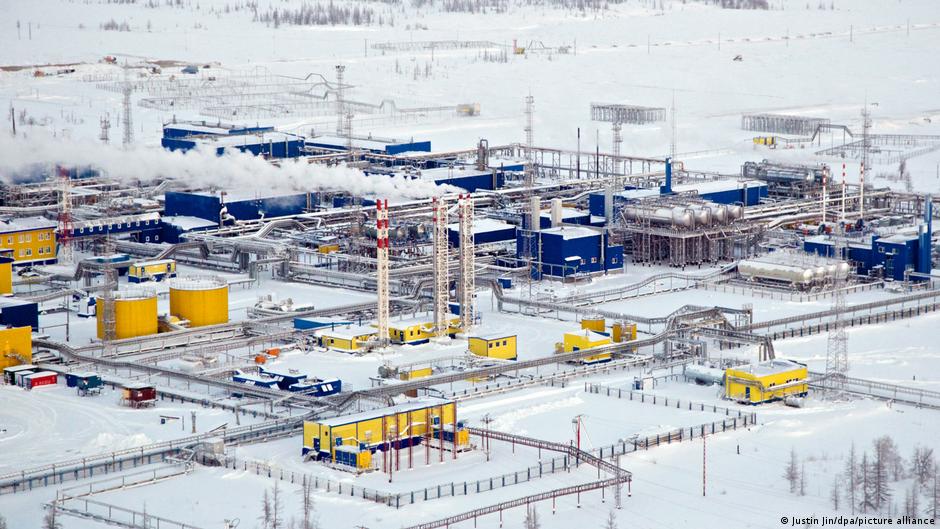
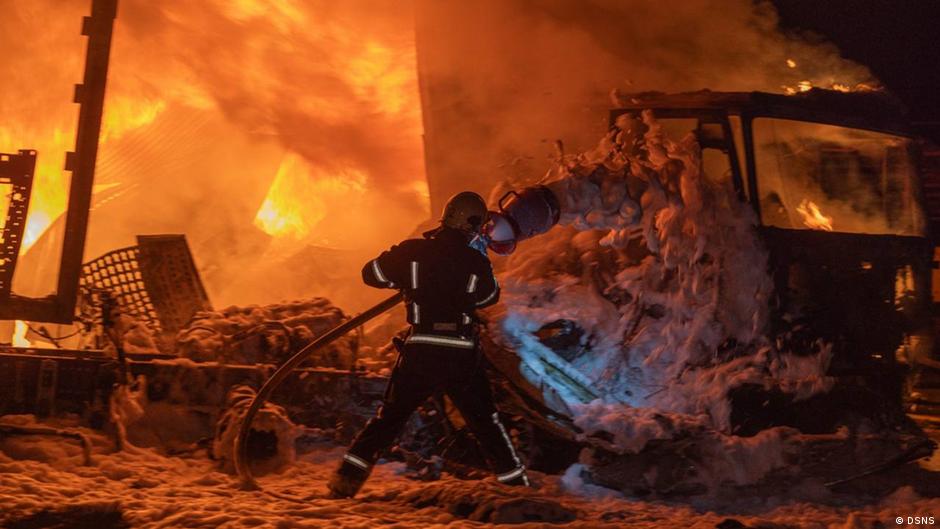
Ukrainian drones have attacked the Yamalo-Nenets autonomous district for the first time, Russian regional officials said, marking a notable expansion of the conflict’s geographic reach into one of Russia’s most important energy-producing regions. A fire broke out at an industrial facility in Novy Urengoy, a city central to the country’s natural gas infrastructure.
Dmitry Artyukhov, the governor of the Yamalo-Nenets region, said on Wednesday, September 9, that the attack had been repelled. According to official information, there were no deaths or injuries. Artyukhov said debris from a downed unmanned aerial vehicle fell on the territory of an enterprise, causing a fire. He added that the scale and nature of the damage were still being assessed.
The incident matters beyond the immediate security dimension. The Yamalo-Nenets autonomous district is a cornerstone of Russia’s gas economy, accounting for an estimated 80% of the country’s natural gas production. Any sustained threat to facilities in the region would have implications for Russian state revenues, corporate capital expenditure, insurance assumptions and the broader risk premium attached to strategic energy assets.
Strategic Energy Infrastructure Comes Into Focus
Artem Zhoga, the Russian presidential envoy to the Urals Federal District, said the target of the attack was a fuel and energy complex facility in Yamal. He said personnel at the enterprise had been evacuated in advance. Russian authorities did not identify the specific facility that was hit.
Russian officials said there were no casualties, while the scale and nature of the damage were still being determined.
Several media outlets and analytical projects that track strikes on Russian territory reported that the target may have been the condensate preparation plant for transport in Novy Urengoy, part of Gazprom’s gas infrastructure. The facility is considered one of the key sites for processing gas condensate in the region.
The Novy Urengoy plant processes gas condensate from the Urengoy, Yamburg and other fields in the area. Its design capacity is estimated at about 19.5 million tonnes of feedstock per year. While the reported fire has not been linked by officials to any disruption in production or exports, the site’s role within the regional energy system gives the episode macro-economic significance.
For senior policymakers and corporate decision-makers, the central issue is not only whether one facility suffered damage. It is whether the perimeter of vulnerability around Russia’s upstream and midstream energy assets is widening. The attack, if confirmed as launched from Ukrainian territory, would suggest that remote assets previously considered geographically insulated may require a reassessment of defensive spending, operational redundancy and emergency planning.
A Longer-Range Conflict With Economic Consequences
Novy Urengoy lies roughly 2,800 kilometers in a straight line from the Russian-Ukrainian border. If information that the drones were launched from Ukrainian territory is confirmed, the incident may represent the longest known strike by the Ukrainian Armed Forces on Russian territory since the start of the full-scale war.
That distance is economically important. Long-range strikes alter the calculation for infrastructure risk. Energy installations in the Arctic and Siberian regions are not merely local industrial assets; they are embedded in Russia’s fiscal model and in the balance sheets of major state-linked companies. They also support downstream processing chains and export-oriented energy flows, even when a particular facility is not itself an export terminal.
Russia has absorbed repeated attacks on oil refineries, storage sites and energy-related facilities during the war. A strike in Yamal, however, would shift attention toward the gas complex, where production geography is concentrated and where large facilities are difficult and costly to replicate. The macro-economic effect of a single incident may be limited if damage is minor and operations continue. The longer-term consequence is the possibility of a higher structural cost of operating critical energy infrastructure under wartime conditions.
For Russia, that could mean greater spending on air defenses, surveillance systems, facility hardening and logistical contingency plans across a broader map. Such expenditures may not immediately change headline production numbers, but they can weigh on margins, redirect capital from expansion or modernization, and deepen the state’s role in protecting strategic industries.
For global markets, the immediate supply signal remains uncertain because Russian authorities have not disclosed the precise facility or quantified the damage. Still, the attack underscores a policy reality that energy consumers, traders and governments have already had to absorb: the war is not confined to front-line military infrastructure. Strategic economic assets have become part of the conflict environment.
European gas markets are less directly dependent on Russian pipeline gas than before the full-scale invasion, but Russia remains a major gas producer and an important variable in global energy expectations. Disruptions or perceived risks in core production regions can feed into scenario planning for liquefied natural gas demand, Asian energy procurement, sanction policy and investment decisions in alternative supply.
The Yamal incident also carries implications for corporate risk assessment. Companies operating in or around Russian energy supply chains must account for the possibility that remote geography no longer provides the same degree of insulation. Insurers, shippers, service providers and financial institutions may interpret such events as evidence of a broader conflict-risk frontier, even where direct exposure is limited.
At the policy level, the episode may reinforce the argument for energy diversification among import-dependent economies. It may also encourage governments to look more closely at the security of critical infrastructure, not only in conflict zones but across supply chains that connect extraction, processing, transport and export infrastructure.
The facts available so far remain limited. Russian officials have confirmed a drone attack, a fire at an industrial facility in Novy Urengoy, no casualties and an ongoing damage assessment. They have not named the enterprise. Reports pointing to the condensate preparation plant remain unconfirmed by the authorities. Even with those caveats, the strike is a significant development because of where it occurred: in Russia’s Arctic gas heartland, far from the Ukrainian border and central to the country’s long-term energy base.