Drone Threat Delays Zelenskyy Flight From Moldova, Underscoring Regional Risk
Norway’s prime minister said a drone threat in Moldovan airspace delayed the Ukrainian president’s aircraft en route to Oslo.
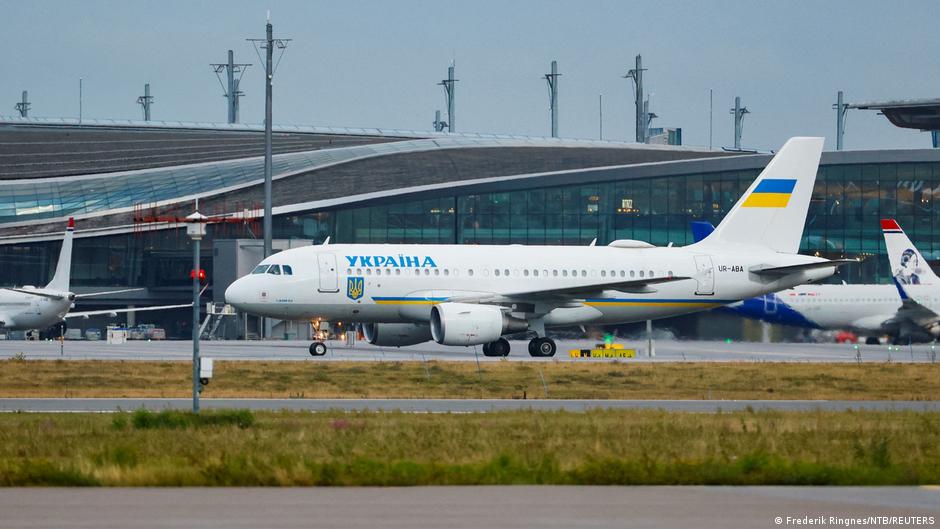
A reported drone threat in Moldovan airspace that delayed Ukrainian President Volodymyr Zelenskyy’s departure for Norway has highlighted how the security spillovers from Russia’s war against Ukraine continue to reach beyond the front line and into the airspace and transport systems of neighboring states.
Norwegian Prime Minister Jonas Gahr Støre said on Wednesday, September 9, that Zelenskyy’s aircraft had narrowly avoided an encounter with a drone while departing Moldova for Oslo. Speaking to the broadcaster NRK, Støre said the episode reflected the conditions under which the Ukrainian leader operates. Zelenskyy’s office had not commented on the incident.
“His plane almost collided with a drone when it was due to take off from Moldova. This is the reality he is in,” Støre said, according to NRK.
Støre did not say where he had obtained the information. His remarks also left unclear whether the episode was accidental or represented a deliberate attempt to target Zelenskyy. The uncertainty matters for governments and markets because ambiguity around intent can complicate the response of neighboring countries, insurers, airlines and security services.
The Norwegian prime minister’s office later clarified the statement, saying that on the previous day there had been a drone threat in the airspace over Moldova that delayed Zelenskyy’s aircraft on its way to Oslo. The office added that these were the kinds of threats Zelenskyy lives with every day, and that it was not known how close the drones had been to his aircraft.
Airspace Risk Moves Into The Economic Domain
The incident, as described by Norwegian officials and a senior Ukrainian official, is more than a security footnote. For senior decision-makers, it is another reminder that airspace risk around Ukraine’s western borders has become an economic variable. Moldova is not a combatant in the war, but its proximity to Ukraine and the reported entry of drones into its airspace expose transport routes, border infrastructure and diplomatic travel to disruption.
A senior Ukrainian official told DW that while the Ukrainian president’s aircraft was waiting to depart from Chisinau, a Russian jet-powered drone entered Moldovan airspace. Zelenskyy’s departure was later postponed, and other flights were suspended. Those details point to a broader operational challenge: even when damage is limited or casualties are absent, a drone alert can halt civilian aviation, delay official travel and require immediate coordination among airport authorities, governments and security agencies.
For businesses, the economic consequences of such episodes are indirect but material. They can raise the cost of travel and logistics, reinforce risk premiums for operations in border regions and increase pressure on governments to invest in surveillance, air defense coordination and crisis-management capacity. In economies already exposed to the trade, energy and fiscal effects of the war, repeated airspace alerts may further weigh on confidence and planning horizons.
Zelenskyy arrived in Oslo from Moldova on the evening of September 8 to attend the funeral of King Harald V. After the ceremony, he met Støre. The official Norwegian government account of their talks did not mention the drone incident.
The absence of the incident from the official readout illustrates a frequent policy dilemma. Governments may want to avoid amplifying unverified or sensitive security information, yet markets and institutions depend on timely signals about threats that could affect transport, diplomatic activity and regional stability. The gap between public messaging and operational disruption can itself become a source of uncertainty.
Moldova’s Exposure Adds To Border Infrastructure Concerns
On September 9, Moldovan police reported finding a fallen drone equipped with a propulsion system. An explosion occurred when it hit the ground, creating a large crater. Inside the drone were damaging elements in the form of metal balls. No casualties were reported.
The same night, according to a local regional military administration, Russian drones attacked the Starokozache international road checkpoint in Ukraine’s Odesa region, on the border with Moldova. NRK noted that the airport from which Zelenskyy flew to Oslo is located roughly two hours by road from that border crossing.
The proximity of the reported drone activity to cross-border infrastructure is economically significant. Border checkpoints are not only security assets; they are part of the physical architecture of trade, humanitarian movement and regional connectivity. Attacks or alerts near such nodes can slow traffic, increase inspection burdens and force authorities to reallocate resources from routine economic management to emergency response.
For Moldova, the issue is especially sensitive. The country’s location between Ukraine and the European Union gives it strategic importance, but also exposes it to disruptions generated by the war next door. Drone incidents can test its airspace monitoring, police response and coordination with partners. Over time, that may shape fiscal priorities and deepen its reliance on external security and infrastructure support.
For European policymakers, the episode reinforces the long-term economic consequence of a conflict that repeatedly spills into adjacent systems without necessarily crossing the threshold of a wider war. Airports, roads, border posts and political travel routes must be treated as part of the resilience agenda. That implies higher public spending, tighter coordination and a more persistent risk environment for investment in the region.
The immediate facts remain limited. Norwegian officials say there was a drone threat over Moldova that delayed Zelenskyy’s aircraft, but they do not know how close the drones came to the plane. A senior Ukrainian official said a Russian jet-powered drone entered Moldovan airspace while the aircraft was waiting to depart. Moldovan police reported a fallen drone with metal-ball damaging elements and no casualties. What is clear is that the security perimeter around the war continues to affect the economic and policy calculations of countries beyond Ukraine itself.