Russian Missile Strikes on Kyiv and Kharkiv Kill Three, Injure 14
The attacks damaged residential and public infrastructure, underscoring persistent risks to Ukraine’s workforce, services and urban economy.
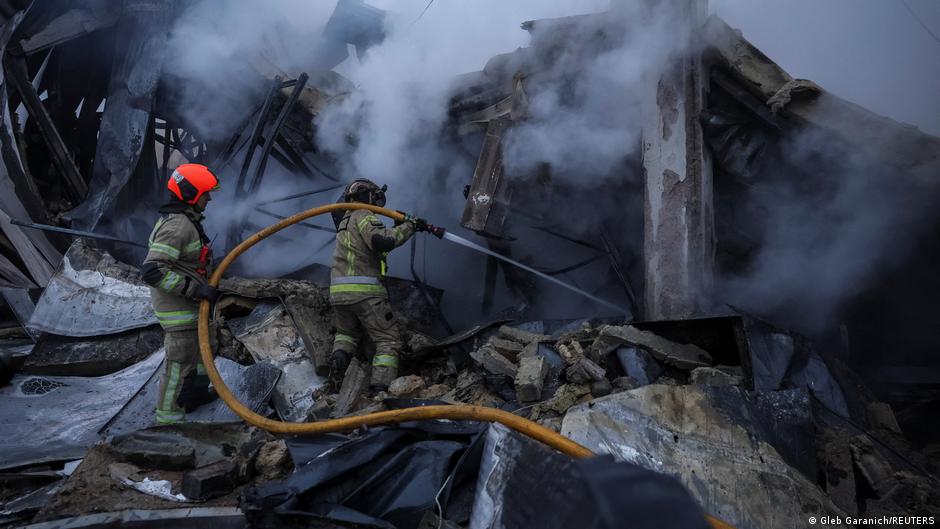
Russian forces launched a series of missile strikes on Kyiv on the evening of October 26, killing at least one person and injuring no fewer than 10, according to Ukrainian authorities. Three of those wounded were reported to be in serious condition. An earlier attack on Kharkiv killed two people and injured four others.
The latest strikes add to the sustained human and physical damage facing Ukraine’s largest urban economies. Beyond the immediate casualties, attacks affecting homes, transport infrastructure, medical facilities and university accommodation can disrupt labor availability, public services and local commerce. They also increase the resources required for emergency response and reconstruction at a time when national and municipal budgets remain under pressure.
Ballistic missiles launched toward Kyiv
Russian troops attacked Kyiv with ballistic missiles on Monday evening, October 26. Ukraine’s Air Force said the launches originated from Bryansk. At approximately 11 p.m. local time, Kyiv Mayor Vitali Klitschko reported on Telegram that at least one person had been killed and 10 others injured.
According to Klitschko, emergency medical teams hospitalized nine of the wounded. Three were in serious condition. The authorities were continuing to assess the consequences of the attacks as the situation developed.
Klitschko said two districts of the Ukrainian capital had been targeted. In the Desnianskyi district, a strike occurred near a metro station and close to a dormitory belonging to one of the city’s universities. In the Dniprovskyi district, a building within a non-residential development area was hit.
Windows were also blown out in two departments of a medical facility in the Dniprovskyi district. The mayor said no patients or medical personnel were injured there. Even without reported casualties at the facility, damage to healthcare buildings illustrates how attacks can impose additional operating and repair costs on essential services already functioning under wartime conditions.
“Medical teams hospitalized nine of the wounded, three of whom are in serious condition,” Klitschko said in his account of the attack.
The Kyiv City Military Administration said a residential building in the Desnianskyi district had been damaged. Preliminary information indicated that people might be trapped inside. At the time the original report was published, the attack was continuing, including through the use of jet-powered drones.
Kharkiv reports deaths and residential damage
Several hours before the strikes on Kyiv, Russian forces also attacked Kharkiv. Kharkiv Mayor Ihor Terekhov said two people had been killed and four injured in shelling of the city’s Novobavarskyi district.
Terekhov reported damage to apartment buildings, private homes and vehicles. The destruction of housing carries consequences extending beyond the initial emergency: displaced residents may require temporary accommodation and public assistance, while damaged property and transport assets can weaken household balance sheets and constrain economic activity at the neighborhood level.
The combined confirmed toll reported in Kyiv and Kharkiv was therefore at least three people killed and 14 injured, based on statements from local authorities. In Kyiv, uncertainty remained over whether people were trapped in the damaged residential building, while officials continued to clarify the wider consequences of the attack.
Economic risks extend beyond direct destruction
For senior decision-makers, the incidents highlight the continuing exposure of Ukraine’s major population and business centers to sudden disruption. Kyiv is the country’s administrative and commercial hub, while Kharkiv is a major industrial, educational and research center. Damage in either city can affect more than the specific buildings struck, particularly when attacks occur near public transport, universities, healthcare facilities and residential areas.
Repeated threats to urban infrastructure may increase reconstruction requirements and complicate planning for employers, municipal authorities and public-service providers. They can also deepen uncertainty for households and investors by raising the likelihood of interrupted work, damaged assets and additional security expenditure.
The strikes further underscore the long-term economic challenge created by recurring destruction. Each damaged home, public facility or vehicle adds to the stock of assets requiring repair or replacement. The burden falls across households, local administrations and the broader state, potentially diverting funding and administrative capacity from development priorities toward emergency relief and recovery.
The full consequences of the October 26 attacks were still being established at the time of publication. Authorities had confirmed casualties and damage across both cities, while the continuing assault on Kyiv meant that the reported figures and assessment of physical destruction remained preliminary.