Russian Drone Strikes Hit Kyiv Fuel Sites and Ukraine Port Infrastructure
The attacks on Kyiv, Odesa and Zaporizhzhia underline the continuing economic pressure on Ukraine’s logistics, energy and transport systems.
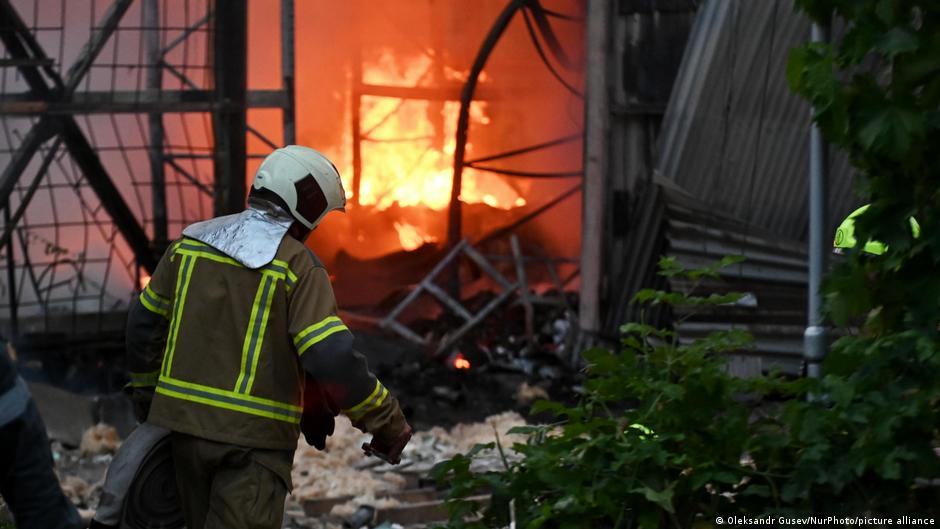
Russian drone strikes hit fuel stations and warehouse facilities in Kyiv and targeted civilian, port and transport infrastructure in the Odesa region, Ukrainian authorities said, in an overnight attack that again placed Ukraine’s logistics networks and urban energy assets at the center of the war’s economic battlefield.
Authorities in the Ukrainian capital reported that seven people were injured after Russian drones struck fuel stations and storage premises in Kyiv. Mayor Vitali Klitschko said on Tuesday morning, September 15, that unmanned aerial vehicles had hit filling stations in the Darnytskyi and Holosiivskyi districts. All of the wounded were taken to hospitals, with two in serious condition, he said. Klitschko later added that one of those hospitalized had died.
The Kyiv City Military Administration also reported a Russian strike on warehouse premises in the Obolonskyi district in the north of the capital. An air alert with a yellow danger level was declared in Kyiv and the surrounding region.
The choice of targets carries significance beyond the immediate physical damage. Fuel stations, depots and warehouses are critical nodes in an urban economy under wartime pressure. Attacks on such facilities can complicate distribution, emergency response, inventory management and transport planning, even when the direct damage is localized. For policymakers and business leaders monitoring Ukraine’s resilience, the pattern points to a sustained Russian effort to raise operating costs and uncertainty across civilian and dual-use infrastructure.
Odesa Attack Targets Logistics and Port Assets
In the Odesa region, Ukrainian officials said Russian forces carried out a mass attack on civilian infrastructure. Odesa has remained a strategically important region because of its connection to Ukraine’s maritime trade, port operations and transport corridors. Any disruption there has implications for supply chains, export flows and the broader economic costs of the war.
“Residential buildings, logistics facilities, port and transport infrastructure came under attack,” Odesa regional military administration head Oleh Kiper wrote on Telegram.
Kiper said roofs, facades and windows of private homes were damaged, along with dozens of garages and cars. The reported damage highlights the mixed economic and civilian footprint of the attacks: homes, vehicles and local assets were affected alongside infrastructure tied to logistics and transport.
For Ukraine’s economy, repeated strikes on the Odesa region remain a central risk. Port and transport infrastructure supports the movement of goods and connects domestic production with external markets. Damage to these systems can affect insurance costs, freight planning, capital allocation and confidence among companies operating in or through Ukraine. Even where facilities remain functional, the threat of repeated drone attacks can force firms and authorities to divert resources into repair, redundancy and protection.
In Zaporizhzhia region, local authorities said Russian drones struck an infrastructure facility. Emergency services were working to extinguish a fire at the site, according to regional officials. One person was killed and another injured in the raid, the regional administration said.
Scale of the Drone Barrage
The Ukrainian Air Force said Russia attacked Ukraine with 200 strike drones, including Shahed-type drones, Gerbera drones and Parodiya decoy drones. According to preliminary data, Ukrainian air defense units shot down or suppressed 187 Russian drones. Officials recorded impacts by aerial attack weapons at seven locations and falling debris from downed drones at three sites.
The figures indicate the continuing scale of Russia’s drone campaign and the burden it places on Ukraine’s air defense resources. For governments and investors assessing the conflict’s macroeconomic trajectory, the sustained use of large drone salvos has several consequences. It requires Ukraine to maintain costly air defense coverage across major cities, industrial regions and transport corridors. It also imposes recurrent costs on municipal services, utilities, emergency responders and private operators exposed to infrastructure damage.
The use of drones and decoys also has policy implications for Ukraine’s partners. If Kyiv’s defenses can intercept or suppress most incoming drones, the remaining successful strikes can still inflict economic harm when they hit logistics sites, fuel infrastructure or ports. That dynamic keeps pressure on allied governments to provide air defense systems, interceptors and related support, while also raising questions about the long-term affordability of defending a wide infrastructure network against relatively frequent attacks.
Russia’s Defense Ministry, which is in the fifth year of its full-scale war against Ukraine, claimed that strikes were carried out against “logistics centers and ports of Ukraine, as well as sea vessels used in the interests of the Armed Forces of Ukraine.” Ukrainian officials, by contrast, described impacts on fuel stations, warehouses, residential buildings, logistics facilities, port and transport infrastructure, and a regional infrastructure site.
The economic significance of the latest strikes lies in the type of systems hit. Fuel retail sites support mobility and emergency services in large urban areas. Warehouses anchor distribution and commercial supply. Ports and transport infrastructure connect Ukraine to trade routes. Damage or persistent risk across these sectors can reduce efficiency, increase inventories and contingency costs, and weigh on reconstruction planning.
For senior decision-makers, the episode reinforces a central feature of the war’s economic geography: Russia’s strikes are not only battlefield events but also attempts to test Ukraine’s logistical depth and public-sector capacity. The immediate toll is measured in deaths, injuries and damaged property. The longer-term cost is measured in disrupted investment decisions, higher risk premiums, and the sustained diversion of fiscal and private resources toward defense, repair and operational resilience.