Russia to Close Goethe Institute Branches as Berlin Tightens Sanctions
Moscow’s retaliation against German cultural institutions signals a wider policy shift that deepens economic fragmentation between Russia and Europe.
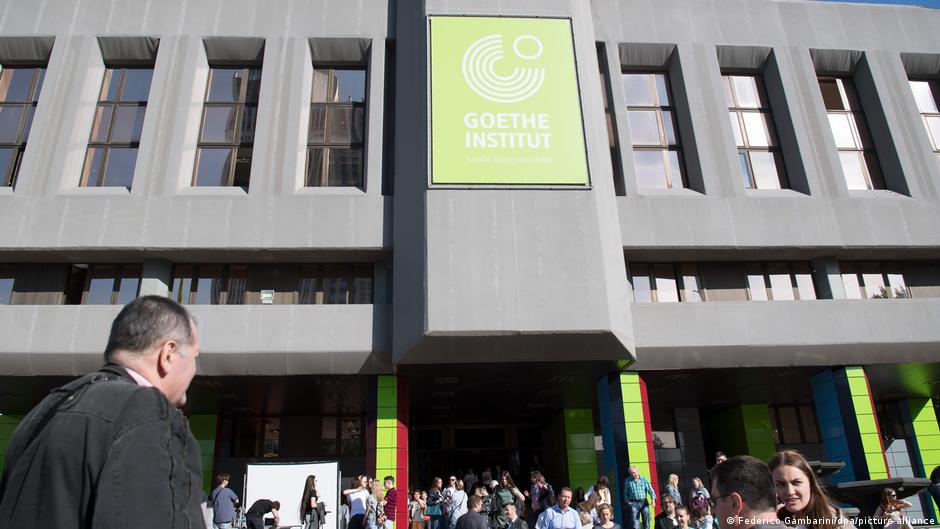
Russia said it will close all three branches of the Goethe Institute in the country after Germany moved to terminate its agreement with Russia over the operation of the Russian House in Berlin, in a further escalation that extends the fallout from sanctions and security tensions into the cultural sphere.
Russian Foreign Minister Sergei Lavrov announced the move on Thursday, Sept. 3, at the Eastern Economic Forum in Vladivostok. The decision follows action by German authorities, who said they were tightening sanctions on Russia after assigning responsibility to Moscow for an August drone incident at Leipzig airport.
For senior decision-makers, the significance of the episode lies less in the immediate operational impact of three cultural offices than in what it reveals about the next phase of Europe-Russia decoupling. Measures that once centered on trade, finance and energy are increasingly reaching the institutional framework that sustained limited engagement even after broader political ties deteriorated. The result is a narrower channel for soft-power influence, fewer stabilizing links between the two sides, and a stronger likelihood that policy retaliation will continue to spill into non-commercial sectors.
“Of course, they will be closed, after our cultural center was thrown out from there. Otherwise we will not respect ourselves,” Lavrov said.
Lavrov said Germany had branches of the Goethe Institute in Moscow, St. Petersburg and Yekaterinburg. However, according to the institute’s own information cited in the source material, its third branch in Russia is in Novosibirsk, not Yekaterinburg.
He also said the German authorities had consciously taken a step that clearly meant the end of their cultural presence in the Russian Federation, which had remained despite what he described as the “Ukrainian vicissitudes” in Russia’s relations with the West.
Cultural retaliation becomes part of the sanctions architecture
The closure order comes after Germany announced a broader package of retaliatory measures. German officials said the decision was made after examining drone settings and certain components that had been used in other hybrid incidents. Interior Minister Alexander Dobrindt said those findings underpinned Berlin’s conclusion that Moscow was responsible for the Leipzig airport incident.
As part of the response, the German government ordered the closure by Sept. 18 of the last Russian consulate general in the country, located in Bonn, and said it would terminate the agreement governing the activities of the Russian House in Berlin. German Foreign Minister Johann Wadephul said that same agreement also regulated the work of the Goethe Institute in Russia. Berlin also said it would tighten checks on Russian citizens entering Germany and strengthen measures against Russia’s so-called shadow fleet.
From a macro-economic perspective, the episode illustrates how sanction regimes are evolving from a collection of sectoral restrictions into a broader architecture of containment. Every additional administrative or diplomatic rupture raises transaction costs for any residual cross-border engagement, even where commerce is not directly targeted. For businesses, universities, regional governments and cultural operators, the loss of legal frameworks and institutional intermediaries adds uncertainty that can outlast the immediate political trigger.
The direct economic value of Goethe Institute operations is limited compared with trade or capital flows, but the indirect effects can be more durable. Cultural institutions often support language training, academic exchange, business networking and reputational access. Their removal reduces one of the few remaining low-conflict spaces through which economic relationships can be maintained or eventually rebuilt. In practice, that makes normalization more expensive and more politically complex, because the infrastructure of trust erodes alongside the infrastructure of trade.
The timing also matters. Europe’s policy response increasingly links security incidents, sanctions enforcement, border controls and action against transport networks such as the shadow fleet into a single framework. That broadening logic suggests policymakers no longer see hybrid security threats as separable from economic policy. For executives and public-sector planners, this means future measures may arrive as integrated packages rather than isolated decisions, with implications for logistics, compliance, staffing mobility and long-term market access.
For Russia, the decision to close the Goethe Institute branches underscores a reciprocal approach that treats cultural presence as leverage within a wider diplomatic confrontation. That may satisfy short-term political objectives, but it also reinforces Russia’s own institutional isolation from Europe at a time when access to external knowledge networks, language capacity and international engagement has strategic economic value. Once such channels are dismantled, reopening them is rarely quick, even if political conditions improve.
The broader message for global decision-makers is that the economic consequences of the Russia-Europe split are no longer confined to commodities, banking restrictions or export controls. The dispute is now affecting the connective tissue of international economic relations: consular access, legal agreements, mobility rules and cultural institutions that help sustain long-horizon engagement. That shift points to a more entrenched fragmentation dynamic, in which the cost of rebuilding cross-border ties rises over time.
Germany’s move, and Russia’s response, therefore represent more than symbolic retaliation. They mark another step in the conversion of geopolitical confrontation into lasting institutional separation. For European policy, that may mean a firmer alignment between security doctrine and economic statecraft. For global businesses, it is a reminder that political risk in the region now extends well beyond formal sanctions lists into the practical systems that support international presence.