NATO Intercepts Russian Military Aircraft Over Baltic Sea Amid Heightened Regional Tensions
NATO forces intercepted Russian bombers and fighters in a coordinated operation over the Baltic Sea, underscoring rising military activity and geopolitical risks in the region.
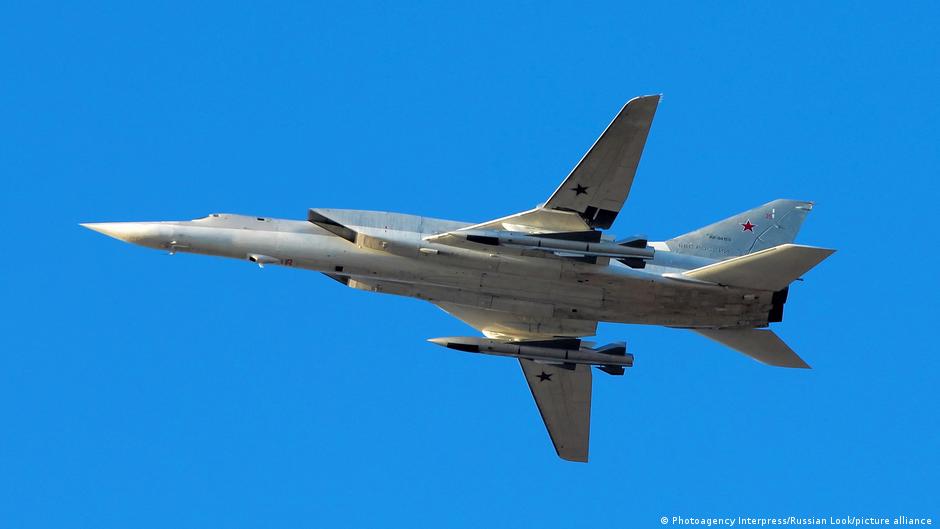
On April 20, NATO forces conducted a significant interception operation involving a group of Russian strategic bombers and fighter jets over the Baltic Sea. The incident reflects growing tensions in the region and highlights the ongoing strategic competition between Russia and NATO members.
Details of the Interception Operation
According to reports from the French military command, French Rafale fighter jets, alongside aircraft from Sweden, Finland, Poland, Denmark, and Romania, intercepted a formation of Russian long-range strategic bombers and supersonic missile-carrying bombers. The Russian contingent included Tupolev Tu-22M3 bombers escorted by approximately 10 Su-30 and Su-35 fighters.
The operation was a complex multinational effort demonstrating NATO’s integrated air defense capabilities in a strategically sensitive airspace. French Rafale jets notably scrambled from Šiauliai, Lithuania, to intercept the Russian formation, an event witnessed by journalists on the ground.
Russia’s Ministry of Defense confirmed the flight, describing it as a "planned operation over neutral waters of the Baltic Sea." The Tu-22M3 bombers, accompanied by Su-35 fighters, reportedly flew for over four hours, with foreign fighters shadowing parts of their route, underscoring the cat-and-mouse dynamics occurring in the area.
Broader Context and Implications
From April 13 to 19, Lithuanian defense officials reported four instances where NATO pilots scrambled to intercept Russian aircraft violating flight regulations. These violations included turning off transponders, flying without filing flight plans, and failing to establish communication with air traffic control.
"At certain segments of the route, long-range bombers were accompanied by fighters from foreign states," highlighting the high-stakes environment along NATO’s eastern flank.
Russia maintains that all flights adhered to international aviation rules, however, NATO’s repeated interceptions and reported infractions point to an increasingly assertive Russian air posture near NATO airspace.
Such military encounters carry significant macroeconomic and geopolitical consequences. Increased military activity heightens the risk of miscalculation or accidental escalation, which could disrupt regional stability and economic confidence. This environment also pressures NATO member states to increase defense spending and reassess regional security policies, potentially impacting broader economic priorities.
For global decision-makers, the Baltic Sea airspace incident exemplifies the persistent friction between NATO and Russia. It signals a continuation of strategic posturing that could affect energy security routes, trade flows, and defense collaborations across Europe and beyond.