Leipzig Sabotage Probe Expands as Latvia Says Suspect Had Lived in Russia
The investigation is widening into an alleged drone attack near Leipzig airport, prompting new European security measures with potential trade, sanctions and mobility impacts.
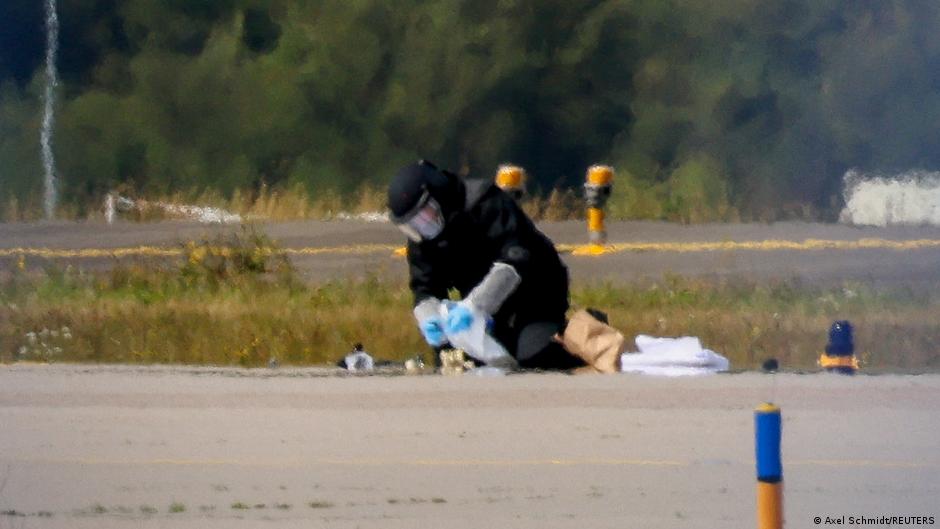
Latvia has said that a Latvian citizen suspected of involvement in an alleged sabotage attempt at Leipzig airport had been living permanently in Russia in recent years, adding a new cross-border dimension to a case that is already driving policy responses across the European Union.
The statement, reported on Thursday, September 3, by the Latvian news agency Leta and attributed to Latvia’s State Security Service, came as Riga confirmed it is cooperating with German investigators and providing the necessary support. The Latvian agency declined to comment further, citing the ongoing investigation. Germany’s federal prosecutor had not issued official public comment on the investigation at that stage.
For senior decision-makers, the case matters beyond its immediate security implications. It illustrates how suspected covert operations can quickly spill into economic policy, affecting sanctions enforcement, border controls, diplomatic relations and the operating environment for logistics, aviation and cross-border business. In this instance, the alleged target was a Ukrainian transport aircraft, placing the incident at the intersection of war-related supply chains, European infrastructure security and state-to-state confrontation.
German investigators had earlier identified two suspects in the case involving the attempted sabotage. According to reports cited from
Die Süddeutsche Zeitungand broadcasters NDR and WDR, the suspected attack on a Ukrainian transport plane involved a Russian-born man with Latvian citizenship and a Belarusian man with Russian citizenship.
The second suspect reportedly entered the Schengen area on an Italian tourist visa. The document was issued in late April at an Italian diplomatic mission in Minsk. After that information became public, Rome said it would examine the circumstances surrounding the issuance of the visa.
That detail is politically and economically relevant because it may sharpen scrutiny of how Schengen visas are granted in higher-risk jurisdictions. Tighter vetting, if adopted more broadly, would not only be a security response but also a policy shift with implications for labor mobility, business travel and consular workloads across the bloc. It would also add to an already thickening compliance burden for companies that move personnel and goods across European borders.
Security response begins to shape economic policy
Italy’s Foreign Minister Antonio Tajani framed the broader threat in unusually explicit terms, arguing that the case underscored attempts by certain countries to act against the EU using individuals without criminal records who do not arouse suspicion.
“The investigation will be carried out. However, all this confirms that there are attempts by a number of countries to take action against the EU, including through people who have no criminal record and do not arouse suspicion,” Tajani was quoted as saying.
His remarks point to a strategic challenge for European governments: how to manage an environment in which hybrid threats can exploit the openness of European travel, trade and legal systems. That challenge increasingly overlaps with economic governance. Measures designed to deter sabotage or covert disruption often extend into customs checks, sanctions monitoring, transport oversight and scrutiny of entities linked to hostile state activity.
The alleged sabotage attempt against a Ukrainian Antonov An-124 cargo plane took place on August 4, according to the investigation. Investigators said at least three drones were involved. One drone carrying explosives was found near several Ukrainian cargo aircraft. A second likely struck a DHL cargo aircraft within minutes of the first drone being discovered. A third unmanned aircraft was found 10 days later, on August 14, in a field west of the airport. Nearby, investigators found about 50 grams of a substance initially assessed as hexogen.
The operational details are significant because they suggest that critical logistics infrastructure, rather than purely military assets, may be exposed to escalating forms of disruption. Leipzig is a major cargo hub, and any incident involving aircraft, explosives and airfreight facilities raises concern over the resilience of transport nodes that are essential to European manufacturing, e-commerce and wartime support flows to Ukraine. Even isolated events can produce outsized effects if they trigger insurance reassessments, tighter cargo handling procedures or delays in customs and security processing.
Berlin has placed responsibility for the incident on Russia. In response, the German government decided to close Russia’s consulate general in Bonn and terminate the agreement covering the operation of the Russian House in Berlin. Germany also said it would tighten checks on Russian citizens entering the country and strengthen measures against Russia’s “shadow fleet,” which Moscow uses to circumvent EU sanctions imposed over Russia’s war against Ukraine.
Those steps show how a security incident can feed directly into a broader economic containment strategy. Measures targeting a shadow fleet are especially consequential because they bear on shipping, maritime insurance, oil flows and sanctions enforcement. For executives and policymakers, the signal is that Europe is prepared to widen the range of instruments used against perceived hostile activity, connecting physical security incidents to trade and financial restrictions.
Moscow has rejected the accusations that it organized the sabotage attempt in Leipzig. In response to the closure of the Russian House in Berlin, Russian authorities said they would close the Goethe-Institut branches operating in Russia, located in Moscow, St. Petersburg and Novosibirsk.
The immediate investigation remains centered on criminal responsibility and operational facts. But the medium-term significance is broader. The case is likely to reinforce a European policy trend toward integrating security, migration screening, sanctions enforcement and infrastructure resilience into a single framework. That has consequences for airlines, logistics operators, exporters, insurers and multinational firms with exposure to Eastern Europe and EU border regimes.
For markets and boardrooms, the lesson is not that one airport incident will transform the regional economy overnight. It is that repeated episodes of alleged sabotage, especially where governments attribute responsibility to a state actor, can cumulatively harden the policy environment. In practical terms, that means higher friction in cross-border movement, more intrusive oversight of transport and maritime channels, and a greater likelihood that geopolitical risk will continue migrating from the diplomatic sphere into the day-to-day mechanics of European commerce.