Italian PM Meloni Responds to Russian Propaganda Attacks Amid Rising Diplomatic Tensions
Italy faces diplomatic strain after Russian TV host’s insults targeting PM Meloni trigger official protests and political solidarity.
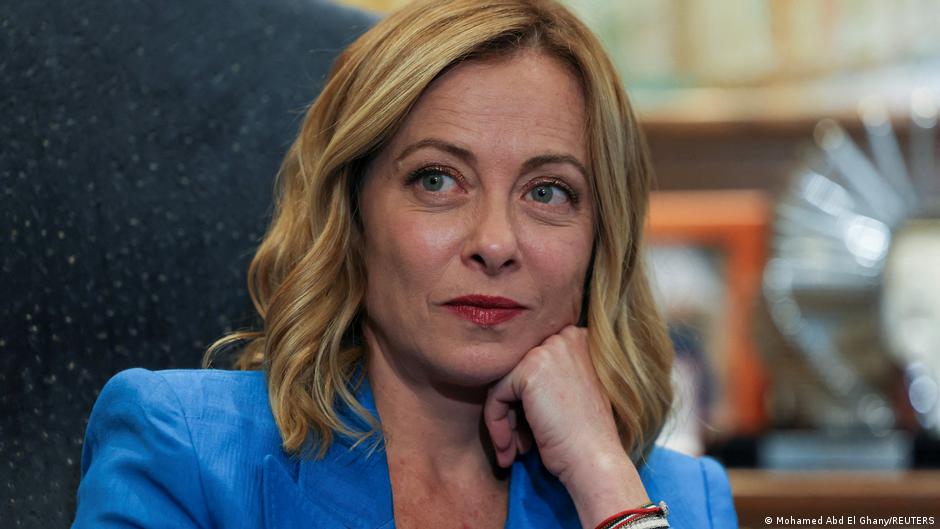
Italian Prime Minister Giorgia Meloni has publicly condemned what she described as "zealous regime propagandists" following offensive remarks made by Russian television host Vladimir Solovyov. The incident has sparked a diplomatic reaction and notable political support within Italy, underscoring growing tensions between Rome and Moscow amid broader geopolitical shifts.
Diplomatic Fallout and Political Reactions
On the evening of April 21, Meloni posted on social media expressing her disapproval of the propaganda attacks, emphasizing Italy’s independence in its foreign policy. She stated, "A zealous propagandist of a regime has no right to lecture on consistency or freedom. But these caricatures will not make us change course. Unlike others, we depend on no one, have no masters, and take no orders. Our only guide is the interests of Italy, which we will proudly follow despite protests from propagandists worldwide." Notably, she did not specify the precise provocation triggering her response.
Earlier that day, Italian Foreign Minister Antonio Tajani summoned the Russian ambassador to Rome, Alexey Paramonov, to formally protest the "extremely serious and offensive statements" made by Solovyov against Prime Minister Meloni. The Russian TV host’s remarks, aired in both Italian and Russian, included insults branding Meloni a "fascist creature who betrayed her voters" and a "disgrace to humanity," as well as accusations that she had betrayed former US President Donald Trump, to whom she had allegedly pledged loyalty.
These statements received wide coverage in Italy’s major media outlets including La Repubblica, Domani, Sky Italia, and the ANSA news agency, drawing significant public and political attention.
"We depend on no one, have no masters, and take no orders. Our only guide is the interests of Italy." — Giorgia Meloni
Italian political leaders across the spectrum expressed solidarity with Meloni. President Sergio Mattarella condemned Solovyov’s words as "vulgar." Former Prime Minister Giuseppe Conte described the insults as "indescribable," while Barbara Floridia, chair of the parliamentary commission overseeing the state broadcaster RAI, and Mariastella Gelmini, representative of the Noi Moderati party, labeled the comments unacceptable. The Democratic Party leader Elly Schlein also voiced support for Meloni during this diplomatic dispute.
Broader Implications for Italy-Russia Relations and European Stability
This incident highlights the delicate balance Italy seeks to maintain between its national interests and its position within the broader European and transatlantic frameworks amid the ongoing geopolitical rivalry involving Russia. Meloni’s assertive rejection of foreign pressure and propaganda signals Italy’s intent to preserve sovereign decision-making in an increasingly polarized international environment.
The diplomatic protest illustrates the potential for media-driven provocations to escalate into formal state-level confrontations, which can influence broader diplomatic relations and economic interactions. Italy, as a key European Union member with significant economic ties to both Western partners and Russia, must navigate these tensions carefully to safeguard its strategic interests.
Moving forward, Italy’s response could set precedents for how EU countries manage external propaganda and disinformation campaigns while upholding democratic values and international diplomatic protocols. The episode serves as a reminder of the complex intersection between media influence, political rhetoric, and international relations in shaping economic and geopolitical landscapes.