Iran’s Leadership Transition and Regional Tensions Following Ayatollah Ali Khamenei’s Death
Iran mourns former Supreme Leader Ali Khamenei amid ongoing U.S.-Iran hostilities and political uncertainty.
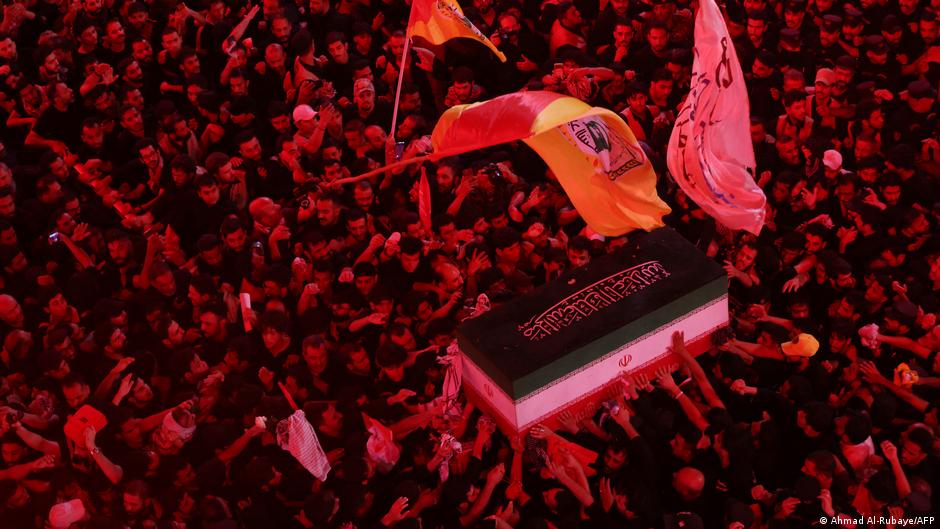
After six days of mourning in Mashhad, Iran held the private funeral of former Supreme Leader Ayatollah Ali Khamenei, who was killed in a February attack by U.S. and Israeli forces. The ceremony took place at the Imam Reza Shrine, one of the largest Shiite Muslim pilgrimage sites globally, visited annually by nearly 20 million people.
The choice of burial site reflects the Iranian regime’s portrayal of Khamenei as a martyr who died resisting a militarily superior enemy. Alongside Khamenei, family members who perished in the same airstrike were also interred at the mausoleum. This location also houses the tomb of Ibrahim Raisi, Iran’s president who died in a 2024 helicopter crash.
Delayed Funeral and Leadership Succession Amid Fragile Ceasefire
The funeral occurred more than four months after Khamenei’s death was confirmed, with Tehran announcing funeral dates only in mid-June during a fragile ceasefire agreement between Iran and U.S.-Israeli forces. Mourning events began on July 4, with Khamenei’s coffin displayed in Tehran, then in the Shiite holy city of Qom, and subsequently in Iraqi Shiite pilgrimage centers Najaf and Karbala. Iranian authorities estimated that up to 20 million people participated in Tehran’s farewell ceremony alone.
Notably, Khamenei’s son, Mojtaba—who is officially the new Supreme Leader—did not appear publicly during the mourning period. His absence has fueled speculation about his health and security. Some sources suggest Mojtaba was seriously wounded during the February attack but remains functional. Iranian officials reportedly fear Israeli attempts to target him, explaining his lack of public appearances.
The state news agency Fars reported that Mojtaba Khamenei is expected to make a public appearance on July 19 at another farewell ceremony in Qom, where he will deliver a eulogy for his father. However, previous reports about his imminent public reemergence have been unconfirmed.
Geopolitical Implications and Escalation Following Mourning Period
During the funeral week, U.S. President Donald Trump announced a week-long pause in negotiations with Tehran out of respect for the mourning period, expressing surprise at the scale of public grief over Khamenei. Yet, just two days after the announcement, hostilities resumed in the region.
Iran shelled tanks in the strategic Strait of Hormuz, claiming the vessels attempted to transit without Tehran’s approval. The U.S. retaliated by striking Islamic Revolutionary Guard Corps positions near the coast, prompting Iran to launch further attacks on American bases in Bahrain and Kuwait.
“The ceasefire between the U.S. and Iran is no longer in effect, and I do not intend to negotiate with Tehran,” Trump declared at a NATO summit in Ankara, signaling a hardening U.S. stance despite ongoing claims from the White House that diplomatic channels remain open.
This renewed confrontation underscores the fragile nature of the temporary ceasefire and highlights the volatility of U.S.-Iran relations amid Iran’s leadership transition. The uncertainty surrounding Mojtaba Khamenei’s health and visibility adds layers of complexity to Iran’s internal power dynamics, potentially impacting regional stability and global economic interests linked to Middle Eastern security.
For senior policymakers and economic strategists, these developments suggest a need for cautious reassessment of geopolitical risk in the Middle East. The combination of leadership opacity, military escalation, and interrupted diplomacy could disrupt energy markets and complicate international efforts to stabilize the region.