Global Memorial Campaign Highlights Russia’s Shift on Civic Institutions
Commemorations in 101 cities underscore how restrictions on independent civic initiatives can reshape institutional trust and global ties.
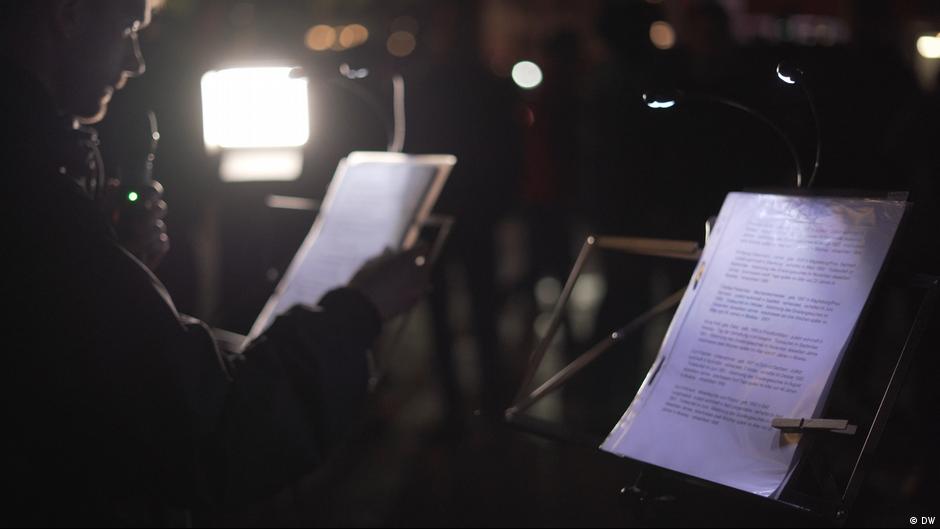
The annual “Return of the Names” campaign commemorating victims of Stalinist repression was held across multiple countries on Thursday, October 29, ahead of the Day of Remembrance for Victims of Political Repression. The campaign’s website listed 101 cities where events took place this year, either on October 29 or earlier.
Although centered on historical memory, the campaign also highlights policy questions with long-term economic relevance. The treatment of independent civic organizations, the scope for private commemoration and the involvement of foreign diplomats offer senior decision-makers signals about Russia’s institutional direction and its relationship with international civil society.
Germany accounted for 15 participating cities, according to the published list. Events were held in Berlin, Munich, Hamburg, Cologne, Bonn, Düsseldorf, Bremen and Bielefeld, among other locations. In Paris, the commemoration was organized by Memorial France at a monument to Parisians killed in the First World War on Boulevard de Ménilmontant.
Restrictions Shift Commemoration Beyond Russia
Russian authorities have not approved the “Return of the Names” campaign since 2020, citing measures to combat the coronavirus. Pressure on independent historical-memory initiatives intensified after the liquidation of the international Memorial society in 2021, according to RFI. The campaign nevertheless continued abroad, while people inside Russia continued to find ways to commemorate those who died.
“The campaign did not disappear: it continued in other countries, while people in Russia still find ways to honor the memory of those who died,” RFI said.
This year, Russia saw private commemorations for victims of repression for the first time since Memorial was banned, according to the investigative online publication The Insider. Independent events took place in the Irkutsk region, Kirov and Veliky Novgorod. Similar commemorations were scheduled for October 30 in St. Petersburg, Kopeysk in the Chelyabinsk region and Tolyatti in the Samara region.
For economic and policy leaders, the geographic shift in participation is significant because civil institutions form part of the wider environment in which investment, innovation and labor markets operate. Restrictions on organized civic activity do not by themselves establish an economic outcome, but they can affect external assessments of institutional predictability, social cohesion and the durability of policy frameworks.
Diplomatic Participation Carries a Wider Signal
In Moscow, diplomats from Sweden, the Czech Republic, the Netherlands, Poland and other countries visited the Solovetsky Stone on Lubyanka Square. RusNews reported that no representative of the United States Embassy attended this year.
The presence of European diplomats shows how historical commemoration can overlap with contemporary international relations. At a time when governments and companies assess geopolitical exposure alongside conventional economic indicators, such symbolic participation can become part of the broader evidence used to interpret bilateral relations and policy trajectories.
The international Memorial society first organized “Return of the Names” in 2007. On October 29 of that year, participants gathered at the Solovetsky Stone in Moscow and read aloud the names of people executed or subjected to repression by the Soviet state.
The reading of names has since been conducted both in person and remotely, with organizers also providing online broadcasts. This hybrid format has enabled the initiative to continue across national borders and despite constraints on physical gatherings. According to the campaign’s website, “Return of the Names” was held in 150 cities in 2025, compared with the 101 cities listed for the current year.
Institutional Memory and Long-Term Economic Confidence
The campaign’s evolution illustrates how civic activity can migrate internationally when domestic institutions are constrained. That process has potential long-term implications for governments and businesses: diaspora networks can preserve organizational capacity abroad, international advocacy can sustain scrutiny of domestic policy, and diplomatic participation can keep governance issues on bilateral agendas.
For senior decision-makers, the principal macroeconomic insight is not that a commemorative event directly changes growth or trade. Rather, the campaign provides a qualitative indicator of institutional change. The closure of Memorial, the continuing absence of official approval since 2020 and the emergence of private events all point to a reconfigured relationship between the state and independent civic initiatives.
Such changes matter because confidence in institutions is closely connected to expectations about policy consistency and long-term risk. The spread of commemorations across 101 cities demonstrates that restrictions within Russia have not ended the initiative. Instead, they have altered its structure, expanding the role of overseas organizations, decentralized participation and private action inside the country.