Florida’s Palm Beach International Airport Renamed to Honor President Trump, Signaling Political and Economic Symbolism
Palm Beach International Airport will be renamed after President Donald Trump, with its airport code changing to DJT, highlighting broader shifts in U.S. political branding and economic signaling.
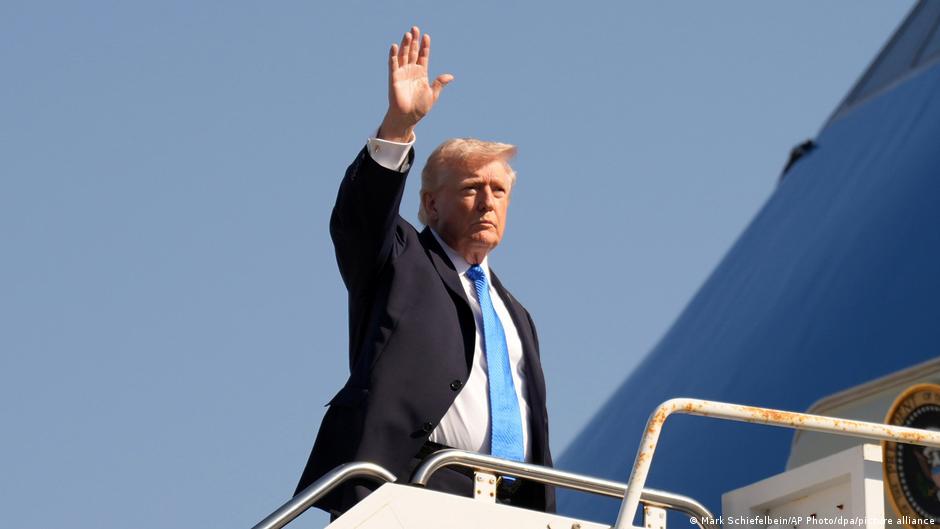
The Palm Beach International Airport in Florida will officially be renamed in honor of the sitting President of the United States, Donald Trump, effective July 9. This decision includes changing the airport’s three-letter International Air Transport Association (IATA) code from PBI to DJT, reflecting Trump’s initials.
Political Symbolism and Economic Implications
This renaming move, announced by U.S. Transportation Secretary Sean Duffy, represents a rare instance of a major U.S. airport being named after a sitting president. The Palm Beach region holds particular significance as the site of Trump’s Mar-a-Lago residence, which he frequently uses for hosting global leaders and conducting political meetings.
Beyond symbolic gestures, such renaming holds potential macroeconomic and geopolitical relevance. Airports function as hubs of commerce, travel, and international connectivity, and naming one after a prominent political figure can serve as a strategic branding tool that influences tourism, investment, and diplomatic perceptions.
"Changing an airport’s name and code entails recalibrating its identity within global transportation networks, which may impact everything from airline logistics to regional economic integration," explains a transportation policy expert.
This move aligns with a broader pattern of politically motivated rebranding within the U.S. federal and state spheres. For example, the U.S. Institute of Peace was renamed after Trump, and the John F. Kennedy Center for the Performing Arts in Washington was rebranded as the "Donald J. Trump and John F. Kennedy Performing Arts Center." Additionally, the U.S. Navy has announced plans to construct two new warships in the "Trump" class, reinforcing the President’s imprint on national infrastructure and defense assets.
These shifts coincide with upcoming national anniversaries, such as the 250th anniversary of U.S. independence, for which commemorative items featuring President Trump have been authorized. This includes a special edition of passports bearing his portrait and signature in gold lettering, the inclusion of his signature on the $100 bill, and the minting of 24-carat gold coins emblazoned with Trump’s image and the word "Liberty."
Long-term Economic and Policy Consequences
The renaming of key national institutions and infrastructure after a sitting president signals a significant recalibration of historical narrative and political branding in the United States. From an economic standpoint, such initiatives may influence consumer sentiment, international diplomatic engagement, and capital flows.
Airports, beyond serving as transit points, are economic engines driving local employment, tourism revenues, and regional connectivity. Rebranding Palm Beach International Airport to "Donald J. Trump International" could create ripple effects in marketing campaigns, airline partnerships, and even international diplomacy, particularly in Florida’s strategic role as a gateway between the U.S. and Latin America.
Moreover, this initiative may reflect a broader policy shift toward intertwining political legacy with economic infrastructure, raising questions about the implications for impartiality, national unity, and the commercialization of public assets. Senior decision-makers should consider how such symbolic actions integrate with broader economic strategies and their influence on international perceptions of U.S. stability and governance.