Ukraine and Germany Deepen Defense Collaboration Amid Escalating Security Threats
Ukrainian President Zelensky meets with German officials to accelerate air defense cooperation following recent missile strikes.
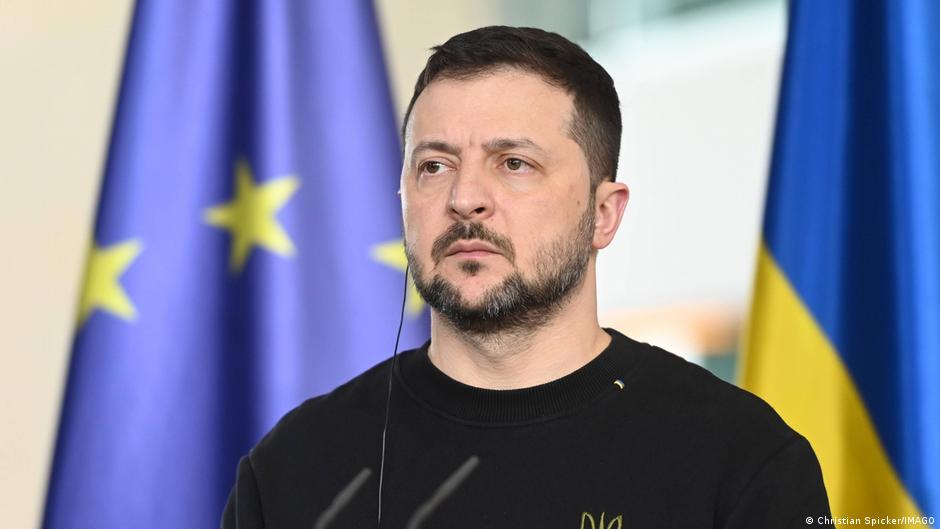
On May 14, Ukrainian President Volodymyr Zelensky met in Kyiv with key German officials, including Thorsten Frei, head of the Federal Chancellor's office, and Martin Jäger, director of Germany's Federal Intelligence Service (BND), to discuss strengthening Ukraine's air defense capabilities amid ongoing Russian attacks.
This high-level engagement underscores the strategic importance Germany places on supporting Ukraine's defense infrastructure in response to intensified missile and drone strikes. The meeting took place shortly after a significant overnight assault on Kyiv involving drones and rockets, which reportedly killed at least 21 people and injured around 50.
Accelerating Air Defense and Drone Cooperation
President Zelensky emphasized the urgent need to expedite agreements with Germany on integrated air defense systems to better shield Ukrainian civilians from aerial attacks. He acknowledged Germany's prior contributions to bolstering Ukraine's air defenses and expressed optimism about Berlin's continued leadership in this domain.
"We talked about how to speed up our agreements with Germany on air defense to protect Ukrainians from such terror. Germany has repeatedly helped strengthen our airspace protection, and we hope for corresponding leadership now," Zelensky stated.
Beyond air defenses, the discussions covered a proposed "drone deal," reflecting Ukraine's intention to develop and enhance unmanned aerial systems in partnership with Germany. Zelensky remarked, "We are ready to strengthen those who have strengthened us," highlighting the mutual commitment to deepen defense collaboration.
Earlier agreements in mid-April between Germany and Ukraine established a framework for cooperation, including joint production of medium- and long-range drones and investments amounting to several hundred million euros aimed at expanding Ukraine's capacity for long-range precision strikes. Information sharing between the two nations' defense agencies is also a critical component.
Expanding Strategic Defense Capabilities with Technology Integration
German Defense Minister Boris Pistorius, during a visit to Kyiv on May 11, confirmed ongoing efforts to develop unmanned aerial vehicles (UAVs) with ranges up to 1,500 kilometers, a significant extension of Ukraine's operational reach. This technological advancement could shift the dynamics on the Eastern European security landscape by enabling more effective countermeasures and deterrence.
Furthermore, Germany plans to join Ukraine's Brave1 platform, an initiative that connects Ukrainian military personnel with technology developers specializing in innovative defense solutions. The partnership seeks to incorporate artificial intelligence elements into weapon systems, enhancing Ukraine's defensive and offensive capabilities amid protracted conflict.
These developments signal a strategic policy shift by Germany towards deeper military-industrial cooperation with Ukraine, reflecting broader geopolitical implications. The integration of cutting-edge drone technology and AI-enhanced systems may influence future conflict scenarios and defense postures in the region and beyond.
For senior decision-makers, the evolving Ukraine-Germany defense collaboration exemplifies how state partnerships can adapt rapidly under duress, leveraging technology and shared intelligence to counteract aggressive threats. Monitoring these dynamics offers insight into potential shifts in European security architecture and the longer-term impact on global defense cooperation frameworks.