Latvia's Coalition Collapse After Defense Minister Resignation Signals Political and Economic Uncertainty
The resignation of Latvia’s Defense Minister has triggered the disintegration of the ruling coalition, raising concerns about political stability and economic policy direction ahead of parliamentary elections.
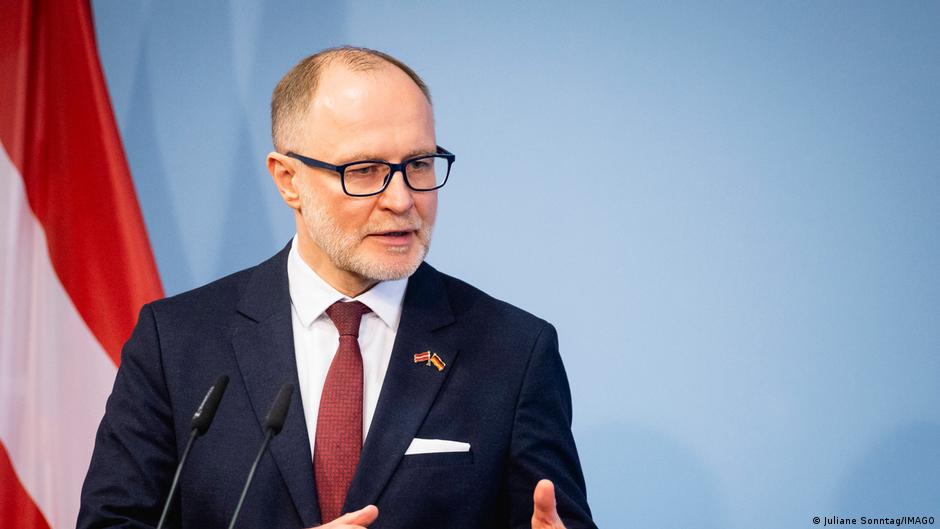
Latvia’s ruling coalition government has disintegrated following the resignation of Defense Minister Andris Sprūds, a key member of the Progressive Party. The collapse of the coalition, comprising the New Unity, Progressive, and Union of Greens and Farmers parties, has significant implications for the country’s political stability and economic prospects in a sensitive regional security context.
Political Fallout and Economic Implications
On May 13, the Progressive Party’s parliamentary leader Andris Šuvajev declared the coalition government ineffective after discussions with Prime Minister Evika Siliņa from the New Unity party. The Union of Greens and Farmers also concurred with this assessment, effectively ending the ruling alliance ahead of Latvia’s parliamentary elections scheduled five months from now.
Šuvajev highlighted the absence of satisfactory responses from the Prime Minister on critical issues, stating that the government faces two possible outcomes: either the Prime Minister resigns due to lost public trust or the parliament votes to terminate the government. While the Progressive Party has not withdrawn its ministers from the cabinet yet, opposition parties have expressed readiness to initiate a vote of no confidence.
“At this stage, there are only two options: either Siliņa announces her resignation due to lost public trust or the parliament ends this with a vote,” Šuvajev said.
Without the Progressive Party's support, the government would hold only 41 parliamentary seats out of 100, while the opposition controls 47, making sustaining a functioning government almost impossible. This political destabilization threatens to undermine investor confidence and complicate fiscal policymaking amid ongoing regional security challenges.
Defense Minister’s Resignation and Security Concerns
The immediate trigger for this political crisis was the resignation of Defense Minister Andris Sprūds on May 10, following an incident involving two drones entering Latvian airspace, allegedly en route from Ukraine to Russia. Prime Minister Siliņa publicly stated that Sprūds had lost her confidence and criticized the military leadership’s failure to ensure national airspace security.
In response, the Prime Minister proposed Colonel Raivis Melnis, a professional military officer, as the new Defense Minister. While she invited the Progressive Party to continue coalition cooperation, they have yet to provide a definitive response, requesting additional time for discussions.
Strategic and Macroeconomic Outlook
This political upheaval occurs in a sensitive geopolitical environment in Europe, where Latvia’s security and defense capabilities are under increased scrutiny. President Edgars Rinkēvičs emphasized the necessity of a stable and decisive government capable of enhancing Latvia’s defense posture. He urged parliamentary factions to develop constructive proposals to resolve the crisis ahead of his May 15 meeting with faction leaders.
Political instability less than half a year before elections can exacerbate economic uncertainty, deterring foreign investment and delaying critical reforms. With Latvia’s economy closely linked to EU policies and Russia’s geopolitical pressures, the disruption risks undermining fiscal discipline and strategic budget allocations, particularly in defense spending.
For global economic observers and policymakers, Latvia’s government collapse highlights the persistent vulnerability of small open economies to political volatility, especially when situated in geopolitically tense regions. The coming weeks will be crucial in determining whether Latvia can restore stable governance to maintain its economic trajectory and meet NATO’s defense expectations amid broader European security challenges.