Russian Missile and Drone Assault on Kyiv Signals Escalation with Broader Economic Risks
Massive attack on Kyiv and multiple Ukrainian cities raises concerns over regional stability and economic disruption.
Widespread Strikes on Kyiv and Ukrainian Regions
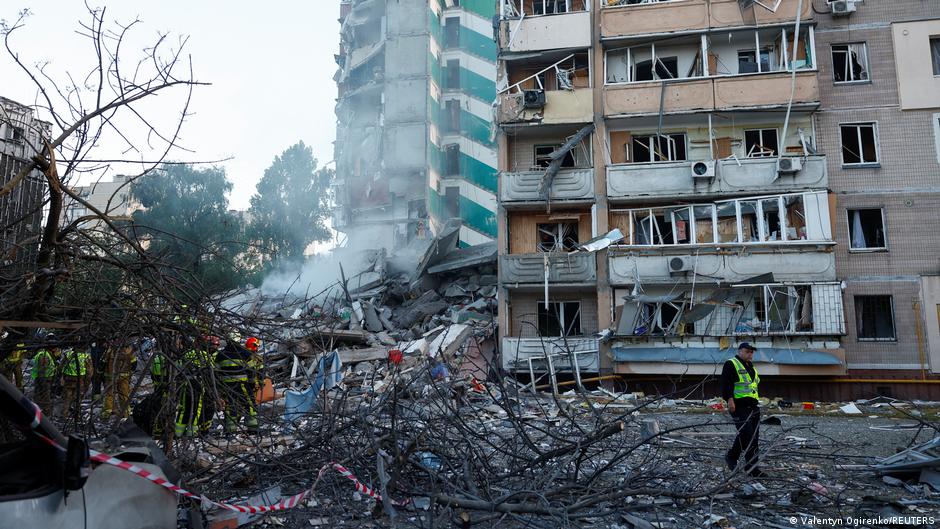
On the night of May 14, Russian forces launched a massive missile and drone barrage targeting Ukraine’s capital, Kyiv, and other key urban centers. The assault caused extensive fires and structural collapses, including a residential high-rise in Kyiv’s Darnytskyi district, where rescue teams have already saved ten individuals from the rubble. At least 16 people were injured and one person died, according to Kyiv authorities.
The attacks extended beyond Kyiv to regions including Kharkiv, Poltava, Sumy, Donetsk, Odesa, Mykolaiv, Dnipropetrovsk, Cherkasy, and notably the western city of Uzhhorod. The Ukrainian Air Force reported that on May 13 alone, Russian forces deployed 892 drones, 710 of which were neutralized by Ukraine’s air defenses.
"The scale and precision of these strikes indicate a strategic intensification that threatens Ukraine's infrastructure and regional stability," commented a defense analyst.
Implications for Ukraine's Economic Infrastructure and Global Markets
The missile and drone strikes not only inflicted human casualties but also targeted critical civilian infrastructure, including residential zones, business centers, fuel stations, and urban facilities across multiple districts of Kyiv. Fires erupted at a gas station and in various urban locations, exacerbating local disruption.
Damage to urban infrastructure impedes economic activity and threatens supply chains vital to Ukraine's economy, which is already strained by ongoing conflict and geopolitical instability. The repeated aerial assaults carry significant consequences for reconstruction costs, investor confidence, and the broader regional economic environment.
Moreover, the unprecedented nature of the attacks reaching as far west as Uzhhorod marks an expansion of the conflict zone, potentially destabilizing supply routes toward Central Europe and affecting European energy and commodity markets.
Long-Term Economic Consequences and Policy Challenges
For global economic actors and policymakers, the escalation underscores the fragility of supply chains and infrastructure in conflict zones and highlights the need for contingency planning and adaptive economic policies. Sustained damage to Ukraine’s urban and industrial centers can trigger increased migration, disrupt agricultural exports, and strain international humanitarian resources.
International stakeholders must monitor developments closely, as prolonged conflict and infrastructure degradation may necessitate shifts in trade routes, energy sourcing, and diplomatic strategies to mitigate broader economic fallout.