EU Shelves High-Level Defence Panel After German and Italian Resistance
The cancelled initiative highlights Europe’s struggle to align defence planning, industrial priorities and fiscal commitments amid rising security risks.
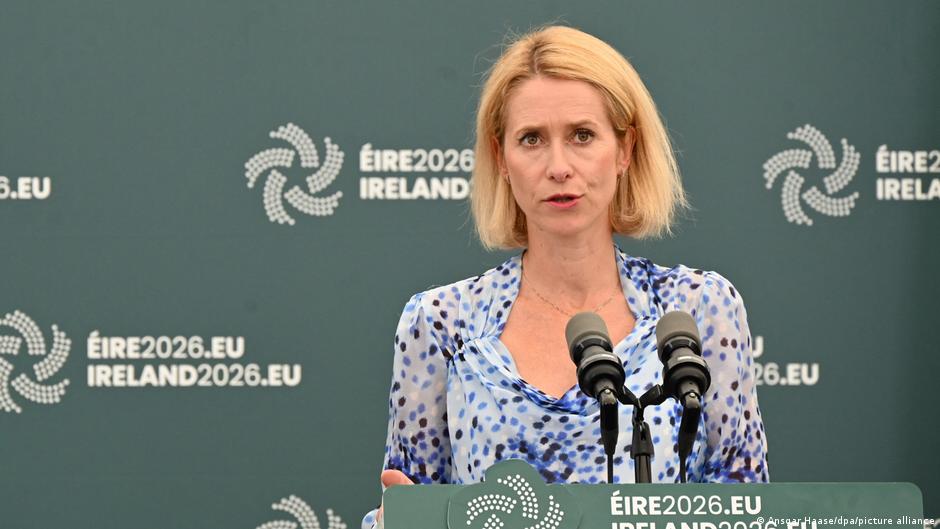
European Union foreign policy chief Kaja Kallas cancelled at the last minute a planned launch of a high-level expert group on defence after opposition from several member-state governments, including Germany and Italy, according to dpa. The decision halted an initiative that had been due to be presented on Monday, September 7, and was intended to accelerate work on strengthening European defence policy.
The cancellation is more than an institutional setback. For senior economic and policy decision-makers, it underscores a central problem facing Europe: the bloc has identified major gaps in military capability, but still lacks a settled governance model for closing them quickly. That uncertainty matters for fiscal planning, defence procurement, industrial capacity, transatlantic coordination and the long-term allocation of public capital.
An EU official in Brussels told dpa late on September 6 that some member states judged the initiative premature. After talks with EU defence ministers, the decision was taken not to proceed with this specific plan.
“Some member states considered that at this moment this was not the right step,” the EU official said, according to dpa.
Defence Ambition Meets Institutional Friction
The proposed group was to operate under Kallas’s leadership and develop recommendations on how Europe could address military capability gaps faster and more effectively. It was expected to include senior political and military representatives from several EU countries, as well as the United Kingdom and Ukraine. Its members were due to be introduced at a launch event on the morning of September 7.
The involvement of the UK and Ukraine would have carried clear strategic and economic implications. Britain remains one of Europe’s largest defence actors despite being outside the EU, while Ukraine has become a testing ground for battlefield innovation, procurement adaptation and rapid military technology deployment. Including Kyiv was intended to connect EU defence planning more directly with operational lessons from the war.
Kallas had announced on September 1, after an informal meeting of EU defence ministers in Wicklow, Ireland, that Ukraine would be brought into the search for solutions to strengthen Europe’s defence capabilities. Kyiv was expected to take part in what she described as a new high-level group alongside senior politicians and military officials from EU states and the UK.
At that meeting, a DW correspondent asked Kallas who would represent Ukraine in the group, noting that former Ukrainian defence minister Mykhailo Fedorov had been engaged by Italy as a defence adviser. Kallas did not name the Ukrainian representative or representatives, saying instead that the full composition of the group would be presented on September 7.
The cancellation therefore interrupts a process that was meant to move from general political agreement to concrete institutional design. For European governments, the issue is not whether defence capacity must increase. The more contested question is who should define priorities, coordinate procurement and convert strategic urgency into funded programmes.
Germany’s NATO Preference Carries Economic Consequences
According to dpa, one possible reason for Germany’s rejection of the expert group is Berlin’s critical view of Kallas personally as head of the EU’s foreign policy service. In defence policy, German authorities are inclined to rely on NATO planning processes. Germany is also currently advocating that a significant part of the European External Action Service overseen by Kallas be merged with the European Commission.
That position reflects a broader policy divide with direct macroeconomic relevance. NATO planning offers an established military framework, but EU-level defence policy is increasingly tied to questions of industrial strategy, public investment, supply-chain resilience and common procurement. Where those responsibilities sit affects how quickly funds are mobilised, how contracts are structured and whether European industry can scale production predictably.
Italy’s reported opposition adds another layer to the challenge. A common European defence push can imply higher spending commitments, pressure to coordinate national industries and difficult trade-offs between domestic procurement priorities and collective capability targets. For governments managing debt burdens, growth constraints and competing social spending needs, the governance of defence cooperation is inseparable from fiscal politics.
The collapse of this initiative also comes against the backdrop of a European debate over whether the continent is moving quickly enough. Kallas has argued that most EU countries are also NATO members, but that gaps remain in the alliance’s defence capabilities and European states need to fill them. She has also said Europe has acted too slowly despite a rising threat level.
Her argument for including Ukraine was based on experience. Kallas described Kyiv as a global leader in battlefield innovation and said Ukraine had substantial expertise. For EU economies, that points to a possible shift in how defence innovation is sourced: less from long procurement cycles alone and more from rapid adaptation, dual-use technologies and lessons from active conflict.
A Delay, Not a Disappearing Problem
The European foreign policy service now intends to examine new ways to cooperate with EU countries on defence policy. The diagnosis, according to the EU source cited by dpa, has not changed: Europe must move faster on defence.
“We do not want to look back in a few years and conclude that Europe was so focused on where it should be in 2035 that it missed the opportunity to do what was necessary in 2027,” the source said.
That warning captures the economic stakes. Long-term defence strategies often point toward 2035 horizons, but procurement, production capacity and readiness require near-term decisions. If Europe delays coordination, it risks higher costs later, fragmented investment and continued dependence on external suppliers or NATO-led processes for capability planning.
For businesses, investors and finance ministries, the episode signals that Europe’s defence build-up remains politically real but institutionally unsettled. Demand for defence goods and related technologies may continue to rise, but the route through which that demand becomes funded contracts is still contested. The balance between EU institutions, national governments, NATO frameworks, the European Commission and external partners such as the UK and Ukraine remains unresolved.
The cancelled launch does not erase the pressure for European rearmament or capability expansion. It does, however, show that the bloc’s economic response to a deteriorating security environment will depend as much on institutional alignment as on headline spending pledges. Without agreement on governance, Europe may struggle to convert strategic urgency into industrial scale, budget certainty and credible long-term deterrence.