EU Agrees to Open Key Accession Clusters for Ukraine and Moldova
The decision advances Kyiv and Chisinau toward deeper EU integration while signaling a broader policy shift in Europe’s economic perimeter.
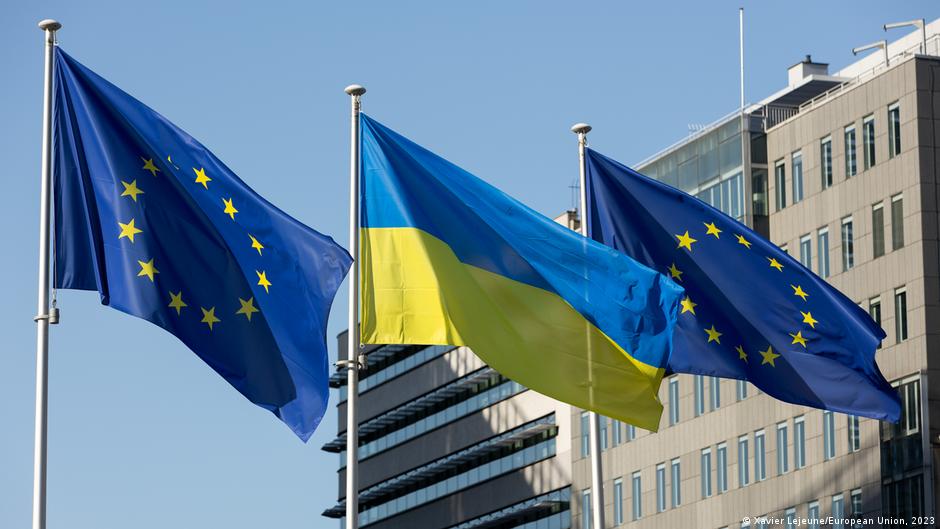
All European Union member states have agreed to open negotiation clusters 2 and 3 in the accession talks for Ukraine and Moldova, Irish Minister for European Affairs Thomas Byrne wrote on X on Monday, October 12. The move marks a significant procedural step in the two countries’ path toward EU membership and carries wider implications for the bloc’s economic architecture, regulatory reach and long-term strategic positioning.
Byrne said the agreement would follow what he described as a “Montenegro Monday” with a “Super Tuesday” for Albania, Moldova and Ukraine. He wrote that all EU member states had agreed to open clusters 2 and 3 for Ukraine and Moldova, close chapters 17, 18 and 19 for Albania, and close chapter 20 for Montenegro.
“All EU member states agreed to open clusters 2 and 3 for Ukraine and Moldova,” Byrne wrote, referring to the accession negotiation framework.
The two clusters concern the “Internal Market” and “Competitiveness and Inclusive Growth.” In macroeconomic terms, these areas sit at the core of the EU’s integration model. They touch on market access, regulatory alignment, competition rules, industrial development, labour and social policy, and the institutional capacity required to operate within the single market.
Regulatory Alignment Moves Closer to the Economic Core
EU accession negotiations are structured around six broad thematic sections, known as clusters, which cover different areas of legislation and public policy. During the talks, the EU assesses how prepared a candidate country is to apply EU rules and standards. The six clusters are “Fundamentals,” “Internal Market,” “Competitiveness and Inclusive Growth,” “Green Agenda and Sustainable Connectivity,” “Resources, Agriculture and Cohesion,” and “External Relations.”
For Ukraine and Moldova, the opening of the internal market and competitiveness clusters indicates that accession talks are moving from foundational requirements toward the economic substance of integration. The first cluster, “Fundamentals,” was opened for Ukraine on June 15. The next phase will put greater emphasis on how candidate economies adapt their institutions, regulatory systems and business environments to EU standards.
For senior decision-makers, the development is important because it points to a gradual expansion of the EU’s economic rulebook eastward. Even before formal membership, accession negotiations can accelerate legal approximation, change investment expectations and influence policy priorities in candidate countries. Companies operating in or trading with Ukraine and Moldova may increasingly face a landscape shaped by EU norms on competition, product standards, services, labour regulation and market governance.
The agreement also reflects the political economy of enlargement. Earlier on October 12, Ukraine’s Verkhovna Rada approved amendments to the education law in two readings and as a whole. The amendments concern the rights of national minorities and were necessary to secure Hungary’s consent to opening the second and third negotiation clusters for Ukraine’s accession to the EU.
Later that evening, Ukrainian lawmaker Yaroslav Zhelezniak said on Telegram that the adopted law had been signed by President Volodymyr Zelenskyy. The sequence underlines how accession progress often depends on both broad EU strategy and specific bilateral concerns among member states. For Ukraine, satisfying Hungary’s demands on minority rights was directly linked to movement on economically central negotiation areas.
Enlargement as Economic Strategy
The timing adds to the significance. On October 5, EU Enlargement Commissioner Marta Kos said at a press conference after a Moldova-EU Association meeting that the EU could open two accession negotiation clusters for Ukraine and Moldova during an intergovernmental conference on the margins of the EU General Affairs Council scheduled for October 13 in Luxembourg.
Kos said Ukraine and Moldova were carrying out systemic reforms “in very difficult conditions” while belonging to a group of four states that are leaders in accession negotiations. She also noted that the European Commission would publish a detailed assessment of reform progress across all areas in candidate countries on October 28 in its annual enlargement report.
From a macroeconomic perspective, the opening of these clusters is not only a diplomatic marker. It also offers insight into how the EU is adapting its enlargement policy amid war, security pressure and the need to stabilize its eastern neighbourhood. Bringing Ukraine and Moldova closer to the single market framework may strengthen institutional predictability, encourage reform-linked financing and support longer-term reconstruction and convergence strategies.
At the same time, the process carries substantial demands. Alignment with the internal market and competitiveness framework requires administrative capacity, legal implementation and durable political commitment. For Ukraine in particular, the challenge is compounded by the war. Kos urged observers not to forget that Ukraine is fighting for survival while simultaneously pursuing EU accession and implementing reforms, including in order to receive additional funds for the budget and the needs of the army.
That point is economically consequential. Reform progress is tied not only to future membership but also to near-term fiscal resilience. For Kyiv, EU-linked reforms can affect access to external support at a time when public finances remain under pressure from defence needs. For Brussels, the accession process becomes one instrument among several for sustaining Ukraine’s institutional and budgetary stability while anchoring it to the European economic system.
Moldova’s inclusion in the same step reinforces the regional dimension. Advancing Ukraine and Moldova together signals that the EU is treating enlargement in Eastern Europe as a broader strategic project rather than a series of isolated tracks. For markets and policymakers, that suggests the potential emergence of a more deeply integrated economic space along the EU’s eastern frontier, though the pace and durability of that integration will depend on reforms, member-state consensus and future Commission assessments.
The decision to open clusters 2 and 3 does not settle the question of EU membership. It does, however, move Ukraine and Moldova into negotiations over areas that define the practical functioning of the European economy. For businesses, investors and governments, the message is that the accession process is becoming more operational, with implications that extend beyond diplomacy into regulation, fiscal policy, trade and long-term economic planning.