Drone Barrage Near Moscow Kills Two and Disrupts Key Transport and Energy Sites
The reported strike on the Moscow region underscores how drone warfare is extending economic pressure to logistics, refining and air travel infrastructure.
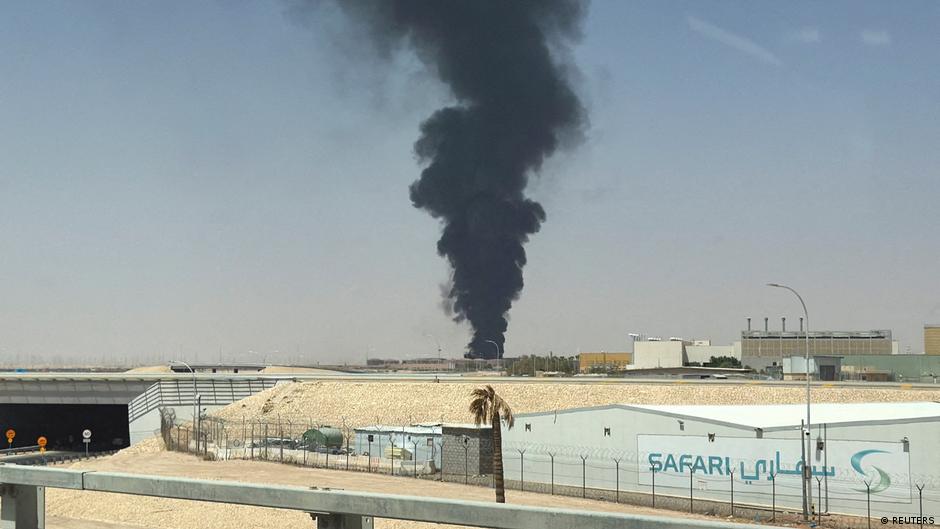
A mass drone attack on Moscow and the surrounding region killed two people and injured at least six, according to Moscow region governor Andrey Vorobyov, in one of the most extensive reported strikes on the Russian capital area. Vorobyov wrote on Telegram on Sunday morning, September 20, that 249 Ukrainian drones had been shot down over the region.
The scale of the reported attack points to the growing economic reach of the war, with drones striking or threatening assets that sit at the intersection of civilian life, logistics, energy supply and transport. Authorities and local reports described fires at a warehouse complex, residential buildings and an oil refinery site, while three Moscow airports temporarily suspended operations.
For senior policymakers and business leaders, the incident is a reminder that the conflict's economic geography is no longer limited to front-line regions or border areas. The Moscow metropolitan economy is central to Russia's administration, transport networks, energy distribution and consumer market. Even when damage is localized, repeated disruptions can affect insurance costs, supply-chain planning, aviation reliability and the risk calculations of domestic and foreign companies exposed to Russia-related logistics.
Energy and Logistics Assets Come Under Pressure
Vorobyov said that after the attack, a warehouse complex caught fire in Sofyino. The anonymous Telegram channel VChK-OGPU claimed that a logistics complex of about 850,000 square meters there was fully engulfed in flames. That claim has not been independently verified in the source material, but if accurate, the reported size would make the site a major logistics asset in the Moscow region.
Vorobyov also said drones hit and caused fires in three apartment buildings and one private house. Separately, Moscow Mayor Sergei Sobyanin reported that 186 drones had been shot down on approach to Moscow.
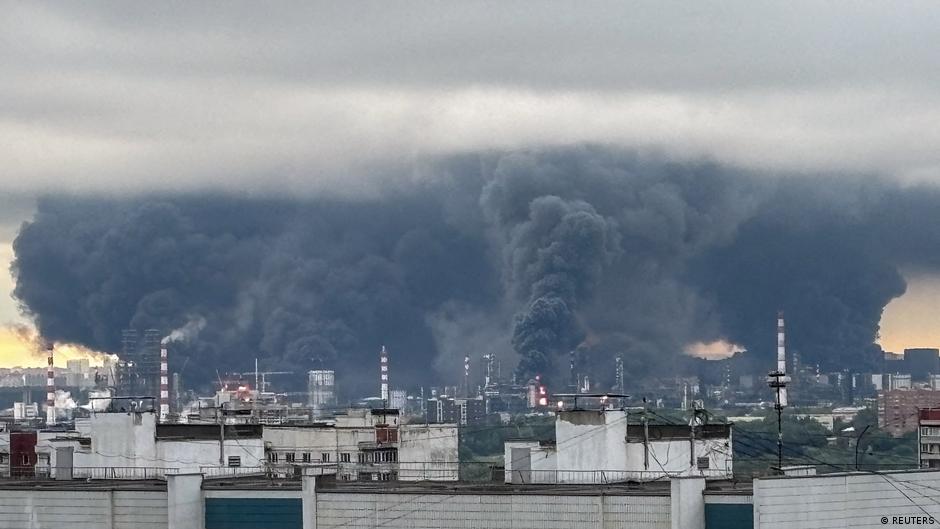
“A facility on the territory of the Moscow oil refinery was damaged. There were no casualties,” Sobyanin said, according to the source.
VChK-OGPU reported that the oil refinery in Moscow's Kapotnya district was on fire. The same refinery had already been attacked in June, according to the source article. Repeated incidents at refining infrastructure matter beyond immediate physical damage because refineries are critical nodes in fuel supply, pricing expectations and regional energy security. Even limited disruption can require rerouting, emergency repairs, additional security spending and changes in operating procedures.
The source also reported claims by VChK-OGPU that drones attacked a thermal power plant in Lyubertsy, while in Kotelniki a drone hit a residential building. The Telegram channel Ostorozhno, Novosti, citing local residents, reported a fire in a residential complex in Kotelniki. In Istra, debris from a drone damaged an apartment in a residential building, according to municipal district head Tatyana Vitusheva.
Airport Suspensions Highlight Wider Economic Exposure
The temporary suspension of operations at Moscow's Vnukovo, Domodedovo and Zhukovsky airports illustrates another economic channel through which drone warfare can create disruption. Airports are not only passenger gateways; they are also linked to cargo, business travel, tourism flows and time-sensitive supply chains. Even short pauses can create knock-on delays, additional costs for airlines and uncertainty for firms that rely on predictable transport connections.
In macroeconomic terms, the immediate casualty figures and physical damage are only part of the picture. Drone attacks near a capital city can influence state spending priorities, infrastructure resilience investments and the balance between military and civilian expenditure. As more resources are directed toward air defense, emergency response and facility hardening, public budgets face additional pressure. Companies, meanwhile, may need to reassess contingency planning, storage locations and security costs.
The reported attack also reinforces a broader trend in which relatively low-cost unmanned systems are being used to challenge high-value infrastructure. That asymmetry has strategic economic implications. It can force governments to spend heavily to defend a wide range of targets, from refineries and power facilities to warehouses and airports. The result is a persistent risk premium around infrastructure that had previously been considered far from the main theater of war.
For Russia, attacks in and around Moscow carry symbolic as well as practical consequences. The capital region is a command, finance and logistics hub, and disruptions there are more visible to households, companies and officials than incidents in remote areas. Fires in residential buildings, damage to energy facilities and airport shutdowns can shape public perceptions of vulnerability and raise questions about the effectiveness and cost of domestic air-defense coverage.
For global markets, the direct effect of a single incident may be limited unless it produces sustained outages or verified damage to major energy flows. But the accumulation of such attacks matters. Repeated strikes on refineries, logistics hubs or transport nodes can contribute to volatility in refined fuel markets, complicate sanctions enforcement calculations and affect the assumptions used by companies, insurers and governments when pricing Russia-related operational risk.
The reported events around Moscow therefore sit within a larger economic shift: the battlefield is increasingly connected to strategic infrastructure, and the cost of the war is being transmitted through transportation delays, energy vulnerability, emergency spending and heightened uncertainty. Even when authorities report the interception of hundreds of drones, the need to defend against such large barrages itself becomes a long-term economic burden.