Armenia's Partial Vote Recount Reveals Minor Adjustments Ahead of Final Results
Partial recount of Armenian parliamentary election votes led to small shifts in party tallies, reflecting ongoing political tensions and potential policy impacts.
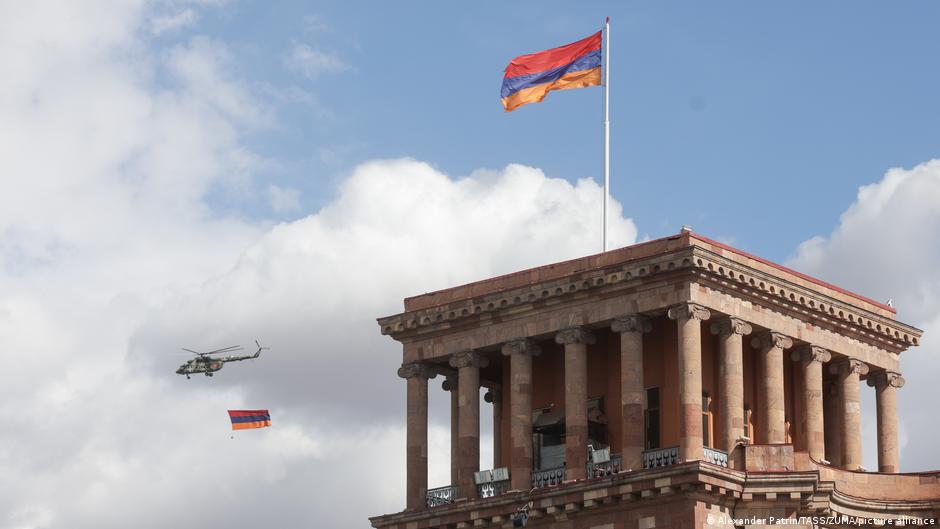
Following a request from the pro-Russian opposition bloc Strong Armenia, Armenia's Central Election Commission (CEC) conducted a partial recount of votes cast on June 7 across 637 of the country's 2,005 polling stations. The recount resulted in modest increases in vote counts for several key parties, highlighting the nation's politically charged atmosphere ahead of final election certification.
Recount Details and Political Implications
The CEC announced that the vote tally for Strong Armenia, led by Russian-Armenian billionaire Samvel Karapetyan, increased by 508 votes, bringing their total to 340,088. The Prosperous Armenia party, headed by businessman Gagik Tsarukyan, saw an increment of 147 votes, totaling 58,378. The ruling Civil Contract party, under Prime Minister Nikol Pashinyan, gained 1,148 votes, raising its total to 727,820. Meanwhile, the Armenia bloc, led by former President Robert Kocharyan, increased by 217 votes to reach 145,113.
Alongside these adjustments, the CEC reported an increase in identified irregularities, which rose by 230 from 1,279, while invalid ballots decreased by 859 from 17,097. The commission also invalidated results from three polling stations. The final election results are scheduled to be announced on June 14.
"The Central Election Commission has completed the recount on 637 polling stations, confirming minor shifts in vote counts across several key political factions," the commission stated.
The recount followed Strong Armenia’s formal request after their electoral defeat, with party representatives citing alleged voting violations. Karapetyan, currently under house arrest on charges linked to an alleged coup plot—which he denies as politically motivated—called the election "shameful." The CEC is mandated to order recounts when credible concerns arise about electoral violations.
On election day, Armenian authorities reported investigations into 59 alleged violations, including multiple voting instances, with at least nine arrests made. Voter turnout was 58.97%, higher than in the 2018 and 2021 parliamentary elections.
Long-Term Economic and Geopolitical Considerations
Prime Minister Pashinyan’s Civil Contract party secured a decisive victory with 49.81% of the vote, consolidating pro-Western political momentum in Armenia. This outcome may influence Armenia’s foreign policy orientation and economic partnerships, potentially reinforcing integration with Western institutions and markets. Conversely, the notable support for the pro-Russian Strong Armenia bloc (23.29%) underscores persistent domestic divisions and the geopolitical tug-of-war between Russian interests and Western influence in the South Caucasus.
Given Armenia’s strategic location and its economic reliance on both Russian aid and Western investment, election outcomes and any subsequent shifts in government policy could impact regional stability, trade flows, and investment climates. Policy decisions made by the new parliament will be critical in shaping Armenia’s long-term economic trajectory and its balancing act between competing geopolitical spheres.
As Armenia navigates post-election challenges, including addressing electoral integrity concerns, the international community will closely monitor the government’s commitment to democratic processes and economic reforms. Stability in Armenia has broader implications for the South Caucasus, a region vital for energy transit routes and geopolitical influence.