Abbas Delays Palestinian Elections, Deepening Governance Risk for Gaza Plan
The postponement of the first national Palestinian vote in more than two decades adds political uncertainty to a fragile regional recovery agenda.
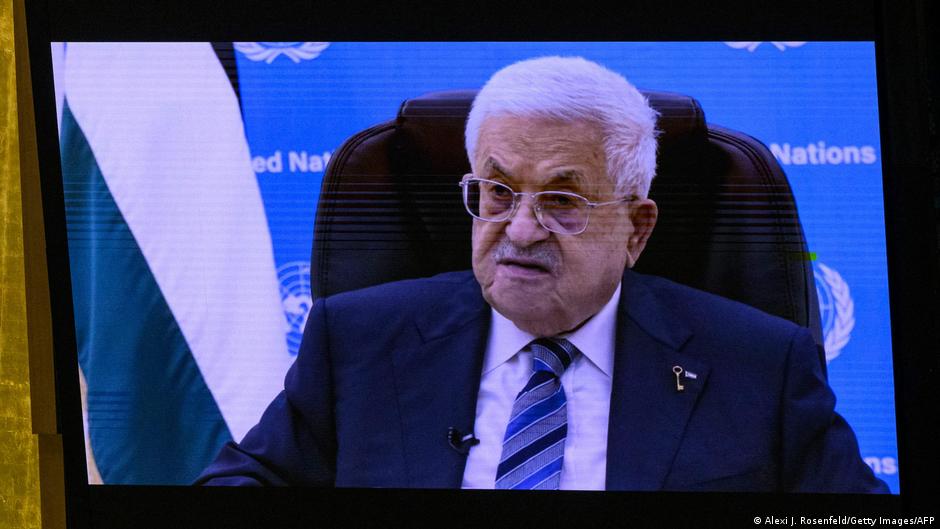
Palestinian national elections have been postponed from late November to September 11, 2027, according to WAFA, delaying what would be the first territory-wide vote in more than two decades. The decree by Palestinian Authority President Mahmoud Abbas covers parliamentary elections across the Palestinian territories, with the presidential vote now scheduled for the same day.
For regional governments, donors and investors watching the post-war architecture for Gaza, the delay is more than a domestic political maneuver. It extends uncertainty over Palestinian institutional legitimacy at a time when governance arrangements are central to any durable ceasefire, reconstruction process and security framework. The vote had been expected to cover the West Bank, East Jerusalem and the Gaza Strip, three arenas where political authority, mobility and security conditions remain deeply fragmented.
WAFA cited Israeli military restrictions, the expansion of Jewish settlements, attacks by armed settlers and the lack of freedom of movement as reasons for the postponement. In relation to Gaza, the agency also pointed to instability and the delayed deployment of international security forces. Those explanations frame the delay as a function of external constraints and security conditions, rather than as a discretionary political decision by the Palestinian leadership.
Israel rejected that account. Foreign Minister Gideon Saar accused the 90-year-old Abbas of misleading the international community and making false claims that Israel had created obstacles to voting. Saar said Abbas was trying to avoid responsibility and accountability.
Gideon Saar said Mahmoud Abbas was trying to avoid responsibility and accountability.
The criticism was not limited to Israel. Objections to the delay also came from within Fatah, the Palestinian national liberation movement to which Abbas belongs. That internal dissent matters for the economic outlook because the credibility of Palestinian governance is a key variable in reconstruction finance, public-sector coordination and the sequencing of any broader political settlement.
Governance Gap Meets Reconstruction Economics
The postponement comes as Gaza’s political future remains tied to a phased ceasefire and reconstruction process. The Middle East crisis escalated sharply on October 7, 2023, when Hamas, recognized by the European Union and the United States as a terrorist organization, carried out a large-scale attack on Israel. Militants launched a heavy rocket barrage, entered Israeli territory and carried out the deadliest massacre of civilians in the history of the modern Israeli state, killing about 1,200 people.
Hamas militants also seized around 250 hostages and took them to the Gaza Strip. Some hostages were later exchanged or released, while others died. Israel responded by declaring war on Hamas, beginning a conflict whose economic consequences have extended across trade routes, energy-risk pricing, fiscal balances and regional investment sentiment.
In October 2025, Israeli authorities and Hamas agreed to a ceasefire under a peace plan developed by the administration of U.S. President Donald Trump. The United States, Turkey, Qatar and Egypt became guarantors of the agreements between Israel and Hamas. During the first phase, Hamas militants returned all remaining living Israeli hostages in exchange for the release of Palestinian prisoners from Israeli jails.
In mid-January, the White House announced the start of the second phase of Trump’s plan to end hostilities in the Gaza Strip. Under that phase, a National Committee is expected to take over administration of the region until the Palestinian Authority is ready to assume that role. The election delay therefore intersects directly with a larger policy question: whether the Palestinian Authority can build enough political legitimacy and administrative capacity to become the eventual governing actor in Gaza.
For senior decision-makers, the macroeconomic significance lies in timing. Reconstruction in Gaza will require security guarantees, institutional counterparties, financial controls, movement arrangements and a credible chain of authority. A national vote pushed into 2027 may preserve short-term administrative continuity, but it also prolongs doubts about accountability and representation. That can complicate donor disbursement, private-sector risk assessment and the design of long-term infrastructure commitments.
The municipal elections held in April in Deir al-Balah in the Gaza Strip were the first such local vote in 20 years. Candidates on most electoral lists were close to Fatah or independent. That episode showed that limited electoral activity remained possible under certain conditions, but it did not resolve the larger question of national political renewal across the Palestinian territories.
The postponement also reflects the persistent mismatch between diplomatic timelines and institutional realities. International plans for Gaza require phased implementation, outside guarantors and eventual Palestinian Authority readiness. Yet the political system that would carry part of that burden has now delayed its first national electoral test in more than a generation. For governments underwriting stabilization, that gap is likely to remain a central risk factor.
Economically, the consequences are indirect but consequential. A longer legitimacy deficit may slow the transition from emergency relief to reconstruction, limit the confidence of multilateral lenders and complicate coordination among the United States, Turkey, Qatar and Egypt as guarantors. It may also affect Israel’s calculations on security restrictions and Palestinian mobility, two issues WAFA identified as central to the postponement.
The new election date of September 11, 2027, sets a long horizon for resolving the question of Palestinian representation. Until then, the region’s economic recovery agenda will operate under a political constraint: the institutions expected to manage reconstruction and eventually govern Gaza face renewed scrutiny over their mandate, accountability and capacity to deliver stability.