US House Bill to Ban Russian Oil Purchases Tests Trump Energy Shift
A bipartisan push in Congress would challenge the White House’s reported diesel arrangement with Moscow and sharpen debate over energy security.
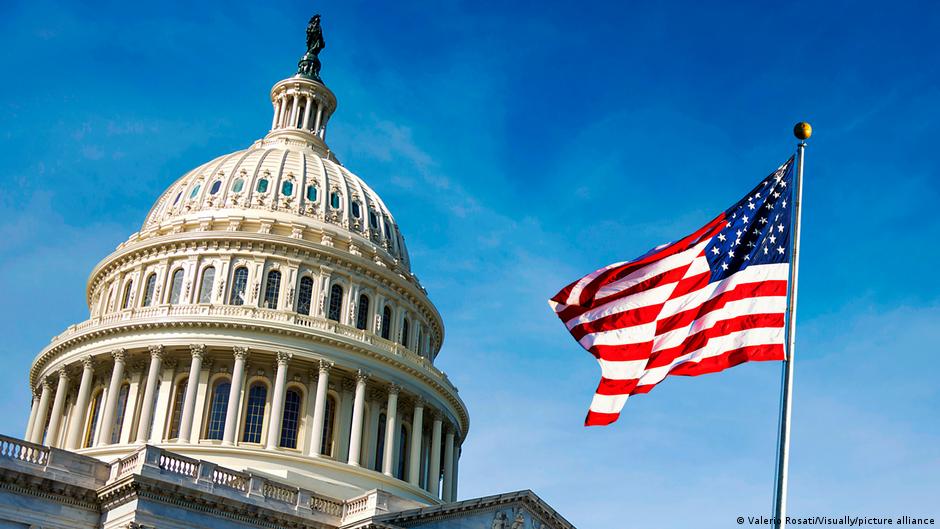
A bipartisan bill expected in the US Congress would seek to prohibit any purchases of Russian oil, opening a new front in Washington’s debate over energy security, sanctions policy and the economic costs of engaging Moscow. Representative Brian Fitzpatrick, a Republican from Pennsylvania, said on Saturday, October 10, that the measure would be aimed at banning all purchases of Russian oil.
Fitzpatrick said the legislation would be called the Ronald Reagan Peace Through Strength Act, framing the proposal in terms of strategic pressure rather than narrow trade policy. The bill is expected to be brought forward through a discharge petition, a parliamentary procedure that allows rank-and-file lawmakers to force a measure to the floor for a vote by the full House if committee leaders or the speaker block consideration.
That mechanism requires signatures from at least 218 lawmakers, an absolute majority of the House. Fitzpatrick said he believes the bill would pass by an overwhelming majority, signaling confidence that congressional resistance to renewed Russian energy purchases may cross party lines.
“It will pass by an overwhelming majority,” Fitzpatrick said, according to the account of his statement.
Representative Don Bacon, a Republican from Nebraska, has already said he would support the measure. Bacon also criticized President Donald Trump’s decision to purchase diesel fuel from Russia, underscoring the political tension between the administration’s apparent energy-market pragmatism and Congress’s continued appetite for restrictions on Russian commodities.
Energy Policy Becomes a Sanctions Test
The proposed legislation comes after Trump said on October 9 that he had held “very successful” talks with Russian President Vladimir Putin. According to Trump, those talks produced an agreement on supplies of Russian diesel to the United States and to the global market. The claim immediately placed energy affordability, sanctions discipline and geopolitical signaling into conflict.
Putin officially confirmed the phone conversation with Trump and the agreements discussed. In a statement attributed to the Russian president, Moscow said the Russian side had reaffirmed its readiness to supply oil and petroleum products to the American and global markets during the discussion of global energy conditions. Putin said he was confident this would have a positive effect on the entire global economy.
For senior economic decision-makers, the dispute is less about a single shipment of diesel than about the direction of US policy. If Congress moves to bar purchases of Russian oil, lawmakers would be attempting to lock in a sanctions-oriented framework that limits executive flexibility in energy diplomacy. If the administration presses ahead with Russian diesel purchases, it would suggest a willingness to prioritize supply stability and fuel-market relief even when that complicates the broader sanctions architecture.
The macroeconomic implications are significant. Diesel is a core input for freight, agriculture, mining, construction and industrial production. Changes in its availability and price can move through supply chains quickly, affecting transport costs, food prices and margins in energy-intensive sectors. A decision to allow Russian diesel into US and global markets could be presented as a tool to ease pressure on fuel prices. A congressional prohibition, by contrast, would preserve pressure on Moscow but could narrow the available pool of supply at a sensitive point for energy markets.
The proposal also highlights a wider policy dilemma for advanced economies: how to balance sanctions credibility against inflation management. Since energy markets are globally connected, even country-specific restrictions can influence pricing expectations, refinery economics and trade flows. If Russian barrels or refined products are redirected, discounted or blocked, the effects can appear in shipping routes, insurance costs, refinery feedstock decisions and benchmark pricing.
Politically, the use of a discharge petition matters. It indicates that supporters of the bill are prepared to bypass normal procedural bottlenecks if leadership does not move the legislation. That adds uncertainty for companies exposed to fuel procurement, commodity trading, logistics and compliance. Firms may need to plan for a policy environment in which executive signals and congressional action diverge, with legal obligations changing quickly if a majority coalesces around the ban.
Global Market Consequences
For the global economy, the central question is whether additional Russian oil and petroleum products would ease supply constraints or undermine the sanctions pressure that has shaped trade since Russia’s war-related isolation from many Western markets. Putin’s statement presents Russian supply as beneficial to global economic conditions. Congressional critics see purchases from Russia as strategically unacceptable and economically risky because they may increase Moscow’s revenue while weakening the credibility of US restrictions.
The dispute may also affect allies and market participants watching for signals about US policy durability. If Washington allows Russian diesel purchases after high-level talks, other governments could reassess how firmly the United States intends to maintain pressure on Russian energy exports. If Congress instead moves successfully to prohibit such purchases, the message would be that US lawmakers remain committed to limiting Russian energy access regardless of short-term market arguments.
In practical terms, the bill’s path will depend on whether Fitzpatrick and other supporters can secure the required 218 signatures and then win a floor vote. Bacon’s support shows that at least some Republicans are ready to oppose Trump’s position on this issue. The size and composition of any coalition will matter for energy markets because a broad vote would suggest that future Russian supply arrangements face durable legislative resistance.
For now, the proposed Ronald Reagan Peace Through Strength Act turns a reported diesel agreement into a larger test of US economic statecraft. The immediate issue is Russian oil purchases. The longer-term question is whether Washington’s energy policy will be guided chiefly by market stabilization, sanctions enforcement or a new attempt to reconcile both under intensifying geopolitical pressure.