Yemen Calls for Mobilization as Houthi Advance Raises Global Trade Risks
Rashad al-Alimi’s appeal highlights how Yemen’s war is increasingly tied to energy security, shipping routes and regional policy calculations.
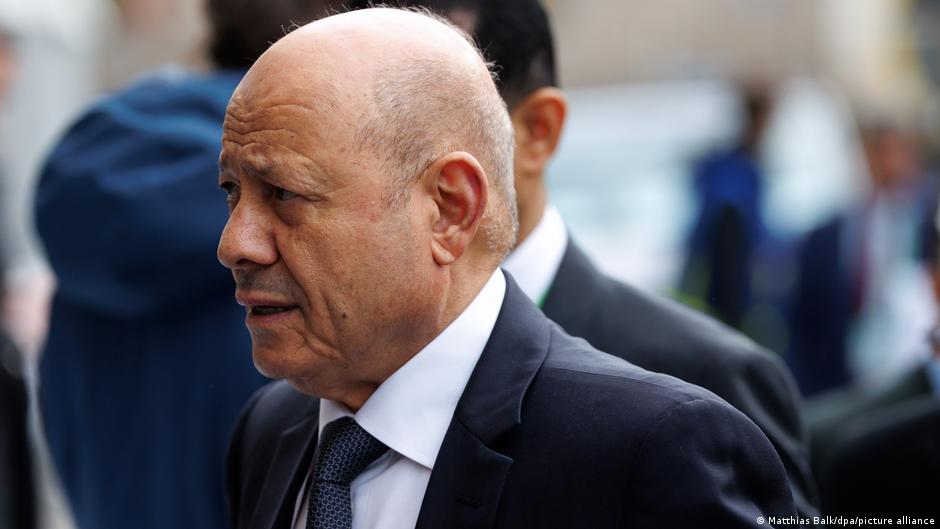
Yemen’s internationally recognized leadership has called on citizens to mobilize as the conflict with the Iran-aligned Houthi movement escalates, a development with implications that extend well beyond the country’s fractured political landscape. Rashad al-Alimi, chairman of Yemen’s Presidential Leadership Council, urged Yemenis on Friday, September 25, to contribute to the defense of the country and join government forces.
Al-Alimi also promised that Houthi fighters who abandon the movement and side with the government would be pardoned under a forthcoming amnesty. The offer signals both a military and political effort to slow the rebel advance at a moment when government forces are continuing to retreat despite support from Saudi military aviation.
Al-Alimi called on Yemenis to contribute to defending the country and to replenish the ranks of government forces.
The appeal comes after several weeks in which the Houthis struck government troops and expanded their position across strategically sensitive territory. For senior policymakers and corporate decision-makers, the significance of the latest escalation lies not only in Yemen’s internal balance of power, but in the pressure it places on global energy flows, maritime trade routes and the regional security architecture surrounding the Gulf.
Strategic waterways become the economic center of gravity
In recent months, the Houthis have managed to seize the entire Red Sea coast as well as territories adjacent to the Bab el-Mandeb Strait. The strait has gained strategic importance since the start of the U.S. and Israeli war against Iran, according to the source account, because it is being used as an alternative trade route that partially compensates for oil supply disruptions caused by the blockade of the Strait of Hormuz.
The expansion of Houthi control in these areas has effectively strengthened the position of Iran and its allies over key regional waterways. That shift is affecting oil exports from Saudi Arabia and other Gulf states to the world market, while rebel attacks threaten global trade routes and contribute to rising electricity prices.
For energy-importing economies, the risks are direct: higher transport costs, insurance premiums and volatility in oil-linked power prices can filter into inflation expectations and industrial costs. For Gulf exporters, the threat is equally consequential, as the reliability of export corridors is a core pillar of fiscal planning, currency stability and sovereign investment strategies.
The situation also complicates policy choices for governments attempting to contain energy-price shocks without deepening military commitments in the region. If the Bab el-Mandeb route is further disrupted, decision-makers may face tighter trade-offs between strategic deterrence, protection of shipping lanes and efforts to avoid a broader confrontation involving Iran, Saudi Arabia, Israel and the United States.
Regional escalation and policy risk
Reuters has reported, according to the source, that the Houthi advance is being directed by Iran’s Islamic Revolutionary Guard Corps. Sources in Tehran say Iran is seeking to open a new front in its confrontation with the United States. That claim, if borne out in policy behavior, would make Yemen an even more central node in the region’s wider contest over deterrence and economic leverage.
Yemen has been in civil war since 2014, a conflict that has led to the country’s de facto division among three opposing sides. The Iran-aligned Houthis hold northern and western provinces, including the capital, Sanaa, where around 70 percent of the population lives. The territorial distribution gives the movement substantial political weight, even as the internationally recognized government attempts to rally domestic support and recover military momentum.
At the start of September, the Houthis announced an expansion of military operations in the Middle East and struck four cities in southern Saudi Arabia. More than 70 people were injured in the large-scale shelling, and fires broke out at oil facilities. Saudi Arabia responded with more than 60 airstrikes on several provinces controlled by the Houthis.
On September 19, the Saudi-led Coalition to Restore Legitimacy in Yemen said the Yemeni rebels had attempted for the first time to strike the Saudi capital, Riyadh, with a ballistic missile. That reported attempt marks an important escalation in perceived risk for the kingdom, whose economic strategy relies heavily on the security of energy infrastructure, logistics corridors and investor confidence.
Al-Alimi’s mobilization call therefore comes at a moment when the military trajectory in Yemen is intersecting with macroeconomic vulnerability. The immediate aim is to reinforce government ranks and encourage defections from the Houthis through an amnesty. The broader consequence is that Yemen’s battlefield is increasingly shaping the economics of regional shipping, oil-market stability and energy pricing.
For senior decision-makers, the central issue is no longer whether Yemen remains a localized conflict. The latest developments show that control of coastal territory and missile capabilities can carry global consequences, particularly when they intersect with constrained oil supply routes and competing regional alliances. The durability of any policy response will depend on whether governments can address the military balance in Yemen while limiting further shocks to trade, energy markets and the Gulf’s export infrastructure.