US Signals Russia Sanctions Will Hold Until Ukraine War Ends
Washington’s message to Moscow at the G20 underscores that sanctions relief remains tied to the end of the war, reinforcing a longer-term policy constraint on Russia’s economy.
The United States has told Russia that it should not expect any easing of economic pressure before the war in Ukraine is over, according to Reuters, a message that sharpens the policy signal facing investors, officials and multinational companies assessing the long-term trajectory of sanctions risk.
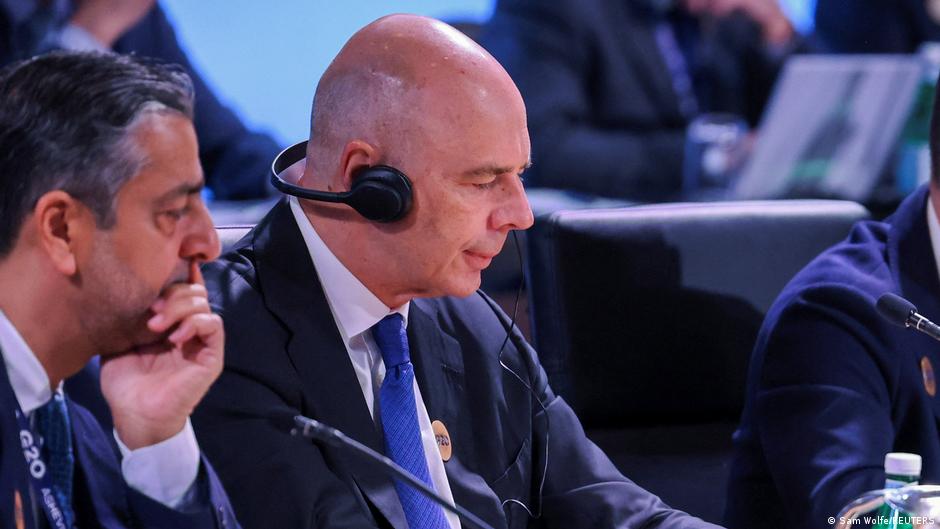
Reuters reported that US Treasury Secretary Scott Bessent delivered that message to his Russian counterpart, Finance Minister Anton Siluanov, during talks on the sidelines of a meeting of G20 finance ministers and central bank governors in Asheville, North Carolina. Citing a source familiar with the substance of the exchange, Reuters said Bessent told Siluanov that Moscow should not expect either a softening of economic pressure or agreements on other issues until the war in Ukraine has ended.
For senior decision-makers, the significance of that exchange goes beyond the immediate diplomatic setting. It suggests that Washington is framing sanctions not as a tactical bargaining tool to be adjusted incrementally, but as part of a broader strategic policy architecture linked directly to the duration of the conflict. That raises the likelihood that Russia will continue to operate under a prolonged external financing and policy constraint, while global counterparties remain exposed to elevated compliance and political risk.
Sanctions Signal Extends Beyond Bilateral Messaging
The reported conversation took place amid visible unease among European governments over Siluanov’s presence at the gathering. The source article says European states are currently working on strengthening sanctions against Russia because of the war, and that Siluanov’s participation in the meeting prompted confusion among them.
That reaction matters in macroeconomic terms. It indicates that, even where diplomatic channels remain open, the political appetite in Europe is still oriented toward tightening rather than relaxing restrictions. If that position hardens in parallel with Washington’s stance, businesses and policymakers should assume that the sanctions regime will remain a structural feature of the international economic landscape for the foreseeable future.
German Finance Minister and Vice Chancellor Lars Klingbeil described Siluanov’s reception at such an event as a “troubling signal,” according to the source text. Speaking to colleagues from other European countries, he also threatened to boycott the traditional group photograph if Siluanov were included.
“One can find space for clear criticism, discuss things with one another, and choose clear words about this war, but a group photo would be too big a step for me at this stage,” Klingbeil said, according to the source article.
Klingbeil said representatives of other European countries joined his position, and the group photograph was ultimately taken without the Russian minister. He also told journalists that, during the participants’ general morning meeting, he had told Siluanov that the war in Ukraine must end and reaffirmed Berlin’s support for Kyiv.
From a policy perspective, those gestures are not merely symbolic. They reflect the degree to which European officials remain attentive to the political signaling embedded in multilateral economic forums. For markets, that is relevant because symbolism often precedes policy coordination. Public resistance to normalization in settings such as the G20 can reinforce expectations that sanctions, export controls and financial restrictions will continue to shape cross-border flows and official engagement.
The Russian Finance Ministry had earlier acknowledged the bilateral meeting. On the evening of August 31, it published a press release saying that Siluanov and Bessent had met on the sidelines of the G20 meeting of finance chiefs and central bank governors. According to that release, the two sides discussed issues of Russian-American interaction on the financial track as well as cooperation within the G20.
That formulation left the substance of the conversation broad and procedural. Reuters’ account adds a more consequential layer by indicating that the US side used the meeting to state clear conditions for any future change in economic pressure. If accurate, the contrast illustrates how both capitals may wish to preserve official contact while keeping their public narratives aligned with sharply different strategic objectives.
The same day, August 31, CNBC reported on its website, citing the US Treasury, that Bessent discussed US President Donald Trump’s “peace plan” for Ukraine with Siluanov in Asheville. Taken together with Reuters’ reporting, that suggests Washington paired discussion of a political pathway with a clear warning that sanctions relief will not come before the war’s conclusion.
For global economic planners, that combination carries several implications. First, it reinforces the view that sanctions policy remains directly tethered to wartime developments rather than to narrower sectoral negotiations. Second, it reduces the probability of near-term relief that could have altered expectations for Russian trade, capital access or broader reintegration into parts of the global financial system. Third, it signals that even if diplomatic engagement continues, Western governments may seek to preserve maximum leverage until there is a definitive end to the conflict.
The broader consequence is a policy environment in which Russia’s economic outlook remains conditioned by externally imposed limits, while companies operating across energy, commodities, banking and logistics must continue planning for long-duration restrictions. For G20 participants and other major economies, the episode also demonstrates how geopolitical conflict continues to spill into the governance of global economic forums, complicating consensus-building on financial coordination and multilateral policy.
In that sense, the exchange in Asheville was not only a bilateral message. It was also a public marker of how the war in Ukraine continues to shape the rules of economic engagement, the boundaries of diplomatic normalization and the horizon for any eventual sanctions recalibration.