U.S. Caribbean Drug-Boat Strikes Signal Wider Policy and Legal Risks
The latest reported U.S. strike underscores how counter-narcotics operations are becoming a broader test of security policy, legal norms and regional risk.
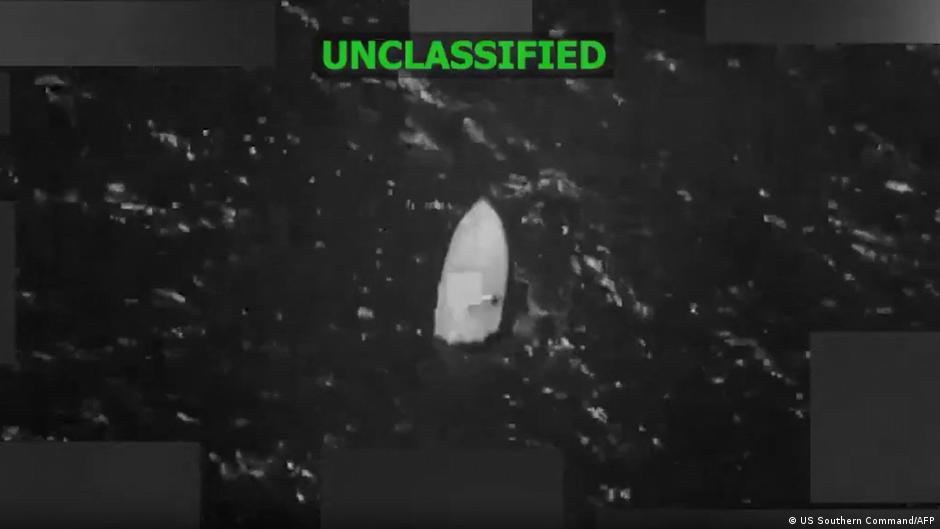
The U.S. military has reported another lethal strike on a vessel in the Caribbean Sea that it said was carrying drugs, killing four people, according to U.S. Southern Command. The command said on Saturday, September 19, that American forces had hit a speedboat traveling along routes used for illegal narcotics trafficking in the Caribbean.
The incident adds to a campaign that has increasingly blurred the line between law-enforcement operations and military action in a strategically sensitive region. For senior economic and policy decision-makers, the implications extend beyond the immediate security rationale. Repeated strikes in Caribbean waters raise questions about regional stability, international legal norms, the trajectory of U.S. policy toward Venezuela-linked drug flows, and the possible economic consequences of a more militarized approach to transnational crime.
“Credible intelligence confirmed this vessel’s involvement in drug trafficking. During the operation, four narcoterrorists were eliminated,” the U.S. military said.
Video published on X showed a moving vessel that then disappeared in a bright flash. The U.S. side did not present evidence proving the vessel’s involvement in drug trafficking. That gap is likely to remain central to international scrutiny, particularly because the campaign has already prompted criticism from human rights officials and concerns about the legal basis for targeting boats described as allegedly linked to narcotics networks.
A Security Campaign With Economic Spillovers
According to the Associated Press, including this case, the total number of people killed in U.S. military strikes on vessels of alleged drug traffickers in the Caribbean Sea has reached at least 231. The agency calculated that 69 such strikes have been carried out as part of a campaign that has lasted for more than a year.
The scale of the campaign matters for economic policymakers because maritime security in the Caribbean is not an isolated issue. The region sits near important shipping lanes, energy routes and investment corridors connecting North America, Latin America and global trade networks. While the reported targets are small vessels allegedly involved in narcotics trafficking, a sustained military campaign can reshape risk perceptions among insurers, logistics firms, ports and regional governments.
Higher perceived operational risk does not automatically translate into broad disruption, but it can alter the calculations of companies moving goods through nearby waters, particularly if the campaign expands or triggers diplomatic retaliation. Senior executives and policymakers will be watching whether these strikes remain narrowly targeted, become a normalized instrument of U.S. counter-narcotics policy, or evolve into a larger regional security posture with consequences for trade, investment and diplomatic relations.
The U.S. framing also carries policy significance. By describing those killed as “narcoterrorists,” the military is placing the operation in a category that goes beyond conventional interdiction. That terminology may strengthen the domestic political case for forceful action, but it also raises the stakes internationally. If counter-drug activity is increasingly treated as a military campaign rather than a policing mission, allied governments, international institutions and market participants may need to reassess the durability of existing rules governing maritime enforcement.
Venezuela, U.S. Policy and Legal Pressure
The campaign also sits within a broader U.S. policy posture toward drug trafficking from Venezuela. On October 23, 2025, at a White House press conference, U.S. President Donald Trump said American forces would “kill people” who bring drugs into the United States from Venezuela. That statement gave a direct political signal that the United States was prepared to use lethal military force against alleged drug traffickers linked to that route.
For investors and governments, such declarations matter because they can affect expectations about U.S. engagement in the Western Hemisphere. A harder military stance may be intended to deter trafficking networks and demonstrate political resolve. But it may also complicate relations with regional governments, sharpen tensions around Venezuela, and create uncertainty about the legal thresholds for the use of force at sea.
On October 31, 2025, Volker Türk, the United Nations High Commissioner for Human Rights, said U.S. attacks on vessels “allegedly linked to drug trafficking” violated international law. Türk called for immediate, independent and transparent investigations into the attacks. That criticism introduces a legal and reputational dimension that could weigh on the long-term legitimacy of the campaign.
The absence of publicly presented evidence in the latest strike is therefore not a minor procedural issue. In a sustained campaign with dozens of strikes and at least 231 deaths, the evidentiary standard becomes central to international acceptance. If Washington cannot persuade external observers that its targeting process is lawful and reliable, the campaign could generate diplomatic costs even among partners that share concerns about narcotics flows.
From a macro-economic perspective, the key question is whether the campaign remains a contained security operation or becomes part of a wider shift in how the United States manages cross-border criminal threats. A durable move toward military enforcement could influence defense spending priorities, regional aid allocations, sanctions policy and cooperation with Latin American governments. It could also create new political risk premiums in parts of the Caribbean basin if governments or markets anticipate escalation.
There is also a broader institutional issue. International trade and investment depend on predictable rules, including at sea. Counter-narcotics efforts are widely supported in principle, but the use of lethal force against vessels whose alleged role has not been publicly substantiated may put pressure on the legal architecture that underpins maritime governance. If other states adopt similar standards, the longer-term result could be a more fragmented and contested security environment.
For now, the immediate facts are clear but limited: U.S. forces say they struck a Caribbean speedboat on a drug-trafficking route, four people were killed, and no public evidence was provided by the American side to prove the vessel’s involvement. The broader significance lies in the accumulation of such incidents. With 69 reported strikes over more than a year, the campaign has become a sustained policy instrument rather than an isolated operation, and its economic and diplomatic consequences are likely to grow accordingly.