U.S. Army Secretary Resigns After Pentagon Rift, Adding Policy Uncertainty
Daniel Driscoll’s reported departure after clashes with Defense Secretary Pete Hegseth adds to turnover at the Pentagon during Donald Trump’s second term.
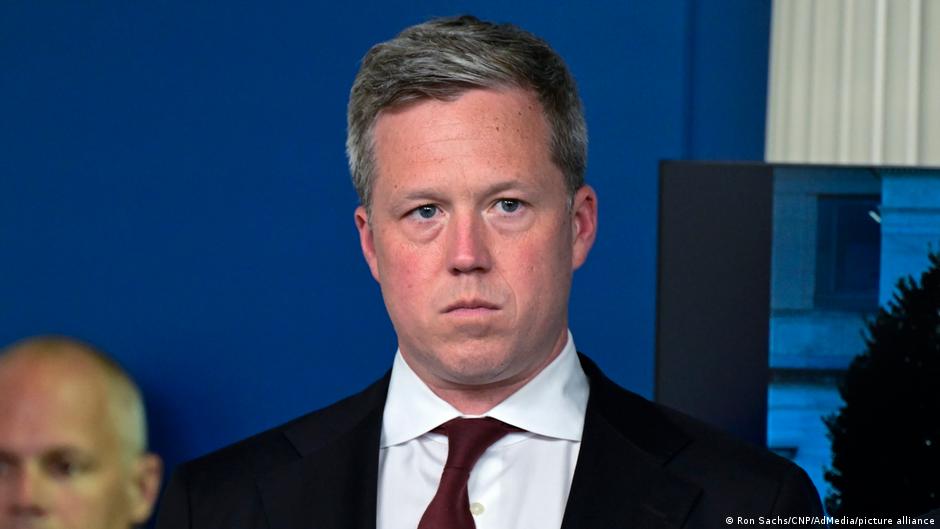
U.S. Army Secretary Daniel Driscoll has asked President Donald Trump to accept his resignation after months of disagreements with Defense Secretary Pete Hegseth over the direction of U.S. military development and the dismissal of several officers, according to The Wall Street Journal and other media reports. Reuters and AP later circulated the same information, while NBC News, citing sources, reported that the White House had accepted Driscoll’s resignation.
The reported departure, expected in the coming days, is more than a personnel dispute inside the Pentagon. For senior economic and policy decision-makers, it signals another layer of uncertainty around U.S. defense planning at a time when military spending, procurement policy and geopolitical risk remain tightly linked to global growth expectations, industrial investment and fiscal strategy.
Driscoll has served as Army secretary since February 2025. Reuters noted that in the role he argued for a “flexible approach,” supported purchases of cheaper weapons for the Army and criticized major defense manufacturers. Those positions gave him a distinct profile in policy debates over how the United States should balance combat readiness, procurement efficiency and long-term force modernization.
Pentagon turnover and defense-policy implications
The dispute with Hegseth appears to have centered on both strategic direction and personnel decisions. In practical terms, that raises questions about whether the Pentagon will now shift further toward a more centralized and less contested defense agenda under Trump’s second term. Leadership instability at this level can alter the timing and composition of procurement decisions, influence industrial expectations and complicate signaling to allies and adversaries alike.
Earlier, on August 21, The Wall Street Journal had reported that Driscoll was planning to resign at the end of the year because of the conflict with the defense secretary. At that time, Reuters commented that Driscoll’s departure would leave the Army without a Senate-confirmed leader while the United States sought to end the war against Iran, which it said had begun together with Israel nearly six months earlier. The acceleration of his exit, if confirmed, would sharpen those concerns.
For markets and multinational firms, the issue is not only who leads the Army but what this says about the administration’s internal decision-making process. Defense outlays are a major driver of manufacturing demand, technology deployment and supply-chain commitments. A push toward cheaper weapons, which Reuters associated with Driscoll’s approach, could have had implications for prime contractors, second-tier suppliers and capital allocation across the defense-industrial base. A change in leadership may therefore reshape procurement priorities, even if the administration maintains its broader emphasis on readiness and military strength.
“Secretary Driscoll effectively advanced President Trump’s ‘Make America Strong Again’ agenda in the Department of the Army, showing outstanding leadership during historic military operations and restoring priority to readiness and striking power, assisting negotiations between Russia and Ukraine and in many other areas,” White House deputy press secretary Anna Kelly said, according to WSJ and AP.
The White House statement frames Driscoll’s tenure as aligned with the president’s agenda, even as reports describe prolonged friction with Hegseth. That contrast is important. It suggests the administration is seeking to contain the political cost of another high-level exit while preserving the message of continuity in military policy. For economic observers, continuity in message does not necessarily mean continuity in implementation. Senior personnel changes often affect budget execution, procurement sequencing and the internal balance between cost discipline and operational ambition.
Reuters cast the resignation as another step in a broader reshaping of Pentagon leadership during Trump’s second presidential term. In that context, the agency recalled the April dismissal of Army Chief of Staff Randy George and several other senior military officials. The cumulative effect is a pattern of turnover at multiple levels of command and management, which can carry consequences well beyond Washington.
Defense policy has become increasingly entangled with macroeconomic strategy. Military budgets influence federal spending trajectories, industrial policy, labor demand in high-value manufacturing and research priorities across aerospace, electronics and logistics. They also shape alliance credibility, which in turn affects energy security, trade flows and country risk pricing. A contested leadership transition inside the Army therefore matters not only for the Pentagon’s chain of command but also for the wider business environment in which governments and firms make long-cycle investment decisions.
Driscoll’s biography adds another layer of political significance. He is a friend and former classmate of Vice President J.D. Vance. In November 2025, he was appointed as Trump’s new special envoy for Ukraine, replacing Keith Kellogg. That background placed him at the intersection of defense administration and one of the administration’s most sensitive foreign-policy files. His exit from the Army post may prompt renewed scrutiny of how the White House coordinates military leadership, diplomatic initiatives and procurement choices across multiple theaters.
At a global level, allies and competitors will read the resignation through the lens of U.S. policy durability. If the Pentagon is undergoing a deeper restructuring of its leadership culture, partner governments may need to reassess assumptions about procurement coordination, burden-sharing and the consistency of U.S. military commitments. For international investors, the broader implication is that geopolitical policy risk remains embedded in the outlook for fiscal spending, industrial orders and strategic supply chains.
The immediate facts remain those reported by U.S. media: Driscoll has submitted his resignation after months of disagreement with Hegseth, the White House has reportedly accepted it, and he is expected to leave the Pentagon within days. But the larger significance lies in what his departure may reveal about the next phase of decision-making inside the Trump administration: more concentrated authority, further turnover and potentially a different balance between cost-conscious procurement and the administration’s stated emphasis on combat readiness and military power.